
6 Farmers Share Cover Crop Tips

March 7, 2024

Six Illinois farmers come together to share their insights and experiences on a practice that's not just farming but stewardship of the land, navigating the delicate balance between tradition and innovation. Check out this Q & A from different parts of Illinois, enriched with practical knowledge and a shared commitment to sustainable agriculture.


Tim Wesselmann | Carlyle, IL | 3rd Generation Farmer

1.  What cover crops do you typically use on your farm, and why?

  • I typically use winter rye/barley on ground going to soybeans and a mix for ground going to corn. A lot of my mixes I'll use 2 types of clover (balansa and crimson) along with ryegrass rape, and if early enough, turnip and radish planted together. Everything seems to work together, keeping weed pressure down and suppling the corn crop with nitrogen, water infiltration, and many other benefits.

2.  What’s something that you would share with yourself about cover crops when you first started?

  • When I first started 10 years ago, I started simple with just winter rye and killed the cover crop off early but was missing out on a lot of biomass, so now we let things grow longer and have our planter set up with starter fertilizer and quick to sidedress with UAN. We also have two monoslope beef barns so we deal with manure and I haul 8-10 ton per acre on cover crop ground and by the time the planter is rolling 80% of the manure is broken down.

3.  What’s something you’d tell another farmer thinking of starting cover crops?

  • My advice to someone wanting to try cover crops is get to know someone who knows cover crops and can guide you on what your resource concerns are, whether it’s a neighbor, crop adviser, conservation specialist or seed dealer (not a seed dealer who is going to drop the seed off and never see him again either).


Michael Aussieker | Washington County |  5th Generation

My main goal with cover crops is erosion control. Anything else is an added bonus, which there have been a few I've found.

1.  What cover crops do you typically use on your farm, and why?

  • We have a lot of cereal rye mostly because of its ability to be seeded so late into the season. I like to grow wheat, also for its erosion control, but having wheat in my rotation causes the cover following wheat/soybeans to be seeded late which almost always limits me to just cereal rye. I'm looking into backing off of my double crop maturity to get a cover crop mix out there sooner.

2.  Have you experimented with different cover crop mixtures, and if so, what have been the results?

  • I'd prefer to put out a mix if it isn't too late in the season. The results have been good, the mixes work well and they aren't too much more expensive from my supplier vs just planting cereal rye. I can't pinpoint a specific benefit I've seen with the mixes vs just cereal rye, cereal rye has been the main driver still in the mixes but I understand agronomically the benefit of the mixes and the benefits of having diversity in the mix.

3.  What’s something you’d tell another farmer thinking of starting cover crops?

  • If you're thinking of starting cover cropping most people will tell you to start with cereal rye ahead of soybeans and to start small scale. Those are fine suggestions, I'd add to make sure and keep your rate on the rye, or whatever cover you decide, to keep that rate on the lower end. 50#/acre of cereal rye is plenty if you're seeding it November 1st. If you're seeding it October 1st, 40# is probably good enough. Also as you scale up, look into cost share, there are different programs out there to help with the added cost of seed and equipment.
  • Other bonuses I've seen other than erosion control- Herbicide cost saving, this has been a big bonus in soybeans. I've greatly reduced the amount of chemicals and amount I'm spending on my herbicide program in soybeans. Another bonus is improving fertility, this is a slow one but we have seen organic matter percentage going up in the first field I cover cropped. I soil test at least every four years and I'm optimistic that the recommendations for P and K will start to be lower, I'm hopeful that these covers are recycling nutrients in the soil profile and helping them become more available for my crops.


Al Klein | Freeburg, IL | 3rd Generation Farmer

1.  What cover crops do you typically use on your farm, and why?

  • I typically plant cereal rye and a legume, usually clover or hairy vetch, preceding corn. I use the rye for erosion and weed control and the legumes for a source of nitrogen. Preceding soybeans, I use cereal rye for erosion and weed control and radishes for a food source for earthworms.

2.  Have you experimented with different cover crop mixtures, and if so, what have been the results?

  • I have tried different seed mixes with mixed results. It is hard to get a good stand of clover in the fall and it doesn't overwinter well. I haven't had good luck with rapeseed either. The last few falls have been very dry, so that contributes to the problem.

3.  What’s something that you would share with yourself about cover crops when you first started?

  • I first started cover crops about 12 years ago. My main concern was erosion on my rolling fields. The cereal rye worked exceptionally well controlling the erosion and an added bonus was the weed suppression. I was able to cut out one spray trip which is not always the case, so scouting is very important. Eventually the earthworm population grew and the water infiltration rate was greatly increased.

4.  What’s something you’d tell another farmer thinking of starting cover crops?

  • When you first start cover cropping, important things to remember is to be vigilant about scouting, not easy in all that green. Termination time is also critical. I normally plant green. Corn does not like to compete with rye, so that needs to be terminated quickly. I usually wait a couple of weeks after the soybeans emerge before terminating.
  • Our biggest hurdle now is voles. I find that if we lay the rye down to the ground with a roller or similar implement, the voles are not as big a problem. But I am still looking for a good solution for that problem.
  • Soil health is very important to me, so I will continue cover cropping. I want to leave the land in better condition than when I started.


Chase Brown |  Warrensburg, IL | 6th Generation

1.  What cover crops do you typically use on your farm, and why?

  • On our operation we use a variety of covers depending on the goals for that farm. Oats, Rye, Triticale, Rape, Radish, Turnip, Clover, buckwheat, flax, vetch are the most common.

2.  Have you experimented with different cover crop mixtures, and if so, what have been the results?

  • We try to utilize a mixture anytime we can, we find that they help remove some risk in establishment, when one species doesn’t work often another one will. We believe in the power of mixtures. Our native prairies that built our awesome soils in Illinois were not one species. Let's mimic that!!!!

3.  What’s something you’d tell another farmer thinking of starting cover crops?

  • Before you start down the path of cover crops, learn and understand what the goals are. It's often hard to see a quick response or immediate profit. Understand the WHY so you aren't disappointed and won't give up after one or two years.


Justin Rahn |  Mount Carroll, IL | 4th Generation

1.  What’s something that you would share with yourself about cover crops when you first started?

  • As a custom operator who sells and seeds cover crops, a customer’s goal is a moving dart board. They want green in the fall and green in the winter. They want green in spring and 300 bu corn or 100 bu beans come fall harvest time. Cover crops take management, it’s not for the guy who throws the seed out in the fall, expects it to grow and wants the soil to work up like a garden with no cover crop residue remaining. Goals can be attained if management is applied. 


2.  What’s something you’d tell another farmer thinking of starting cover crops?

  • It takes patience. Not every year is the same, with all the factors - weather, crop rotations, cover crop seed selection, etc. Do and don’t watch your neighbors. Some guys have different goals in mind when it comes to managing their cover crops. I’ve seen neighbors have complete disasters and some have great success. Just because 1 guy can plant corn into headed out rye and have great crops doesn’t mean the neighbor has the equivalent success without the right management and machinery. 


Bill Leigh  |  Minonk, IL |  6th Generation

1.  What’s something that you would share with yourself about cover crops when you first started?

  • Listen to what others are doing. You don’t need to do it through NRCS, using their recommendations. Keep it simple. I have 20 lbs of cereal rye spread with my fertilizer in the fall. It will grow, eventually, and it doesn’t cost much but seems to do the job. It’s going to look ugly for a while but it’s the economics and soil health that count.

2.  What’s something you’d tell another farmer thinking of starting cover crops?

  • Don’t get carried away with acreage. Start it small, keep it cheap, leave fields to compare yield results. And don’t think only in terms of pure yield. This is economic as well as an environmental decision. What does it cost to do primary tillage in the fall, then tillage in the spring. It all adds up.


Learn more about how IL Corn's conservation resources and programs.

graphic of PCM and general mills logo
By Tara Desmond • November 24, 2026
Precision Conservation Management (PCM), a conservation program created by IL Corn, is proud to welcome General Mills as its newest supply chain partner.
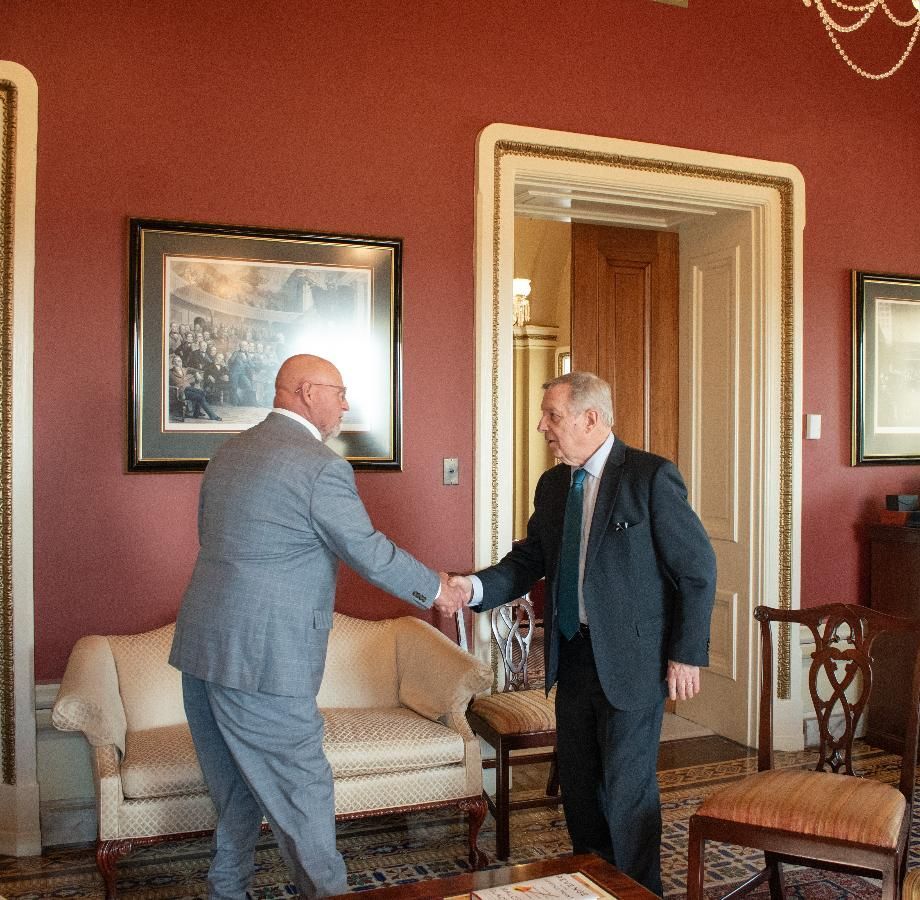
durbin with group
By Lindsay Croke • November 24, 2026
The IL Corn Growers Association (ICGA) is proud to announce that Senator Dick Durbin, Senate Democrat Whip and senior Senator from Illinois, received the “World of Corn” Award at the ICGA Annual Meeting on November 24, 2026 “Senator Durbin’s retirement gives us the opportunity to reflect on the many things he has done to support Illinois corn farmers throughout his tenure representing Illinois,” said Mark Bunselmeyer, President of the IL Corn Growers Association and a farmer from Maroa. “From helping us secure the funding to build the National Corn to Ethanol Research Center in the early 2000s to helping us fund a new lock 25 on the Illinois River, Senator Durbin understands the value of agriculture to Illinois.” This award honors individuals who have made exceptional contributions to the corn industry through leadership, advocacy, and service. Senator Durbin is recognized for his legacy of leadership in the Illinois and Federal Government. He was first elected to the U.S. House of Representatives in 1983, making his 2026 retirement the end of 43 years of service. During that time he has: Served on the U.S. House Agriculture Committee (1983-1997) Served on the U.S. Senate Agriculture, Nutrition, and Forestry Committee (2019-present) Supported safety nets in the farm bill\ Supported conservation funding, specifically more funding to Illinois Channeled funding to build the National Corn-to-Ethanol Research Center in 2003, which has the largest academic fermentation process development capacity in the U.S. Been a lead advocate for the year-round sale of E15 and for ethanol infrastructure investment Supported federal grant funding aimed at speeding up EMS service response times in rural areas  Secured $829 million in federal funding to modernize Illinois' outdated system of locks and dams along the Mississippi and Illinois rivers in early 2022. “Senator Durbin’s door has always been open to the IL Corn Growers Association,” said Bunselmeyer. “Every issue or idea has been an opportunity for discussion and a renewed commitment to help Illinois corn farmers when and where he could. We are appreciative of his service to Illinois.” Senator Durbin is the 47th U.S. Senator from the State of Illinois, the state’s senior Senator, and the longest serving, popularly elected Senator from Illinois. Durbin also serves as the Senate Democratic Whip, the second highest ranking position among Senate Democrats. Durbin has been elected to this leadership post by his Democratic colleagues every two years since 2005 and is the longest serving Whip for either party. Senator Durbin has given more than half of his life to House and Senate Congressional service, having first been elected to the U.S. House of Representatives in 1982, representing the Springfield-based 20th congressional district. After serving seven House terms, Durbin was elected to the U.S. Senate on November 5, 1996, and re-elected in 2002, 2008, 2014, and 2020. Durbin fills the seat left vacant by the retirement of his long-time friend and mentor, U.S. Senator Paul Simon. Senator Durbin was born in East St. Louis, Illinois, to his father, William Durbin, and his Lithuanian-born mother, Ona (Kutkaite) Durbin. He is married to Loretta Schaefer Durbin. Their family consists of three children—Christine, Paul, and Jennifer—as well as six grandchildren. About the Award The World of Corn Award is the Illinois Corn Growers Association’s “Lifetime Achievement” award, typically presented to past farmer leaders who have shown exceptional commitment to the association and related agricultural organizations. Occasionally, ICGA presents more than one award in a year, including to retiring legislators or partners who have been particularly instrumental in key agricultural issues. The award honors individuals who have made significant contributions to the corn industry through advocacy, leadership, and service, exemplifying a lifelong dedication to promoting the interests of Illinois corn farmers and advancing the agricultural community statewide.
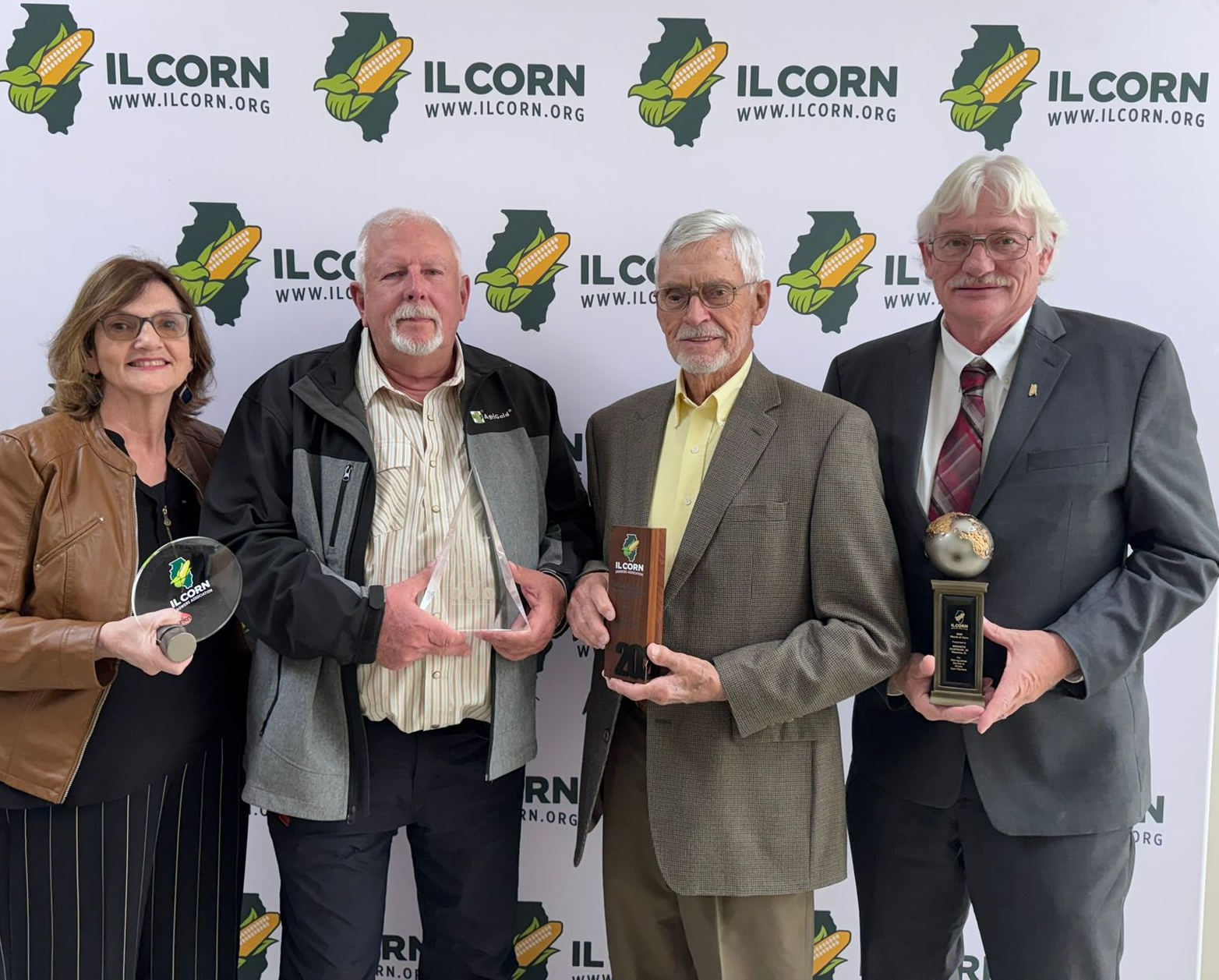
Phyllis Coulter at annual meeting
By Lindsay Croke • November 24, 2026
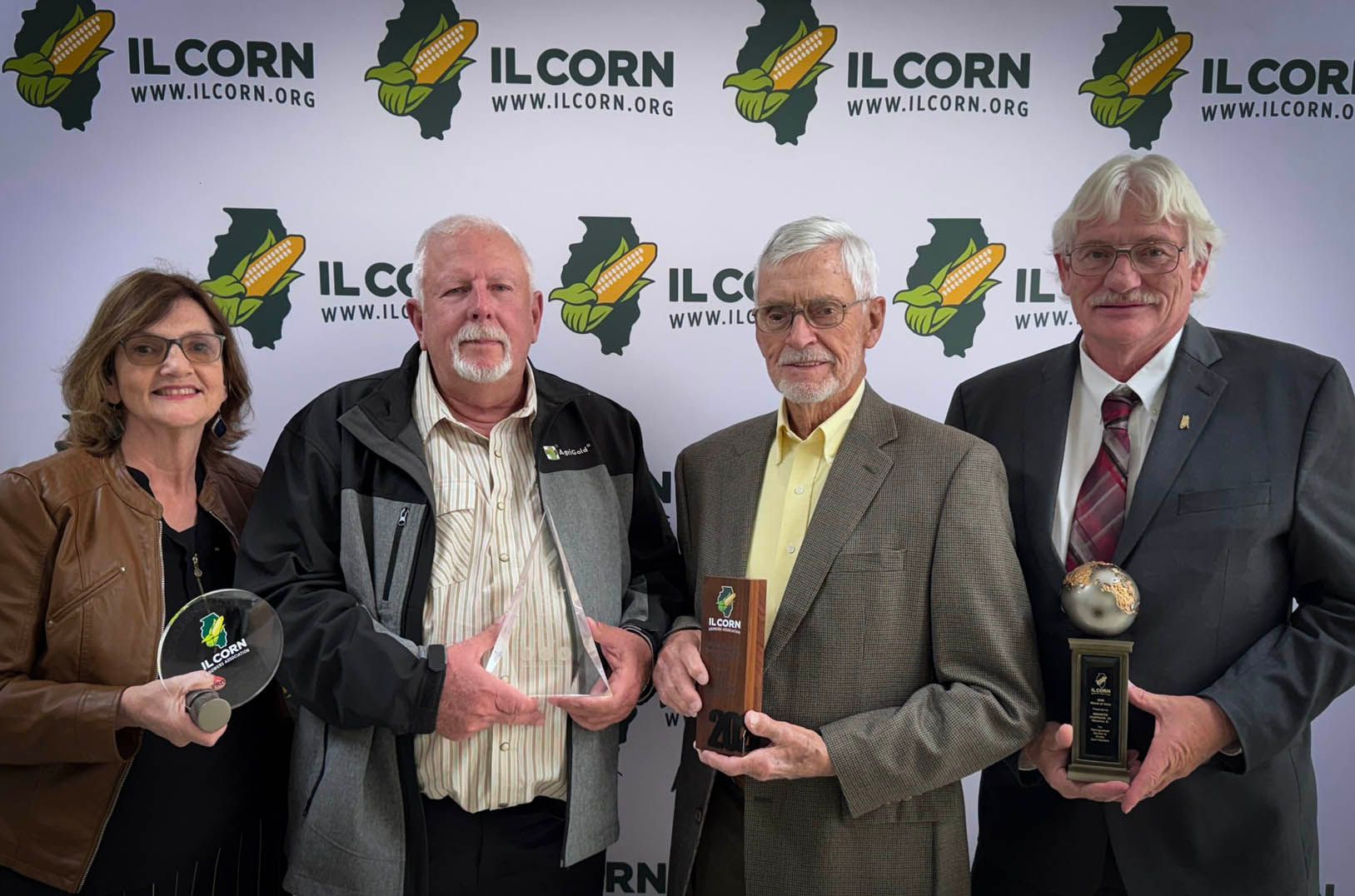
At November ICGA Annual meeting Phyllis Coulter was honored with receiving the media award for all of her work.
new ICGA leadership
By Lindsay Croke • November 24, 2026
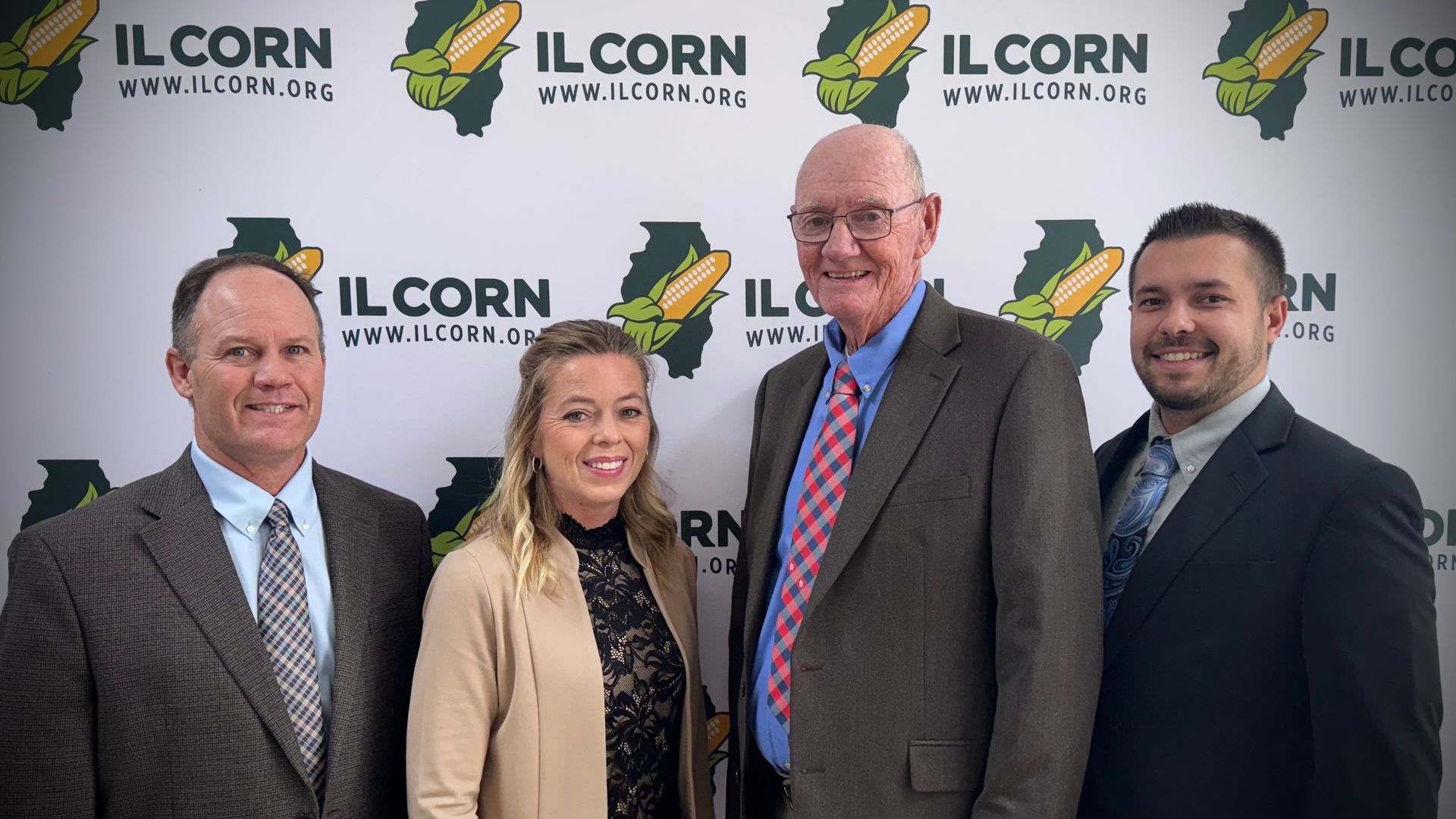
Don Guinnip, a farmer from Marshall, IL, has been elected president of the IL Corn Growers Association (ICGA) for 2026-2027 at their re-organizational meeting, which was held today immediately following the association’s annual meeting. Guinnip has served on the ICGA board since March 2016, most recently as vice president. He will continue his role as District 12 director for the duration of his term as president, representing corn farmer members in Clark, Coles, Cumberland, Crawford, Douglas, Edgar, and Jasper Counties. Joining Guinnip in leadership roles are Vice President Sarah Hastings of Sidney, Secretary Evan Marr of Jacksonville, and Treasurer Phil Fuhr of Taylor Ridge. The ICGA Exports Committee will be led by Chairman Chris Gould of Maple Park and Vice Chairman Mike Shane of Peoria. Elected to lead the Industrial Committee are Shane Gray of Waverly and Vice Chairman Dan Parker of Dwight. Grassroots Committee leadership for the coming year is Chairman Cliff Lane of Toulon and Vice Chairman Michael Houston of Golden. Four farmers were re-elected and will continue in their positions as directors. They are Ellen Rahn of Mount Carroll, Dan Parker of Dwight, Mike Shane of Peoria, and Chad Dillenberger of Valmeyer. Clint Gorden of Blue Mound was reelected to fill a two year At-Large Director term to represent all the corn farmers in Illinois. Wade Wilhour of Beecher City is newly elected to represent farmers in District 11 which includes Christian, Effingham, Fayette, Mongomery, and Shelby Counties. Learn more about the ICGA Board of Directors and the counties each director represents.
Joe Fritch
By Lindsay Croke • November 24, 2026
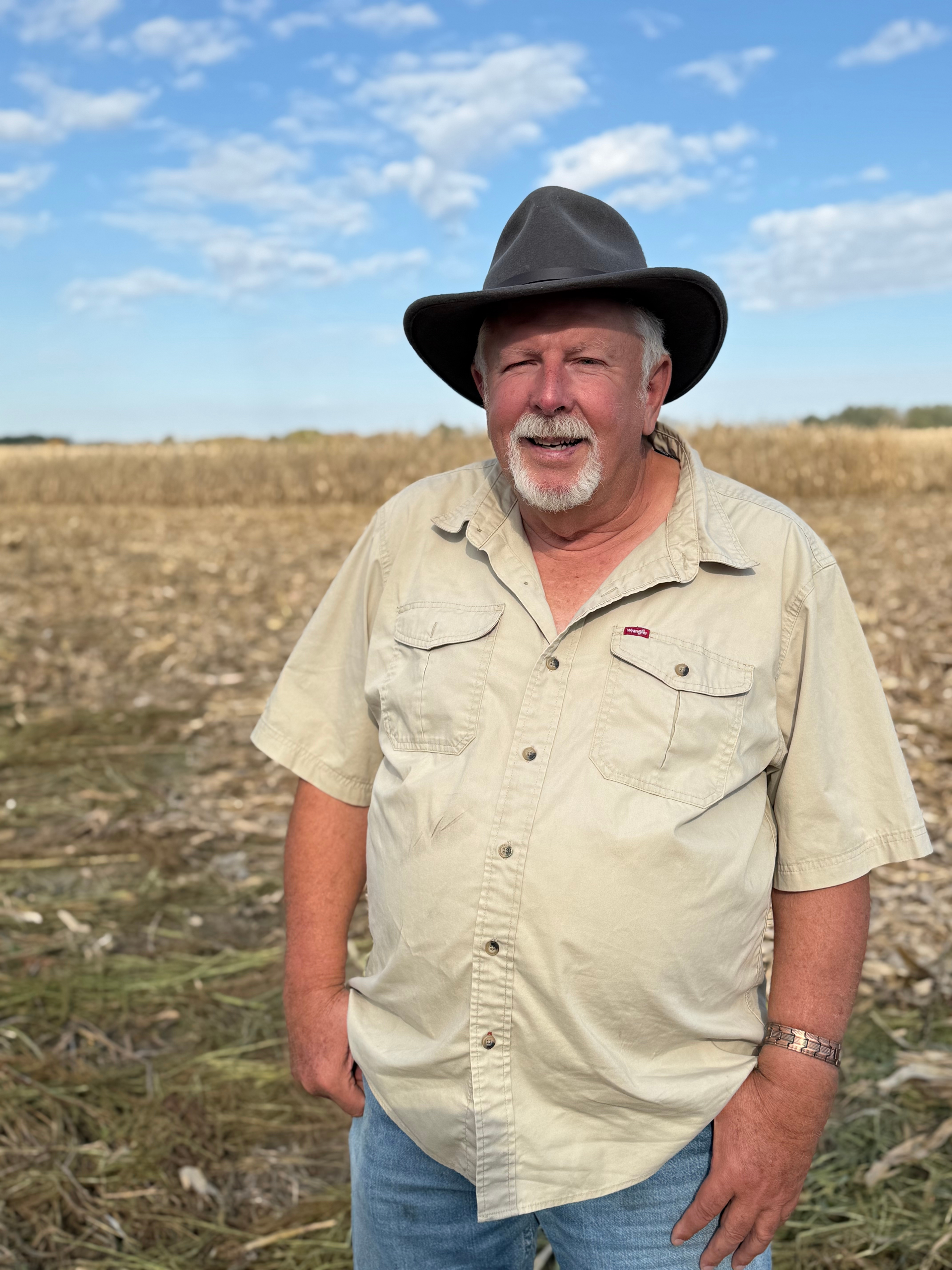
Illinois farmer Joe Fritch honored at IL Corn annual meeting.
Phyllis Coulter, Joe Fritch, Joe Murphy and Kenny Hartman
By Lindsay Croke • November 24, 2026
Illinois farmer Joe Murphy honored at ICGA Annual Meeting.
Show More