
Cornfield to Capitol: Farm Bill 2025

Lyndi Allen
September 4, 2025

Protecting Farmers, Driving Demand

Every five years, Congress negotiates the Farm Bill—the most important piece of legislation that shapes farmers’ bottom lines. For corn farmers, the 2025 Farm Bill will determine programs from crop insurance safety nets to market expanding programs for exports.


What’s at stake for corn in the Farm Bill?


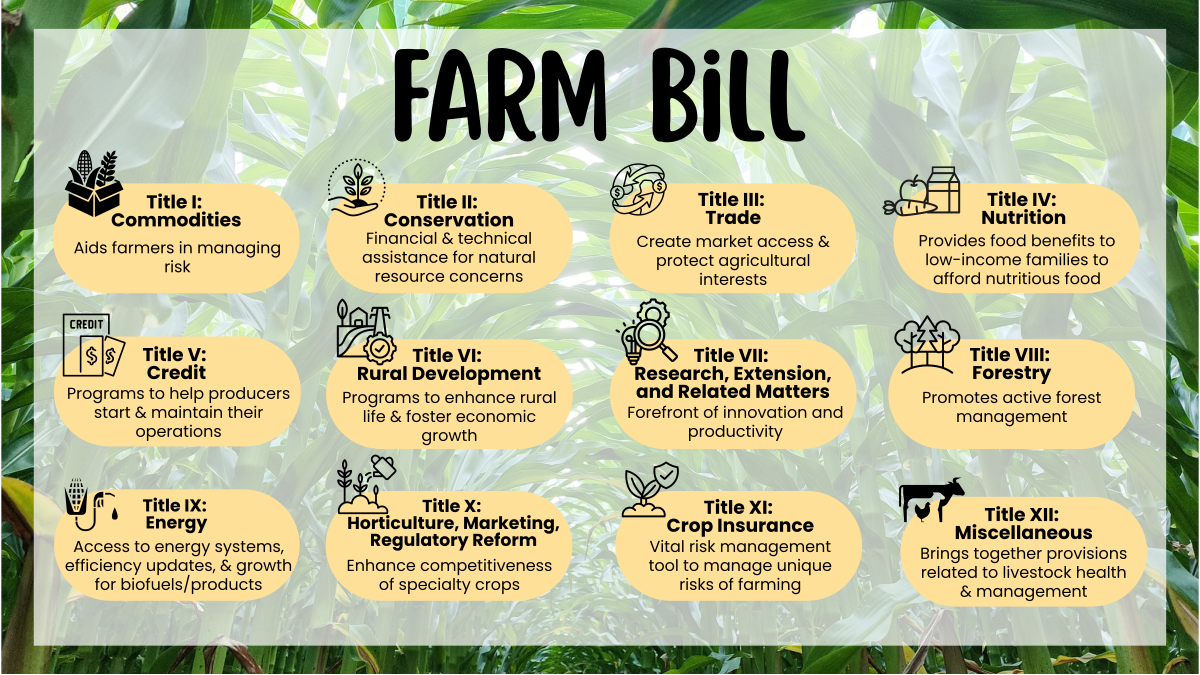
  • Crop Insurance: A key tool for risk management, especially in a low-price market
  • Conservation Programs: Opportunities for funding farming practices that align with Nutrient Loss Reduction Strategy (NLRS) while protecting flexibility for farmers
  • Trade and Market Development: Market Access Program (MAP)/ Foreign Market Development (FMD) programs that open international trade for corn and ethanol
  • Research and Innovation: Sustaining U.S. Department of Agriculture (USDA) research that benefits farmers on yields, sustainability, and new uses
  • Supplemental Nutrition Assistance Program (SNAP): Provides food benefits to low-income families to supplement their grocery budget so they can afford the nutritious food essential to health and well-being
Infographic outlining Farm Bill titles: commodities, conservation, trade, nutrition, credit, and more.

What is a “skinny” Farm Bill?


The House Agriculture Committee has been working on a “skinny” Farm Bill drafting process during August, and a markup is currently anticipated in late September or October. The House Agriculture Committee already has an outline for a Farm Bill from the version it voted on last year, but many of the policies will need updating.


As several of the priority items were addressed in the Reconciliation Bill, it is expected that this Farm Bill will have some, but more limited, spending provisions and will focus more on policy changes.


Lawmakers will still need to handle some critical issues in the Farm Bill, including how to address California’s Proposition 12 law, a hemp regulatory loophole created in the 2018 Farm Bill, and pesticide provisions.


Some legislators and experts say the farm bill is unlikely until 2026. The lawmakers have a tight deadline of just 14 legislative days to finalize funding before the end of the fiscal year.


How IL Corn is working to protect farmer priorities

  • Advocacy in D.C.
  • IL Corn Growers Association (ICGA) leaders meet with lawmakers and staff
  • Coalition advocacy efforts with other corn-states, National Corn Growers Association (NCGA), and industry partners
  • Farmer Voices
  • Encouraging grassroots involvement through calls, meetings, and testimonials


Your stories matter. Policymakers need to hear how the provisions under the Farm Bill affect your farm. Sign up to be in our Call to Action system to receive alerts when you need to tell your congressman how current legislation affects your farm.

Steve Koeller, Justin Moore, Shane Gray, Rep. Katie Stuart, Chad Dillenberger, and Dale Haudrich
By Lyndi Allen April 8, 2026
Representative Katie Stuart and Illinois farmers visited NCERC for a tour, to learn about its expansion plans, and interview Illinois farmers
thumbnail from farmdoc webinar
By Tara Desmond April 8, 2026
Researchers reveal most farmers operate from a single, highly consistent production plan and change it far less often than conservation advisors typically assume.
thumbnail of different videos
By Tara Desmond April 8, 2026
Catch up on IL Corn’s top stories and videos from Q1 2026, featuring farmers, yields, policy updates, and must-see moments from the field.
Shane and Marty
By Tara Desmond April 8, 2026
Farmer and past ICGA President Marty Marr shares insights on policy, conservation, and leadership and why staying involved matters in agriculture.
Randy thumbnail
By Tara Desmond April 2, 2026
An Illinois farmer shares lessons from 30 years of no-till, concerns about profitability, and opportunities for new corn demand in evolving markets.
Jared and his father
By Tara Desmond April 2, 2026
Illinois farmer Jared shares how 168 lbs of nitrogen produced 308 bu/acre and why cutting rates outperformed a high-input field by $200/acre.
Show More