
Dicamba Registration Pulled by Ninth Circuit Court

June 4, 2020
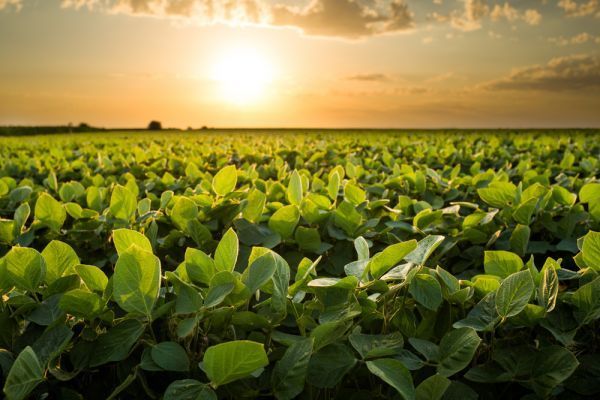
The sun is setting over a field of green plants.

June 10 Update:

Many questions still float around about the decision from the United States Court of Appeals for the Ninth Circuit in regards to usage of Dicamba. The Illinois Department of Agriculture compiled a FAQ resource to help guide farmers with questions they may have. 


June 5 Update: 

Late in the day yesterday, the Illinois Department of Agriculture (IDA) finished reviewing and interpreting the ruling of the Ninth Circuit Court. Following, their conclusion the Illinois Fertilizer & Chemical Association (IFCA) released the following statement.

 "Effective immediately, stop the use, sale and distribution of three Dicamba products in Illinois. IDA legal counsel has looked at the US 9th Circuit Court ruling on dicamba, and believes it clearly calls for the stop of use, sale and distribution of all uses of the three products: Xtendimax, Engenia and FeXapan effective immediately. The Tavium registration is not affected by this ruling. We are expecting a statement from IDA very soon but this is the situation in Illinois, and we ask for our members to abide by this determination and help communicate this serious message. More information with be forthcoming and we will communicate as soon as we have more details from IDA or USEPA on the management of product already in the supply chain."

 
We expect to hear more in the coming days from EPA and the industry but at this time growers are advised to work with their suppliers/retailers to come up with an alternative plan. This will continue to be an evolving situation and we will do our best to keep you informed.


Original Article:


Yesterday, the Ninth Circuit ordered the Environmental Protection Agency (EPA) to vacate registrations for 3 dicamba herbicides for use ontolerant soybeans and cotton. This could leave Illinois farmers who have already planted dicamba tolerant soybeans and planned to use the popular herbicide, scrambling for another plan.


Although most Illinois corn farmers also plant soybeans, the decision has another big implication for corn: this decision could set a precedent and threatens the established regulatory process for all protection tools.


The American Soybean Association promptly released a statement: The American Soybean Association (ASA) is disappointed by the 9th Circuit’s decision to overturn the Environmental Protection Agency’s dicamba registration approval. Farmers rely on EPA and the regulatory process to effect science-based determinations that allow them to use safe, efficient tools to responsibly manage their farms. ASA is reviewing the court’s decision to fully determine its repercussions on the soy industry, but regrets that the future of dicamba – a very effective weed management product when used responsibly – is on the line.


What happens next? The EPA can request a rehearing or appeal to the Supreme Court. The registrants (Bayer, BASF, and Corteva) are contemplating next steps, but have discontinued Dicamba use as of today, June 4. All parties wait for further guidance from EPA which is expected late on June 4 or on June 5.


The cutoff date to use Dicamba in Illinois is June 20, so many Illinois farmers impacted by later spring planting dates might not have been able to utilize the herbicide before June 20.

Baby with Corn Plastic Food Containers
By Pearl McDade June 12, 2026
Explore how corn is converted into PLA bioplastic for cups, food packaging, and 3D printing as demand grows for sustainable materials.
PCMthumbnail
By Tara Desmond June 11, 2026
PCM's 2026 Data Book, featured in this week's Prairie Farmer, shares 11 years of field data proving conservation and profitability go hand in hand.
By Tara Desmond June 11, 2026
How much do you know about the farmers who came before you and the decisions that still shape Illinois agriculture today? That's what University of Illinois student Lyndon Shi set out to explore during his internship with IL Corn . What began as an archival research project became a deeper look at the history of farmer leadership, innovation and advocacy in Illinois. While digging through university archives, Lyndon uncovered an undigitized manuscript from agricultural economist Harold Guither explaining the case for checkoffs. When he mentioned the discovery to IL Corn Director Rod Weinzierl, he got an unexpected response: "Oh yeah, I know him. We worked with him." It was a reminder that agricultural history isn't as distant as it may seem. Lyndon's research connected two eras of the IL Corn Growers Association: the original organization founded in the 1890s and the modern ICGA established in the 1970s. He learned how University of Illinois agriculture dean Eugene Davenport helped organize corn growers and sent professors across the state on "Corn Gospel Trains" to share the latest farming research. One story stood out in particular: the adoption of hybrid corn. Farmers who once judged corn by the appearance of the ear had to shift their focus to yield. Lyndon sees a similar transition today, as farmers increasingly balance yield with profitability amid rising input costs. "Illinois corn farmers are very good at organizing, and they are genuinely very grassroots," Lyndon said. "They've had a much more active role in shaping policy rather than just being on the receiving end." This Summer and Fall, Lyndon will travel to Taiwan on a federal scholarship to study food security. He'll do so with a new appreciation for Illinois agriculture's global connections, including Taiwan's longstanding role as an important trading partner. Watch the full conversation on IL Corn TV to hear Lyndon's research firsthand and discover how Illinois corn's history continues to influence the future.
Matt at USAPEEC Strategic Conference
By Tara Desmond June 11, 2026
IL Corn director Matt Raben was elected to USAPEEC's executive committee at the organization's 37th Annual Meeting this week.
Green world map with black curved arrows linking North America to Europe and Asia
By Lyndi Allen June 11, 2026
As one of the nation’s top agriculture exporters, Illinois ships corn to buyers across the globe—but where is it all going
Brian
By Tara Desmond June 11, 2026
Funk's Farm manager Brian Bangert explains the farm's 200-year history, the origins of Funk's G Hybrid, and how corn powers their cattle operation today.
Show More