High School

Hand holding a sprouting plant icon, symbolizing growth or sustainability

Ag Impact

Black outline icon of a desktop monitor showing text lines and a small image layout.

Lessons

Simple black line icon of 3 pieces of paper

Programming

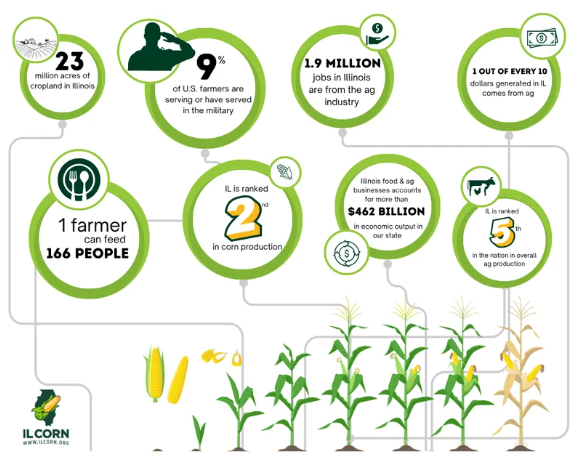
Green agricultural infographic with crop stats, farmer icons, and maize plants growing across the bottom.

High school

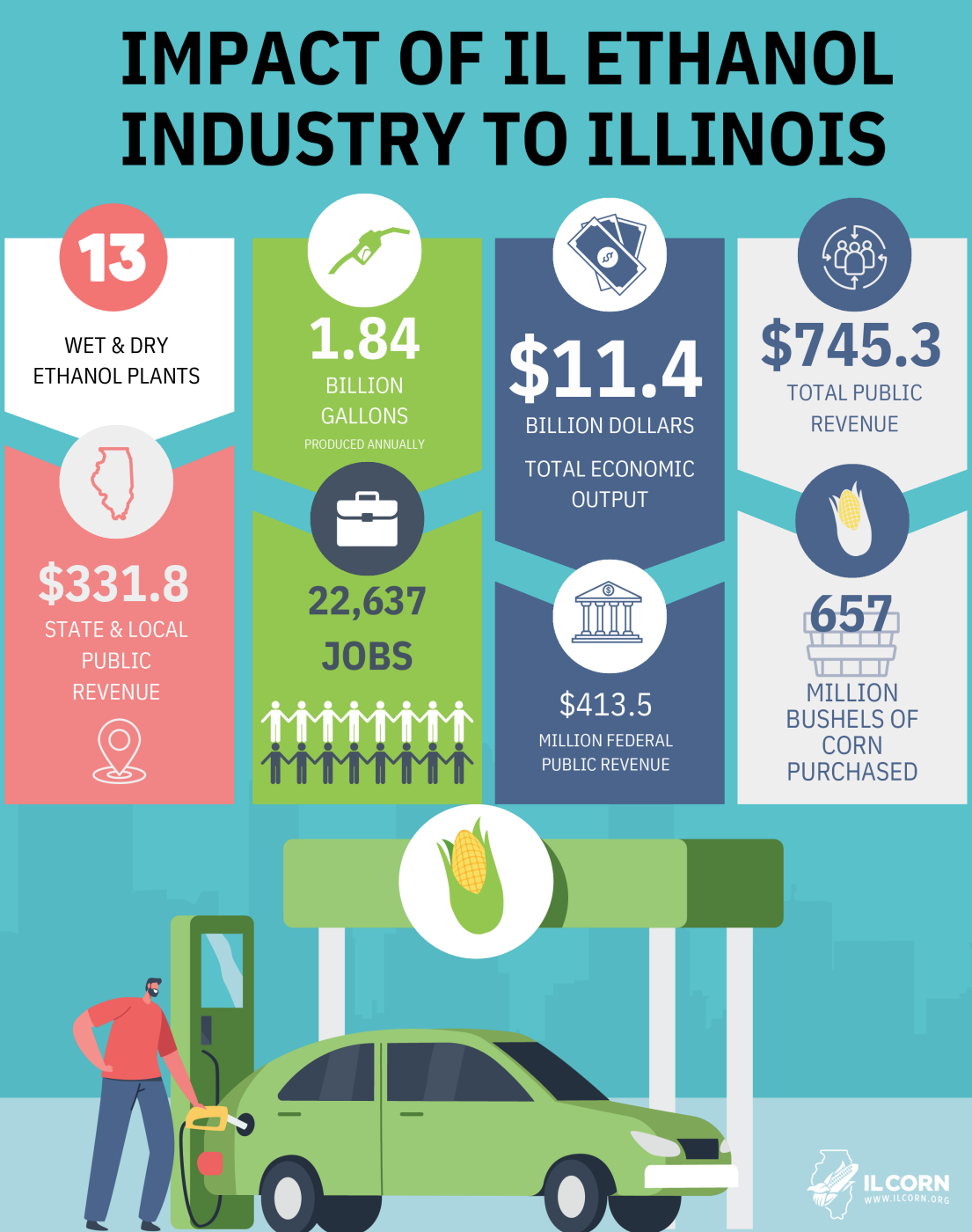
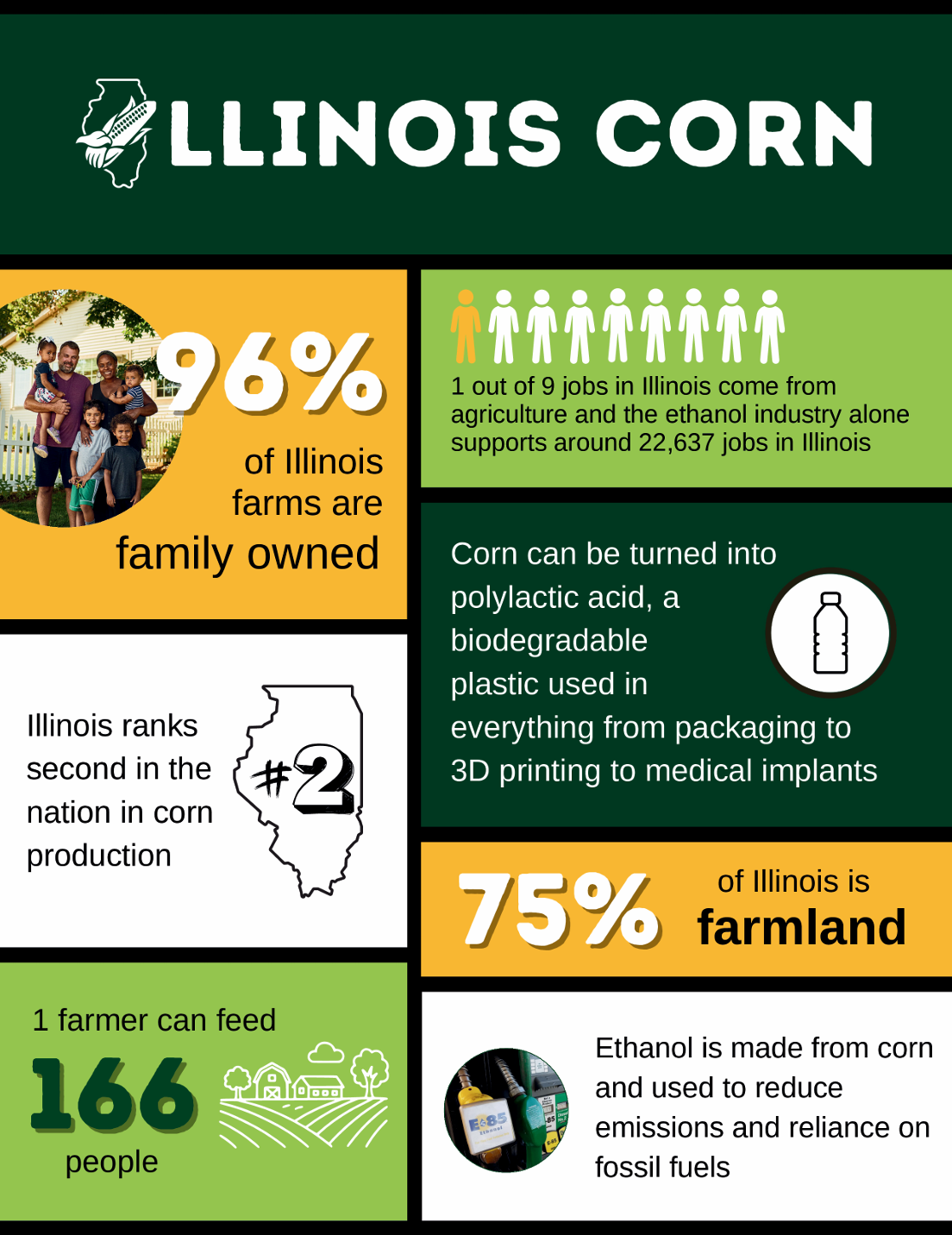
Learn about corn's impact across IL:

Infographic on ethanol industry impact in Illinois with fuel pump, car, and key economic stats.
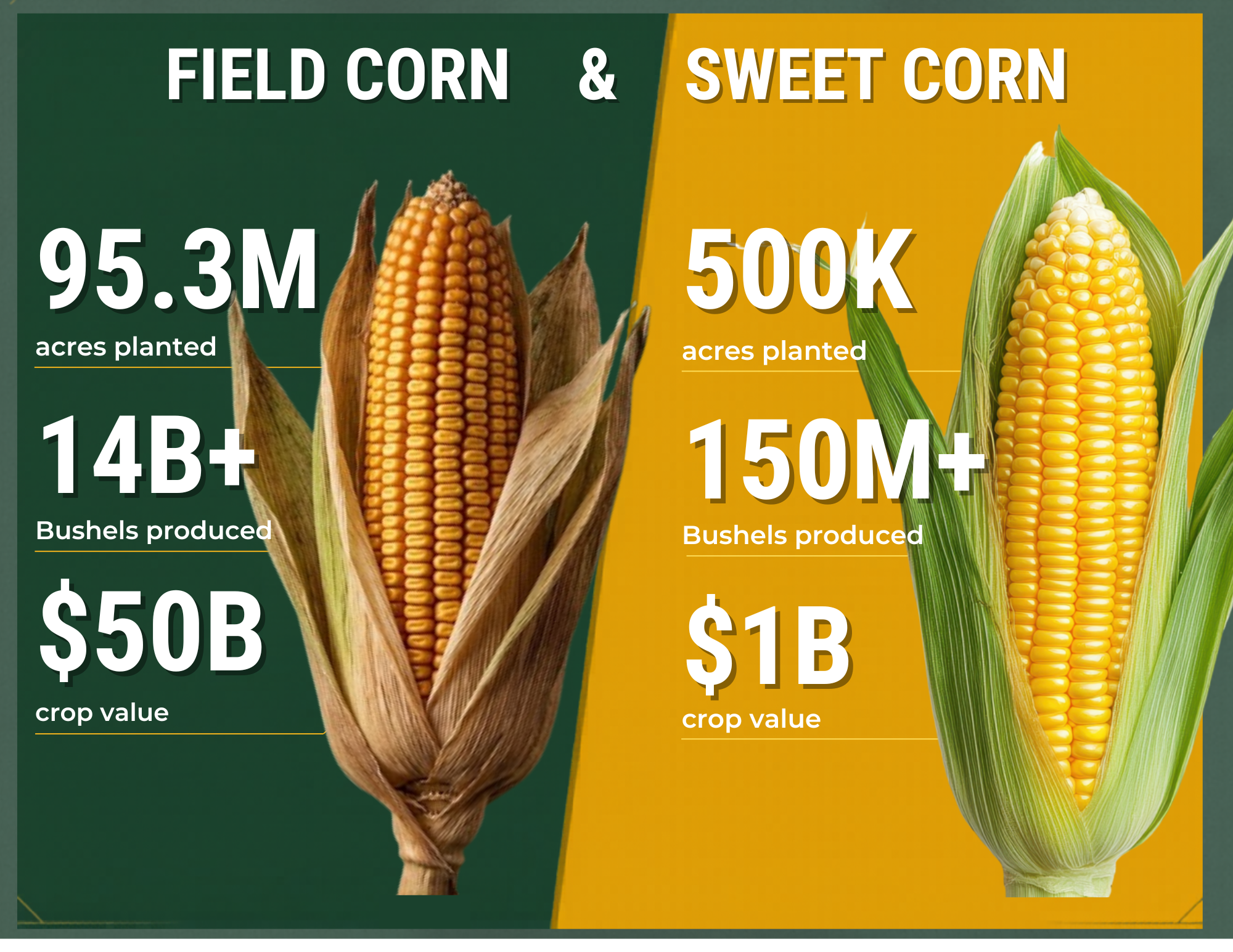
Field corn and sweet corn infographic with ears, acreage, bushels produced, and crop value stats
Illinois corn infographic with farm ownership, rankings, 75% farmland, and livestock feed facts

High School Lesson Plans

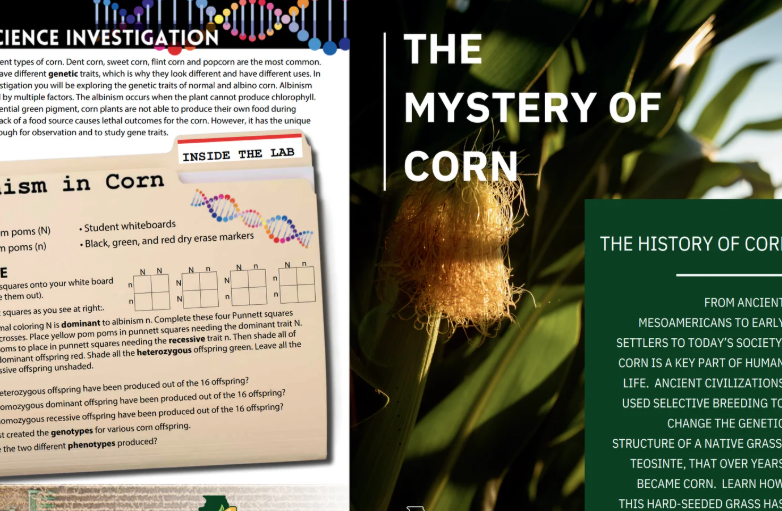
Science project cover on corn with diagrams and a green poster titled “The Mystery of Corn”

History & Mystery of Corn

This lesson explores how corn developed into the crop it is today. It discusses genetic traits & variances, corn's importance across the ages, careers in biotechnology, and GMOs.

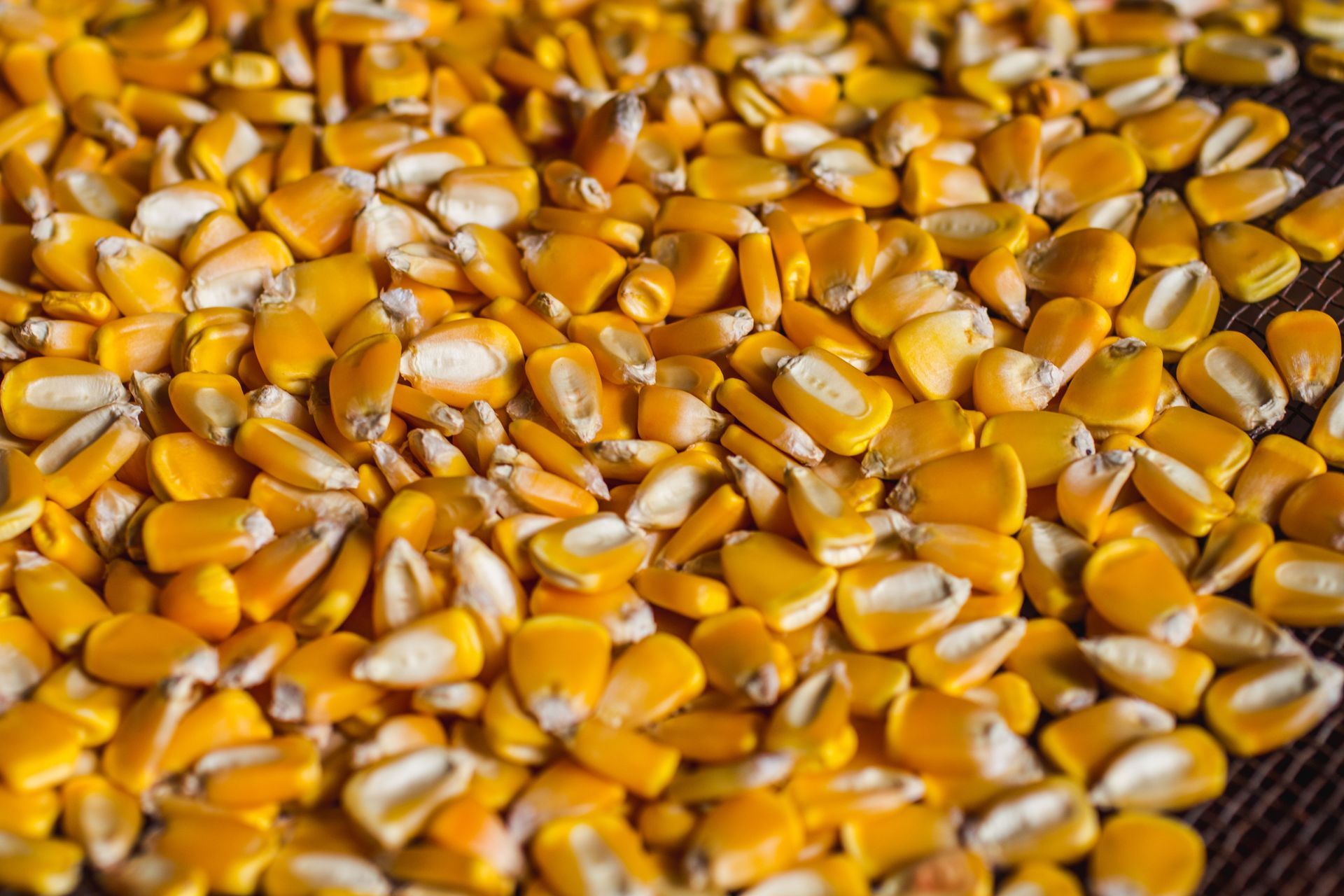
Close-up of bright yellow corn kernels piled together

Field & Sweet Corn Statistics

This lesson provides hands-on activities to compare the production statistics, acreage, and economic value of field corn versus sweet corn in the U.S. and Illinois.

Field corn vs sweet corn look and height difference in field

Field & Sweet Corn: Physical Differences

This multi-disciplinary lesson helps students distinguish between sweet corn and field corn through physical comparisons, hands-on paper crafts, and interactive math activities. 

Corn plastic cups and to-go boxes with mother and baby in background

Uses of Field Corn

This lesson focuses on the key differences between sweet corn and field corn. It discusses the diverse economic and industrial applications of field corn, including its use in livestock feed, ethanol production, global exports, and everyday manufactured goods.

Nourish the Future

Nourish the Future is a national education initiative created by science teachers for science teachers that bridges modern agricultural practices with K‑12 science education. Its primary aim is to cultivate a nationwide network of educators who use sound, science-based resources to spark critical thinking and to connect students with real-world agricultural science. Below is a comprehensive summary highlighting key aspects of the website that are particularly useful for agricultural education in middle and high school classrooms, or for farmers looking to educate non-farmers:


Curriculum and Educational Resources

Check mark

NGSS-Aligned Curriculum:
The website provides free, hands-on curriculum resources that are designed to meet the Next Generation Science Standards (NGSS).

Check mark

Topics Include:

Animal science, biofuels and bioproducts, biotechnology and food security, and soil, water, and sustainability.

Check Mark

Practical, Real-World Connections:

The curriculum is designed to translate complex scientific concepts into real-world applications. This makes abstract STEM topics accessible and relevant by showing students, for instance, how agriculture informs environmental stewardship and sustainable practices.