IL Corn Celebrates Farm Advocate Megan Dwyer's National Recognition in Young Leaders Competition

Tara Desmond
January 29, 2024
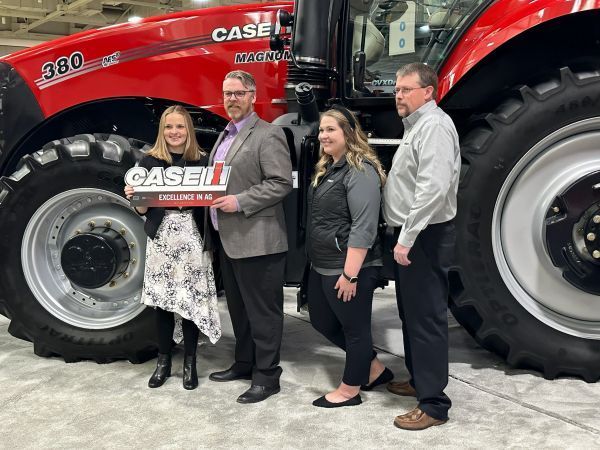
A group of people standing in front of a case tractor

Megan Dwyer, a valuable member of the IL Corn team, has clinched 4th place nationally in the American Farm Bureau Young Farmers & Ranchers Excellence in Agriculture competition. Megan's exceptional achievements reflect her dedication to agriculture, a passion cultivated through years of involvement with Farm Bureau.


In this Q & A, Megan provides insights into her experiences with the county Farm Bureau and Young Leaders, emphasizing her journey from high school and FFA to her active role in the Henry County Farm Bureau.


Megan's success is not a surprise to IL Corn, as her invaluable contributions to the team align seamlessly with her commitment to agriculture. As Megan reflects on her experiences and the things she cherishes about this achievement, it becomes clear that her passion for the industry is not just a job but a calling.

Q: Tell a little about your experiences with the county Farm bureau

A: Wanting to be engaged in agriculture after high school/FFA the logical choice was to be involved with Farm Bureau. I helped with Ag in the Classroom activities with the Iowa Farm Bureau while attending Iowa State and when I moved home became active with the Henry County Farm Bureau and Young Leaders. I served on the board, chaired the education committee, went on the Young Leaders industry tour to Florida, Leaders to Washington, Women’s Communication Bootcamp, and many other activities.


Q: What are a couple things you absolutely loved and will cherish about this experience?

A: For me it was a report card and checking in on what I’ve been able to do for the industry. I really hope the compilation of articles, stories, etc are something that my kids will someday look at and feel inspired to be an advocate and see the impact that can be made.


Q: How has working for IL Corn helped prepare you for this?

A: There is no doubt Farm Bureau gave me some training and leadership development opportunities right out of the gate that I’m not sure could be found elsewhere. It was then about using those resources and not just putting them up on a shelf. My role at IL Corn has let me engage on issues at the state and national level truly making a positive impact for Illinois farmers. Farmers are busy with their full-time jobs and most have no idea about the threats lurking around the corner when it comes to regulatory and policy proposals. I see my role as a buffer to make sure those threats never become a reality. IL Corn is a leader in the industry and staffed with dedicated people who are passionate about being at the table and working every day on behalf of our farmers and it’s a team I’m proud to be a part of.


Q: What’s one thing you’d want non-farmers to know about farmers like you who have multiple jobs?

A: The biggest thing is always we are people just like you. I have the same fears over inflation, rising costs of everything, keeping my kids safe, if I’m doing the whole parenting thing right. The difference is, I can help take away one of those burdens and that’s confusion and fear around traditional farming practices and safety of our food. Just like I rely on a tax expert every year to take away my fears of an audit, farmers should be the first stop to find out the truth. There are less farmers and that also relates to less people in certain positions making decisions impacting farmers with production ag background. While many farmers have off-farm jobs in varying industries, I feel I have a responsibility to be an advocate for farmers and the industry.


Q: What’s one thing you’d want to tell a farmer who isn’t involved with volunteer leadership roles if they’re thinking about getting involved?

A: We need you. I get it, saying yes to one thing is saying no to another. I have 4 young kids, the full-time job, farm, a side business, stay involved with my church but if something is important you make the time. Not all roles take a tremendous amount of time, start small, decide where your passion is- policy, consumer engagement, kids, social media, working behind the scenes just sharing your expertise on an issue. Once you figure out what excites you, find the people and organizations willing to invest in you and those strengths to step up and be an advocate. If you really don’t think being involved is for you, offer to see what you can do for your neighbor, friend, or family member who is taking that added responsibility off the farm to serve and help lighten their load at home/on the farm. 


Interested in getting involved with IL Corn leadership or volunteer opportunities? E-mail us.
Lou Lamoreux Farm
By Tara Desmond September 3, 2026
Livestock farmer Lou Lamoreux talks about his farming operation.
captain Cornelius at shake it up cocktail lounge
By Tara Desmond September 3, 2026
4.29M bushels of U.S. corn fueled beverage alcohol production in July 2026 alone — up 54% from July 2025. Corn's in your Labor Day toast!
aerial view of short corn
By Tara Desmond September 3, 2026
Illinois farmer Steve Fourez tests short stature corn against conventional hybrids, exploring yield potential and late-season management benefits.
USDA building
By Lyndi Allen September 3, 2026
This week, U.S. Secretary of Agriculture Brooke L. Rollins announced the U.S. Department of Agriculture (USDA) Data Modernization Plan to put Farmers First, reduce unnecessary burdens on producers, and improve the timeliness, accuracy, and usefulness of the data that informs agricultural decisions. USDA data informs crop and livestock estimates, risk-management tools, disaster assistance, and critical business decisions made by farmers, ranchers, agribusinesses, researchers, and policymakers. In February 2026, Secretary Rollins issued a Request for Information seeking feedback on the opportunities, challenges, and emerging areas in USDA data. That feedback helped shape the USDA Data Modernization Plan and its four pillars: Modernize the Data Reporting Experience: USDA will expand use of administrative data, improve mobile access to surveys, explore opportunities to use prefilled information where appropriate, and strengthen coordination across the Department. These changes will reduce duplicative requests and limit the amount of time producers spend reporting information. Enhance Acreage and Yield Estimation: USDA will conduct a pilot to evaluate the use of improved satellite imagery, geospatial tools, crop models, and other emerging technologies combined with essential producer-reported information to enhance acreage and yield estimations. USDA will also assess the use of optional field inputs to enhance and ground truth yield estimates and continue advancing yield research through collaboration with agricultural partners and land-grant universities. Integrate Data and Technology Platforms: USDA will modernize its technology infrastructure, expand secure data-sharing capabilities, and evaluate the responsible use of tools such as artificial intelligence and machine learning. Better integrated systems will improve efficiency, reduce duplication, and allow USDA to produce more timely and useful information. Expand Trust and Transparency with Producers: USDA will protect producer privacy, clearly explain why information is requested and how it is used, and create additional opportunities for producers to provide feedback. USDA will also improve communication surrounding reports, methodologies, response rates, and data limitations. USDA will begin implementing actions under the plan immediately and will continue engaging farmers, ranchers, and agricultural stakeholders throughout the process. The Department will evaluate new approaches carefully, protect privacy and confidentiality, and publish clear methodologies and supporting information to maintain the integrity of USDA’s agricultural statistics. See USDA’s Full Data Modernization Plan
Cornfield beside a dirt path under a blue sky with wispy clouds
By Lyndi Allen September 2, 2026
EPA has granted 1.76 billion RIN exemptions to small refiners, raising concerns among farmers and biofuel producers about the potential impact on demand for renewable fuel.
Weekly News
By Lyndi Allen August 28, 2026
News from IL Corn for week ending 8/28/26
Show More