IL FFA Chapters Win Prizes While Learning About Farming Conservation

January 3, 2023
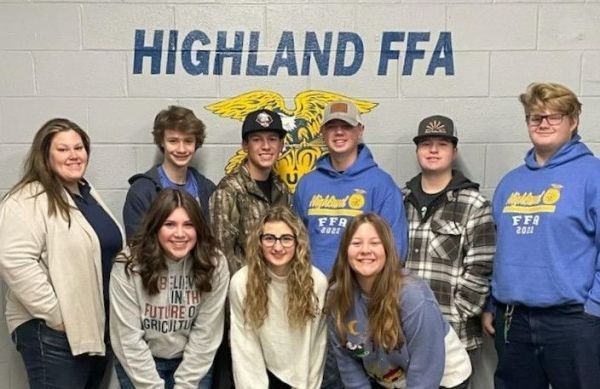
A group of people standing in front of a wall that says highland ffa

Announcing the Winners

1st Place - Highland FFA Chapter

Claire Geiger, the FFA Advisor commented, "The Water Testing Initiative provided a great opportunity for much needed discussions to take place within my classroom. This activity provided a perfect chance to talk with students and inform them about nutrient loss reduction strategies, the 4 R's, as well as eutrophication leading to potential hypoxia zones. Participating led to exposing students to various career pathways, whether they had production backgrounds or not."

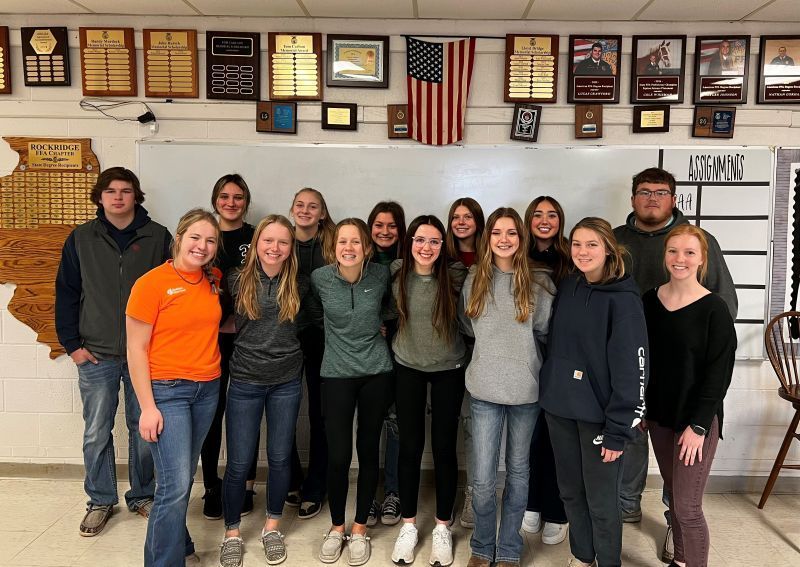
2nd Place - Rockridge FFA Chapter

"We are so grateful for opportunities such as this initiative that get agriculture students involved in real agriculture issues! This initiative has helped students to start building their skillset and growing their minds, so that hopefully one day, they can be involved in providing real solutions. Not only did our BSAA (Biological Science Applications of Ag) students learn how to apply the scientific method to a real-world scenario, they had the opportunity to experience the impacts of nutrient loss on water quality, how conservation practices in agriculture impact nutrient loss, and how all of that together impacts them as agriculturalists and consumers. Overall, we are excited to use their findings and apply some of the best management practices to our own FFA test plot," said Kirsten Kapraun, Ag teacher & FFA advisor for the chapter.


Taylor Dieterich, a BSAA student, commented, "This was a great experience for my class. This project not only had an impact on our learning, but also taught us about the impact nitrogen loss has on agriculture. You learn new things every day in ag!"

A group of people are posing for a picture in a room.
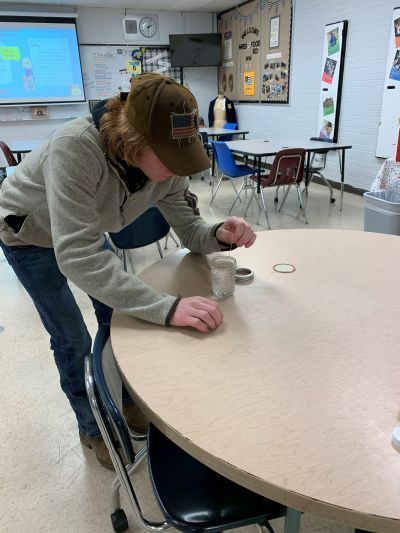
A man in a hat is reaching for a cup on a table

3rd Place - Somonauk Leland Sandwich FFA Chapter

For this chapter a student Cody Peterson did the majority of work because of his interest in this topic. He is taking the lead with his teacher to develop programming to use in their ag program, school district, and community to teach about water pollution and watersheds (with a focus on showcasing non-point source pollution such as fertilizer). They plan to use the award money to purchase an Enviroscape model to utilize for these efforts. Even after this project Cody plans to follow up with local farmers that were involved.
 

“One thing we discovered through this project was that high school students have very little awareness of water quality, water availability, or how very connected we all are by our water resources. We also discovered many farmers in our area utilize at least one conservation practice at their farm,” said Jenny Wold, teacher in Somonauk.

4th Place - Southeastern FFA Chapter

The entire chapter agreed, "This project taught us the importance of teamwork, as well as the importance of opening your mind to new areas of information that we may have not known much about. The impact our local farmers have on our world's ecosystem is a large one, improving our management practices and nitrogen reducing practices is absolutely vital to keeping our water clean." 

This chapter also had the opportunity to expand their knowledge of other management practices after the experiment was done. They were able to meet with companies like Pivot Bio to investigate other practices that are becoming more known.


“This collaboration with IL Corn has allowed us to bring principles of conservation agronomy into classrooms around the state. We look forward to watching this effort continue to build in Illinois, while showing students that corn and soybean farmers are united in our efforts to implement nutrient loss reduction strategies across Illinois acres,” said Jennifer Jones, Research Agronomist at Illinois Soybean Association.

A group of people are posing for a picture in a room.

In April, IL Corn and Illinois Soybean Association partnered up on a hands-on learning opportunity for FFA chapters in Illinois called the Water Testing Initiative Challenge.
 

This new educational program challenged students to sample water from different areas on the farms, then analyze that data with a report that included improvement suggestions and management changes with explanations on why it should change.
 

“We were excited with the participation and the opportunity to teach the next generation of agriculturalists a little bit about the IL Nutrient Loss Reduction Strategy. Learning how to identify possible problems and think through solutions is something they will use in their future endeavors. Soil health and environmental stewardship are crucial to the future of production agriculture,” says Megan Dwyer, Director of Conservation and Nutrient Stewardship at IL Corn.

Baby with Corn Plastic Food Containers
By Pearl McDade June 12, 2026
Explore how corn is converted into PLA bioplastic for cups, food packaging, and 3D printing as demand grows for sustainable materials.
PCMthumbnail
By Tara Desmond June 11, 2026
PCM's 2026 Data Book, featured in this week's Prairie Farmer, shares 11 years of field data proving conservation and profitability go hand in hand.
By Tara Desmond June 11, 2026
How much do you know about the farmers who came before you and the decisions that still shape Illinois agriculture today? That's what University of Illinois student Lyndon Shi set out to explore during his internship with IL Corn . What began as an archival research project became a deeper look at the history of farmer leadership, innovation and advocacy in Illinois. While digging through university archives, Lyndon uncovered an undigitized manuscript from agricultural economist Harold Guither explaining the case for checkoffs. When he mentioned the discovery to IL Corn Director Rod Weinzierl, he got an unexpected response: "Oh yeah, I know him. We worked with him." It was a reminder that agricultural history isn't as distant as it may seem. Lyndon's research connected two eras of the IL Corn Growers Association: the original organization founded in the 1890s and the modern ICGA established in the 1970s. He learned how University of Illinois agriculture dean Eugene Davenport helped organize corn growers and sent professors across the state on "Corn Gospel Trains" to share the latest farming research. One story stood out in particular: the adoption of hybrid corn. Farmers who once judged corn by the appearance of the ear had to shift their focus to yield. Lyndon sees a similar transition today, as farmers increasingly balance yield with profitability amid rising input costs. "Illinois corn farmers are very good at organizing, and they are genuinely very grassroots," Lyndon said. "They've had a much more active role in shaping policy rather than just being on the receiving end." This Summer and Fall, Lyndon will travel to Taiwan on a federal scholarship to study food security. He'll do so with a new appreciation for Illinois agriculture's global connections, including Taiwan's longstanding role as an important trading partner. Watch the full conversation on IL Corn TV to hear Lyndon's research firsthand and discover how Illinois corn's history continues to influence the future.
Matt at USAPEEC Strategic Conference
By Tara Desmond June 11, 2026
IL Corn director Matt Raben was elected to USAPEEC's executive committee at the organization's 37th Annual Meeting this week.
Green world map with black curved arrows linking North America to Europe and Asia
By Lyndi Allen June 11, 2026
As one of the nation’s top agriculture exporters, Illinois ships corn to buyers across the globe—but where is it all going
Brian
By Tara Desmond June 11, 2026
Funk's Farm manager Brian Bangert explains the farm's 200-year history, the origins of Funk's G Hybrid, and how corn powers their cattle operation today.
Show More