
Illinois Air Quality: Where Corn Fits Into the Picture


By Aerterra and Tara Desmond • October 29, 2026

A 2026 analysis published by Aerterra ranks Illinois 48th among the 50 states and Washington, D.C. for air quality, using a population-weighted average of 2023 EPA monitoring data. Illinois’s figure was 50.4, behind Arizona, Nevada and New Mexico.  That places it among only four states above the "Good" threshold, driven largely by the Chicago metro area's weight in the state average.


Outdoor air quality index (AQI )is only one part of the air-quality picture. EPA says Americans spend approximately 90% of their time indoors and that concentrations of some pollutants are often two to five times higher indoors than typical outdoor concentrations. Source control, ventilation and appropriate filtration can all help reduce indoor exposure.


Corn connects to this story in two different ways. Aerterra is using corn-derived PLA in residential HVAC filters, while corn ethanol can reduce lifecycle greenhouse-gas emissions and petroleum use compared with gasoline.


TLDR:

  • Illinois's average AQI is 50.4, ranking 48th of 51 and landing in the "Moderate" category
  • Only Arizona, Nevada, and New Mexico rank worse; Illinois is the only Midwestern state in the bottom five
  • The EPA estimates indoor air is typically 2 to 5 times more polluted than outdoor air, and Americans spend about 90% of their time indoors
  • U.S. households use an estimated 500 million air filters per year, a market where corn-based PLA media is now competing with petroleum-based materials
  • Illinois families can check real-time local readings at AirNow.gov


The numbers at a glance

Measure Figure
Illinois average AQI (2023 EPA data) 50.4 ("Moderate")
Illinois national rank 48th of 51
States/D.C. with a "Good" average AQI 47 of 51
Indoor air pollution vs. outdoor (EPA estimate) Typically 2 to 5x higher
Share of time the average American spends indoors Roughly 90%
Air filters used by U.S. households annually An estimated 500 million

Why does Illinois rank so low

The AQI tracks major pollutants, including ground-level ozone and fine particulate matter (PM2.5), on a 0-to-500 scale. Illinois sits just above the "Good" line at 50.4, in "Moderate" territory. The state figure is population-weighted, meaning the Chicago metro area, with its traffic density and industrial activity, carries significant weight in the average. The American Lung Association's State of the Air report has consistently ranked the Chicago metro among the more challenged regions for ozone.


Downstate readings are generally more favorable. Conditions vary by county and by season, so the state average tells only part of the story. Real-time local readings are available at AirNow.gov.


For the roughly 1 in 13 Americans living with asthma, according to the CDC, these numbers shape daily decisions. For farm families who spend far more time outdoors than the average American, they can matter even more.


The bigger surprise: the air inside

Here is the finding most people miss. Even in a state ranked 48th, outdoor air quality is usually not the biggest air quality issue an Illinois family faces. The EPA estimates that indoor air is typically 2 to 5 times more polluted than outdoor air because homes trap pollutants from cooking, cleaning products, pet dander, dust, and building materials and then recirculate them through the HVAC system.


With Americans spending about 90% of their time indoors, the filter in the furnace often does more for the air a family actually breathes than the state's outdoor ranking suggests. The Department of Energy recommends checking that filter monthly during heavy-use seasons and replacing it regularly, typically every 60 to 90 days, depending on the home. Industry groups like ASHRAE treat filtration in the MERV 8-13 range as a core tool for indoor air quality.


Where Illinois corn comes into the home

American households use an estimated 500 million air filters a year, and nearly all are made from petroleum-based synthetic materials. That is beginning to change, and corn is the reason.


Corn starch can be fermented into lactic acid and converted into PLA, a renewable plant-based polymer produced at a commercial scale by companies like NatureWorks and verified through the USDA BioPreferred program. Aerterra, a winner of the National Corn Growers Association's Consider Corn Challenge, spins corn-based PLA into nanofiber filter media and manufactures HVAC filters in the United States in the same MERV 8, 11, and 13 ratings consumers already know.


The demand structure is what makes this new use notable for growers. Filters are replaced every 1 to 3 months in nearly every home with forced-air heating or cooling, so each household that switches represents recurring corn demand rather than a one-time sale. Illinois's air quality challenge is largely urban and industrial, but the crops grown in Illinois fields are now part of how families address the air inside their homes. 


Three things Illinois families can do this week

  1. Check the filter. If you cannot remember the last time you changed it, it is likely overdue. A clogged filter recirculates the particles it should be catching, forcing the system to work harder.
  2. Match the MERV rating to the household. MERV 8 covers everyday dust and pollen; MERV 11 adds pet dander and finer smog particles; and MERV 13 captures fine particulate and smoke, which matter most for allergy and asthma sufferers. Check your system's specifications before upgrading, as some systems handle higher ratings better than others.
  3. Watch the local number, not just the state's. Illinois's 50.4 average hides significant county-to-county differences. AirNow.gov shows real-time readings by ZIP code.


Corn's other air-quality connection: ethanol

The connection between corn and air quality doesn't stop at the furnace filter. Ethanol made from corn is also part of the transportation sector's efforts to reduce emissions and improve fuel performance. When blended into gasoline, ethanol can replace a portion of petroleum-based fuel while providing a domestically produced, renewable alternative. Corn-based ethanol has also been shown to have significantly lower greenhouse gas emissions than petroleum-based fuel.


For Illinois, that connection is especially significant. The state has 14 ethanol plants that employ more than 22,000 people and generate $11.4 billion in economic output. Illinois corn farmers supply the feedstock for this industry, creating a direct connection between the state's corn fields, rural communities and the fuel used by drivers across the country.


Corn’s air connection is broader than it first appears: corn can become a renewable transportation fuel through ethanol and a renewable material for filtration through PLA. In both cases, Illinois corn is contributing to technologies and products designed to address environmental challenges, while creating jobs and economic activity here at home.


Frequently Asked Questions

  • Where does Illinois rank for air quality in 2026?

    Illinois ranks 48th out of the 50 states and Washington, D.C., based on 2023 EPA monitoring data compiled in Aerterra's 2026 Air Quality by State report. Its population-weighted average AQI of 50.4 falls in the "Moderate" category, making Illinois one of only four states above the "Good" threshold.

  • How does ethanol fit into the corn and air-quality story?

    Corn is used to produce ethanol, a renewable fuel that is blended into gasoline and used in vehicles across the country. Ethanol can reduce the amount of petroleum-based gasoline needed and has a lower lifecycle carbon intensity than gasoline, although the total environmental benefit depends on how the corn is produced and the fuel is made and used. For Illinois, one of the nation's largest corn-producing states, ethanol provides another important connection between the state's corn crop and efforts to reduce transportation-related emissions.

  • What is the AQI, and what counts as good?

    The Air Quality Index measures major pollutants, including ozone and fine particulate matter, on a 0-to-500 scale. Readings from 0 to 50 are "Good," and 51 to 100 are "Moderate." Illinois's annual average of 50.4 sits just above the Good line, though daily readings vary widely by location and season.

  • Why is Illinois's air quality worse than that of neighboring states?

    The state average is population-weighted, so the Chicago metro area's traffic and industrial activity carry substantial weight. Downstate air is generally more favorable. Local conditions should be checked using real-time tools like AirNow.gov.

  • Is indoor air really worse than outdoor air?

    Often, yes. The EPA estimates indoor air is typically 2 to 5 times more polluted than outdoor air because homes trap pollutants from cooking, cleaning, pets, and dust, then recirculate them. Since Americans spend about 90% of their time indoors, indoor filtration usually affects daily exposure more than outdoor filtration does.

  • How often should home air filters be replaced?

    Most filters should be replaced every 60 to 90 days, though homes with pets, allergies, or heavy HVAC use may need to be changed more frequently, every 30 days or so. The Department of Energy recommends checking filters monthly during peak heating and cooling seasons. Timing varies by system type and filter rating.

  • How is corn used to make air filters?

    Corn starch is fermented into lactic acid, which is then converted into PLA, a renewable plant-based polymer. The PLA is spun into fine fibers that form filter media, replacing petroleum-based synthetics. Aerterra manufactures these filters domestically in MERV 8, 11, and 13 ratings using U.S.-grown corn.

  • What does this mean for Illinois corn growers?

    Corn’s role in air-quality and emissions solutions extends beyond one product. Ethanol creates demand for corn as a renewable transportation fuel, while corn-based PLA creates opportunities for renewable materials such as air-filter media. Both uses build demand for corn, which strengthens the corn market and the Illinois economy. Together, they show how Illinois corn can move beyond traditional markets and become part of products and technologies addressing energy, emissions and indoor air quality.


Not a member?

Become one today!

SHARE THIS

Latest Posts

group at pork power event
By Tara Desmond • November 18, 2026
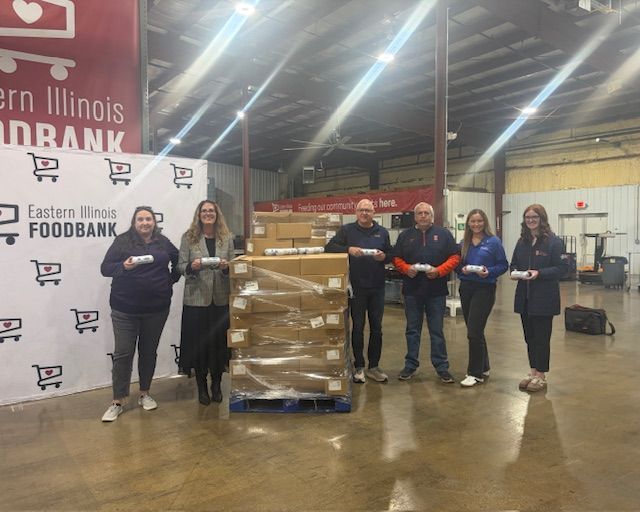
IL Corn joins Pork Power partners to deliver pork to Eastern Illinois Foodbank, part of 101,000+ pounds donated to Illinois food banks this year.

IL Corn and Agriculture Organization Partners
By Lyndi Allen • November 18, 2026
IL Corn joined agricultural partners at the Latino Caucus Gala to celebrate Latino contributions to Illinois agriculture and build relationships with state and federal leaders.
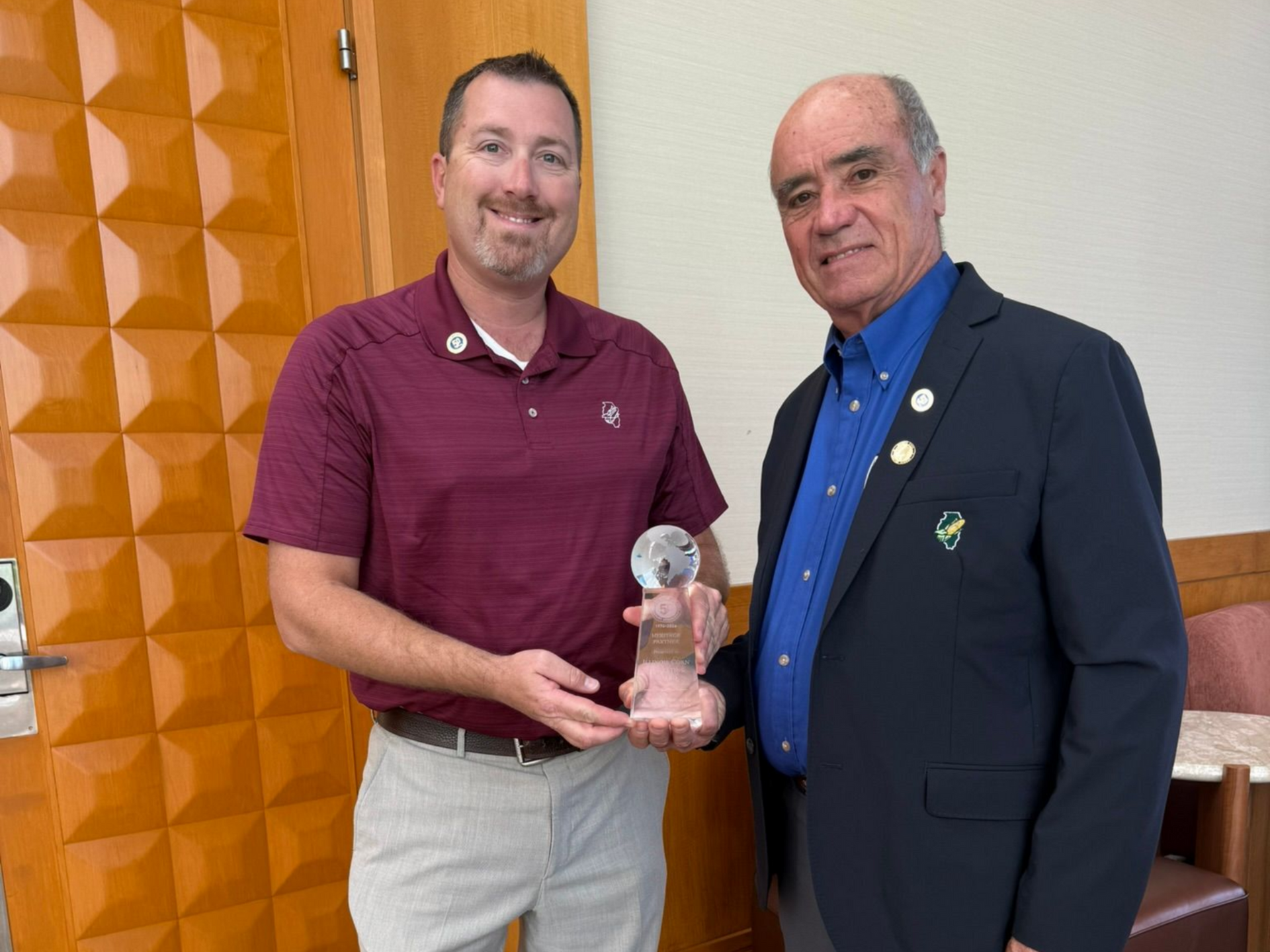
John Klemm and Dale Haudrich Receive Award
By Lindsay Croke • November 17, 2026
In 2025, beef and pork exports accounted for 70.31 million bushels of Illinois corn usage, demonstrating the value of a system that promotes U.S. red meat around the world. By creating demand for beef and pork exports, often by marketing underutilized cuts and maximizing value of the entire animal, the U.S. Meat Export Federation (USMEF) helps strengthen markets for livestock and corn farmers alike. This year, USMEF celebrates its 50th anniversary. As a longtime partner of the Illinois Corn checkoff, the organization continues to play a critical role in expanding global opportunities for U.S. agriculture. During the USMEF Strategic Planning Conference and 50th Anniversary Celebration, Illinois corn farmer leaders had the opportunity to reflect on five decades of export growth while exploring what the next 50 years could hold for the industry. Five Decades of Export Growth Since USMEF was founded in 1976, the U.S. pork and beef industries have experienced dramatic growth in production, efficiency, and export demand. The share of pork production exported has risen from just 3.3% in 1976 to 26.0% in 2025, while beef exports have increased from 0.5% to 10.3% of total production. At the same time, production levels and animal weights have climbed, creating greater demand for corn. Perhaps most impressive is the value of exports. Since 2010, the export value of U.S. beef and variety meats has increased 129%, while the export value of U.S. pork and variety meats has climbed 76%.

Lindsay and Rachel thumbnail
By Tara Desmond • November 16, 2026
Would you know if a farmer you care about was quietly struggling? Farm SOS counselor Rachel Brown shares the warning signs.

thumbnail of Lindsay and Brooke
By Tara Desmond • November 12, 2026
NCERC research fellow Brooke Wagner shares how IL Corn-funded research at SIUE is creating new uses for Illinois corn. Watch on IL Corn TV.

thumbnail of Collin and Jared on Brownfield Ag
By Tara Desmond & Brownfield Ag • November 12, 2026
IL Corn’s Collin Watters tells Brownfield how trade team visits, ethanol demand and USMCA help move Illinois corn to markets worldwide.

U.S. Capitol building under a blue sky with dramatic clouds in Washington, D.C.
By Lyndi Allen • November 12, 2026
Congress returns to Washington, D.C. this week, with several unfinished legislative priorities that remain important to Illinois corn farmers and the future of agriculture.

Joe Hampton with Queen Johnna Fulcher
By Tara Desmond • November 11, 2026
Farmer, family man and founding IL Corn board member, Joe Hampton helped give farmers a seat at the table. His influence is still felt decades later.

Illinois Leopold Conservation Award: seeking nominees, deadline February 15, 2027, over a grassy field path
By Sand County Foundation • November 10, 2026
Applications are now being accepted for the 2027 Illinois Leopold Conservation Award.

Doug with his kids farming
By Tara Desmond • November 10, 2026
Jacksonville farmer and ICGA member Doug Coop served 20 years in the Army. Here's how service shaped his life, his family and his farm.
Show More