Key Illinois Summary Points of 2022 Census

February 15, 2024

The U.S. Department of Agriculture’s (USDA) National Agricultural Statistics Service (NASS) announced the results of the 2022 Census of Agriculture, spanning more than 6 million data points about America’s farms and ranches and the people who operate them, down to the county level.


Here are Key Summary Points:

  • There were 71,123 farms and ranches in Illinois during 2022, down 2% from five years ago. The average farm size was 370 acres, down 2 acres from the previous Census of Agriculture in 2017.
  • Illinois remained the #1 state for soybeans, horseradish, and pumpkin acres
  • There were more than 33,000 farms that grew soybeans in Illinois during 2022.
  • Nearly 650 farms grew pumpkins in Illinois, and more than 68% of those acres were harvested for processing.
  • 50 Illinois farms grew more than 2,000 acres of horseradish in 2022.
  • Illinois was #2 in corn acres, #3 in total crop sales, and #4 in hog inventory.
  • Illinois farms and ranches produced $26.4 billion in agricultural products, up 55% from the $17.0 billion that was produced in 2017.
  • Farm production expenses totaled $17.8 billion. That is up 33% from 2017.
  • The top 5 counties by total farm sales are Iroquois, McLean, Livingston, LaSalle and Champaign
  • The top 5 counties by Average Sales/Farm are Gallatin, Lawrence, Logan, DeKalb and Piatt

In terms of demographics:

  • The average age of all Illinois producers was 58.6, up from 58.0 in 2017.
  • 33,927 female producers accounted for 28.0% of all Illinois producers.
  • The number of Illinois farmers and ranchers under age 35 was 10,632, and that was 8.8% of all IL producers.
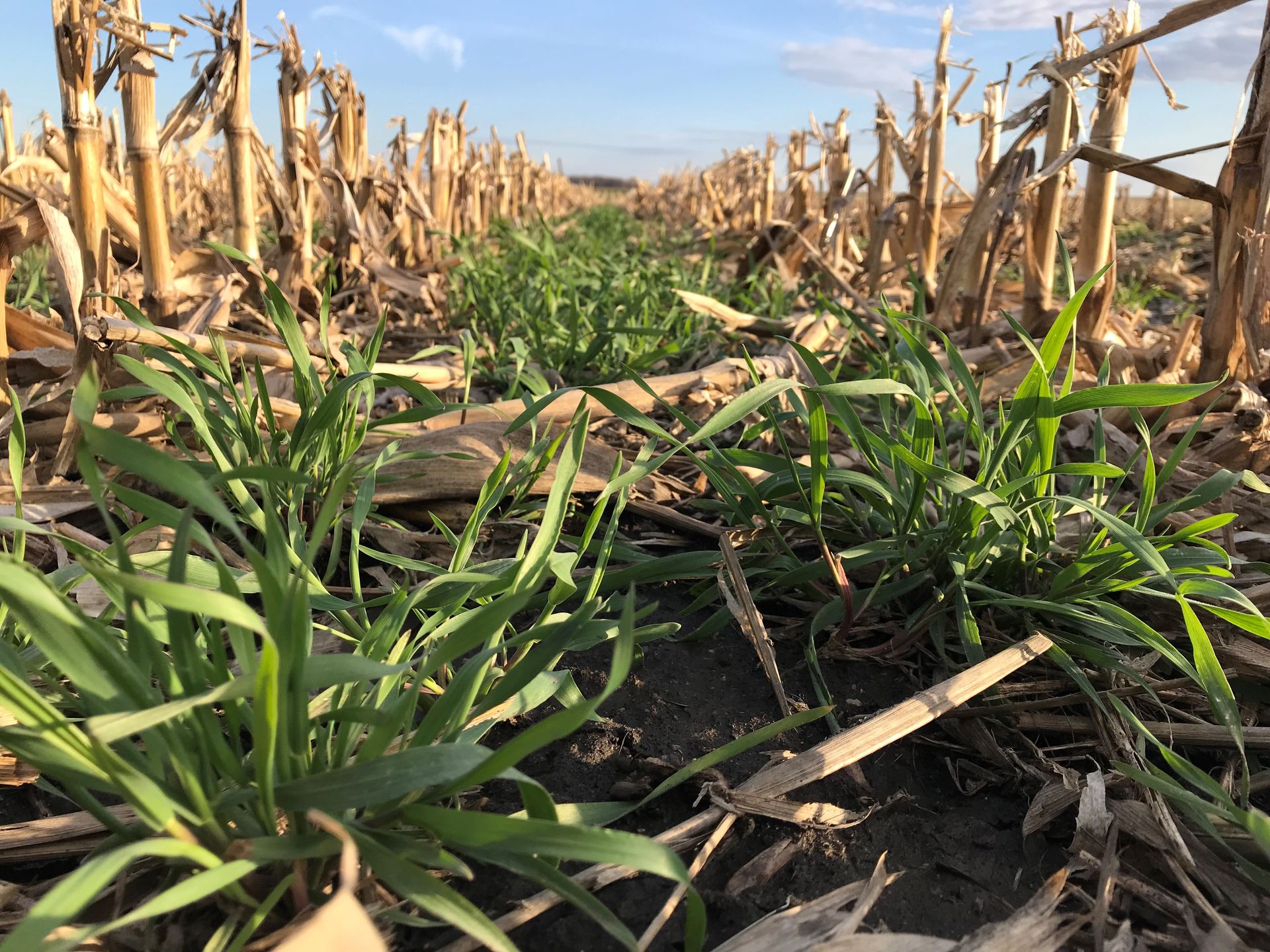
  • Lastly but not least, cover crop acres totaled 881,228 in 2022 and that is up 24% from 2017.

Despite a decrease in acres overall, National Agricultural Statistics Service Illinois State Statistician Mark Schleusener said farmers, except for those in the west, fared well throughout the state. 


“I think one of the surprising things for 2022 was the combination of good yields and good prices in Illinois,” he said. “Usually, we don't get the two together. If there's a production problem, the price is usually high, and if production is good the price is usually low. But, because of a series of complicated factors, Illinois farmers were blessed with the good weather and the good prices.” Listen to the latest episode of IL Corn TV on Monday for a deeper dive into the census with Schleusener!


Listen to Audio here:

Baby with Corn Plastic Food Containers
By Pearl McDade June 12, 2026
Explore how corn is converted into PLA bioplastic for cups, food packaging, and 3D printing as demand grows for sustainable materials.
PCMthumbnail
By Tara Desmond June 11, 2026
PCM's 2026 Data Book, featured in this week's Prairie Farmer, shares 11 years of field data proving conservation and profitability go hand in hand.
By Tara Desmond June 11, 2026
How much do you know about the farmers who came before you and the decisions that still shape Illinois agriculture today? That's what University of Illinois student Lyndon Shi set out to explore during his internship with IL Corn . What began as an archival research project became a deeper look at the history of farmer leadership, innovation and advocacy in Illinois. While digging through university archives, Lyndon uncovered an undigitized manuscript from agricultural economist Harold Guither explaining the case for checkoffs. When he mentioned the discovery to IL Corn Director Rod Weinzierl, he got an unexpected response: "Oh yeah, I know him. We worked with him." It was a reminder that agricultural history isn't as distant as it may seem. Lyndon's research connected two eras of the IL Corn Growers Association: the original organization founded in the 1890s and the modern ICGA established in the 1970s. He learned how University of Illinois agriculture dean Eugene Davenport helped organize corn growers and sent professors across the state on "Corn Gospel Trains" to share the latest farming research. One story stood out in particular: the adoption of hybrid corn. Farmers who once judged corn by the appearance of the ear had to shift their focus to yield. Lyndon sees a similar transition today, as farmers increasingly balance yield with profitability amid rising input costs. "Illinois corn farmers are very good at organizing, and they are genuinely very grassroots," Lyndon said. "They've had a much more active role in shaping policy rather than just being on the receiving end." This Summer and Fall, Lyndon will travel to Taiwan on a federal scholarship to study food security. He'll do so with a new appreciation for Illinois agriculture's global connections, including Taiwan's longstanding role as an important trading partner. Watch the full conversation on IL Corn TV to hear Lyndon's research firsthand and discover how Illinois corn's history continues to influence the future.
Matt at USAPEEC Strategic Conference
By Tara Desmond June 11, 2026
IL Corn director Matt Raben was elected to USAPEEC's executive committee at the organization's 37th Annual Meeting this week.
Green world map with black curved arrows linking North America to Europe and Asia
By Lyndi Allen June 11, 2026
As one of the nation’s top agriculture exporters, Illinois ships corn to buyers across the globe—but where is it all going
Brian
By Tara Desmond June 11, 2026
Funk's Farm manager Brian Bangert explains the farm's 200-year history, the origins of Funk's G Hybrid, and how corn powers their cattle operation today.
Show More