LaGrange Lock on the Illinois River Reopens; Other Newly Maintained Locks Follow

October 19, 2020
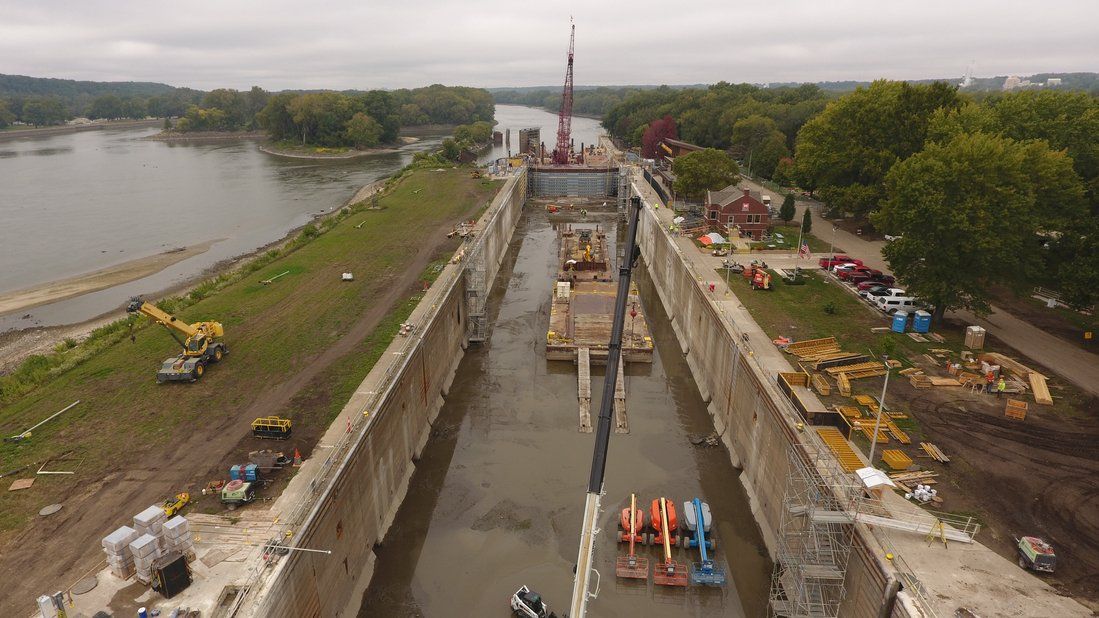
An aerial view of a bridge being built over a river.

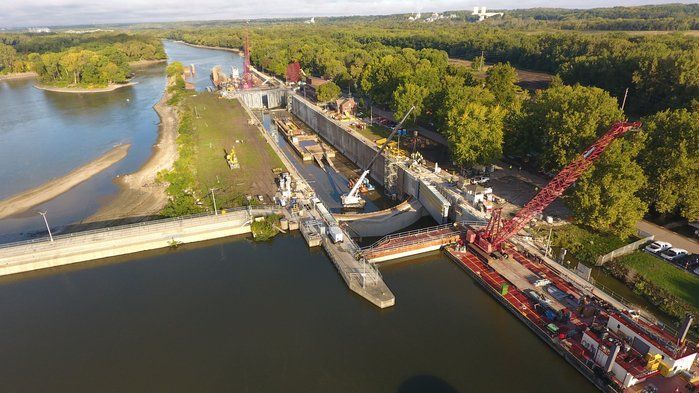
The LaGrange Lock and Dam at Versailles, IL on the Illinois River reopened last week after a major maintenance project to rehabilitate the lock and dam during the summer of 2020. The 12 million tons of food and ag commodities that leave the state via the LaGrange Lock will resume, just in time for harvest 2020 sales.


Other locks on the Illinois River including Starved Rock Lock and Dam, Marseilles Lock and Dam, and Dresden Island Lock and Dam are scheduled to reopen after major rehabilitation on October 29. Peoria Lock and Dam opened on September 30.


Minonk farmer and Illinois Corn Growers Association President Bill Leigh said, “The river systems we enjoy here in Illinois on the Illinois and Mississippi Rivers are hidden gems that allow Illinois farmers to be very competitive selling our commodities out of the state. Access to a newly maintained system will be a very exciting prospect for Illinois farmers along the Illinois River.”

“Next on our list, we look forward to the locks being upgraded and extended to 1,200 foot chambers which will allow modern tows to go through the locks without breaking in half, making the system much more efficient and timely,” he said.


Funding for lock and dam upgrades is visible on the horizon, with potential to begin pre-engineering and design on a lock on the Illinois or Mississippi River in 2021. This budget development is now possible after lobbying efforts from ICGA and their partners to reprioritize and reallocate federal and industry funding.


ICGA has led the effort to modernize and upgrade the locks and dams in Illinois, with the topic being one of the top two concerns of ICGA members for the last fifteen years. ICGA hosted barge tours in 2000-2010 to raise farmer and stakeholder awareness of the issue and has been lobbying for lock and dam funding since 1995.


“Our farmer members understand that the Illinois, Mississippi, and Ohio Rivers are one of the biggest advantages we enjoy in Illinois. We have access to these efficient transportation networks year-round and they make us the largest corn export state in the union. Investment in the locks and dams on the inland waterways system is a game changer for Illinois corn farmers,” said Rodney Weinzierl, Executive Director of IL Corn.

A piece of paper that says il corn on it
An aerial view of a large body of water with a crane in the middle of it.
Dr. Yan Zhang, Justin Moore, Rod Weinzierl, Rep. Nikki Budzinski, Dr. Christopher Slaten, and Dr. Pr
By Lyndi Allen May 26, 2026
Congresswoman Nikki Budzinski is requesting federal funding for the National Corn-to-Ethanol Research Center through her Community Project Funding requests.
Shane and Taylor
By Tara Desmond May 21, 2026
Solinftec's Solix robot uses AI to target weeds in real time, cutting chemical use up to 90%. Solar-powered, autonomous, and built for Midwest farms.
Photo taken in McLean County Museum of History
By Tara Desmond May 21, 2026
Illinois Ag Across Time - Episode 2: Tracing 200 years of Illinois farm families, innovation, and the land that fed a nation.
Don Meyer
By Tara Desmond May 21, 2026
Illinois Ag Across Time — Tracing 200 years of Illinois farm families, innovation, and the land that fed a nation.
Hammer striking corn kernels on a wooden surface, with kernels scattering in a rustic barn setting
By Lyndi Allen May 21, 2026
Ethanol is a powerhouse for American farms, fuels American vehicles, and has strengthened America’s economy for decades, but remains one of the most misunderstood fuels on the road today.
Cargo containers lined up at a port beside a canal, under a bright sky
By Lyndi Allen May 21, 2026
For decades, America’s inland waterways operated on a system that couldn’t keep up—aging infrastructure, delayed projects, and a funding model that forced farmers and shippers to wait.
Show More