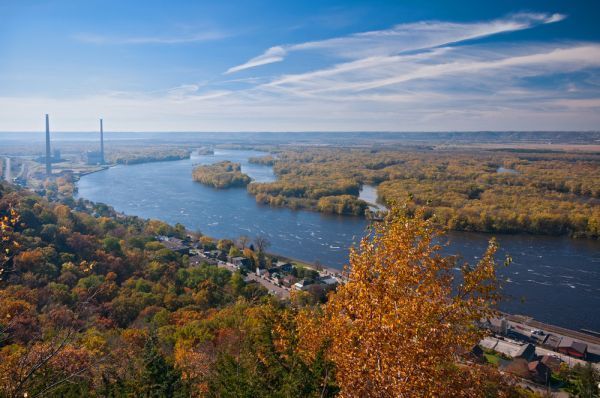
Despite some modest improvements, the watershed remains threatened by more frequent and extreme flooding, aging infrastructure, chemical pollution, nutrient runoff, and continued urbanization and agricultural intensification. Of note, the river’s water quality is rated as very poor, due to increasing sediment and nutrient loads, raising concerns for the nation’s drinking water supply and resulting in the grade for water supply and ecosystems dropping to a D compared to 2015. Flood control and risk reduction remained at a D due to increased frequency of high discharge events during in the past five years.
“The Mississippi River Watershed, which shapes thousands of communities and powers the nation, faces pressing challenges, with significant implications for the health and safety of all Americans, as well as our economy,” said Kimberly Lutz, Executive Director of America’s Watershed Initiative. “As the United States looks to recover and rebuild our economy amid the coronavirus pandemic, the health and resilience of this critical natural resource – through investments in infrastructure, research, education and flood and water management– must be part of the solution. ”
To protect the nation’s largest water system, America’s Watershed Initiative calls for:
- INVESTMENT: $2 billion in annual funding through private and government sources to address critical needs in inland navigation, regenerative agriculture, ecosystem function, and flood and water management.
- LEARNING: Establish a science agenda, improve data information systems, and report progress against goals to inform decisions and ensure wise use of funds.
- EDUCATION: An informed citizenry—coupled with transparent and data-informed decision-making by basin leaders—will facilitate progress toward goals.
- ACTION: Greater collaboration among complementary and competing interests will improve our ability to manage in a way that values all uses of this tremendous resource.
“The challenges facing the waters and lands in America’s Watershed are large, growing and demand urgent action,” said Dr. Larry Weber, Chair of AWI’s Report Card Committee. “Progress will require smart investments in scientific information to improve decision-making, and coordinated on-the ground implementation. Only by working together and seeking collaborative solutions will we make meaningful and sustained progress to meet these many challenges and change this trajectory.”
The 2020 report card features several improvements since the 2015 report card, including to indicators and analysis methods for water quality, flood control and risk management, transportation, and water supply. The new indicators improve the understanding of key issues and concerns in the watershed.
The data and information used to prepare the 2020 report card point to yet another issue: the need for consistent data across the watershed. Data gathered in different ways and using different metrics make it challenging to use and therefore, to draw conclusions.
Lutz said, “We would be alarmed if we were given a diagnosis by a physician without standard data like vital signs and blood work. Similarly, our nation is taking on greater risk by not investing in the monitoring and information systems that provide us guidance on the health of this watershed, which is vital to our lives and livelihoods. Real progress can be made toward a sustainable Mississippi River system that provides opportunity and potential for all its residents, but only if we have the information we need and act together, with urgency.”
The preparation of the 2020 report card was led by AWI’s Report Card Committee, which included AWI Executive Director Kimberly Lutz, Executive Director Emeritus Frank Morton, Committee Chair Larry Weber (University of Iowa), and Board Members Bob Beduhn (HDR Inc.), Joan C. Frietag (Hanson Professional Services), Steven Gambrell (Mississippi Valley Flood Control Association), Steve Mathies (Stantec Consulting Services), Dan Mecklenborg (Ingram Barge Company), Michael Reuter (The Nature Conservancy), David Simmons (Consultant for Viking Cruises), Robert Sinkler (Streamside Systems Inc.), and Brigadier General (Ret). C. David Turner (American Water Military Services Group).
Analysis and production of the report card is the work of a team from the University of Maryland Center for Environmental Science Integration and Application Network (UMCES IAN), led by Drs. Heath Kelsey, Katie May Laumann and Vanessa Vargas-Nguyen.