Opportunities and Challenges in Washington, DC

July 21, 2022
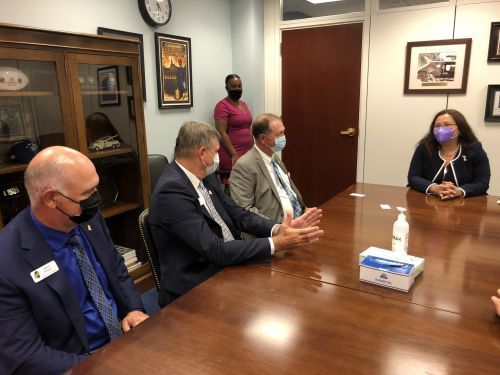
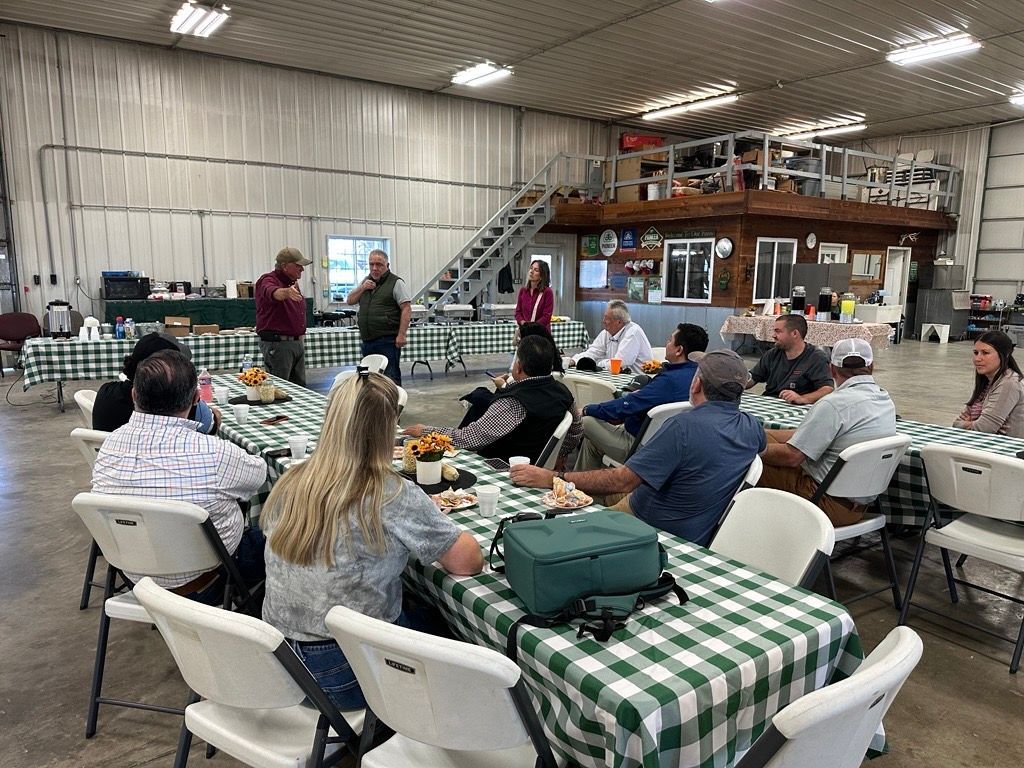
A group of people are sitting around a table wearing face masks.

Your IL Corn Growers Association farmer leaders hit Capitol Hill last week during a fly-in to Washington, DC, our first since March 2020. A significant number of things had changed in the capitol city, but even those leave opportunities for us to connect with your elected officials and build bigger and better relationships.


Most importantly, ICGA touched base with our Illinois delegation, including Senators Duckworth and Durbin. Farmer leaders brought up ICGA’s top three legislative priorities in each meeting – for some legislators there were thank yous to deliver! – and after positive conversations in a number of those meetings, we look forward to additional supporters on the Next Generation Fuels Act and additional research into Farm Bill priorities in the coming months.

ICGA legislative priorities for 2022 are:


  • Pass a low carbon, high octane fuel standard (HR 5089, The Next Generation Fuels Act) which will level the playing field and allow biofuels, like ethanol, to contribute to our climate solution.
  • Ensure funds for the recently approved new start on Lock and Dam 25 are allocated in efficient manner. 
  • Build a 2023 Farm Bill that realizes Illinois corn farmer priorities:    
  • Maintaining a robust crop insurance program.
  • Increasing Foreign Market Development and Market Access Program funds for renewed focus on export market development.
  • Supporting current on-farm conservation practices and encouraging new ones.

A number of COVID rules and post-January 6 restrictions remain in DC. ICGA had to navigate new restrictions getting into the house and senate office buildings, lots of changing schedules, and several closures. As an example, congressional meeting sizes were significantly restricted, and in some districts with many farmer constituents, this was a challenge. However, smaller meeting sizes opened up opportunities for different visits and connection points!


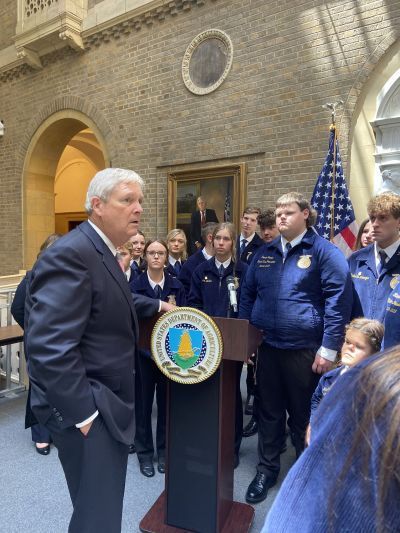
A highlight of the visit was a return to the FFA leadership team briefing and congressional meetings. The goal of this program is to build future leaders of our ag associations by exposing these students to the advocacy process. These students met with USEPA and USDA officials, John Deere’s corporate lobbying team, the U.S. Grains Council, and sat in on the National Corn Growers Association policy development process. Meeting Secretary Vilsack was a highlight!


Your IL Corn Growers Association looks forward to representing you in Washington, DC and Springfield, IL, but we aren’t effective without your help! Make sure to contact your elected officials every time there is a call to action by signing up for our advocacy platform here.

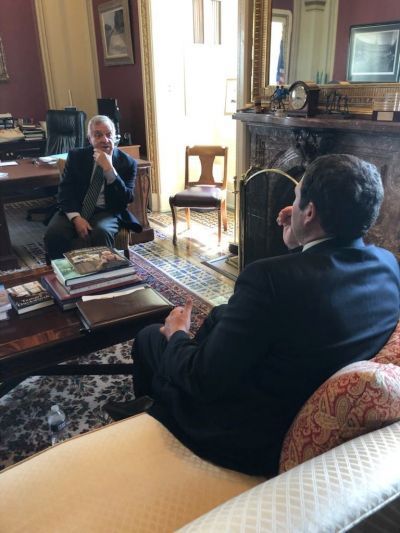
Two men are sitting in a living room talking to each other
A man in a suit stands at a podium in front of a group of people.
Dr. Yan Zhang, Justin Moore, Rod Weinzierl, Rep. Nikki Budzinski, Dr. Christopher Slaten, and Dr. Pr
By Lyndi Allen May 26, 2026
Congresswoman Nikki Budzinski is requesting federal funding for the National Corn-to-Ethanol Research Center through her Community Project Funding requests.
Shane and Taylor
By Tara Desmond May 21, 2026
Solinftec's Solix robot uses AI to target weeds in real time, cutting chemical use up to 90%. Solar-powered, autonomous, and built for Midwest farms.
Photo taken in McLean County Museum of History
By Tara Desmond May 21, 2026
Illinois Ag Across Time - Episode 2: Tracing 200 years of Illinois farm families, innovation, and the land that fed a nation.
Don Meyer
By Tara Desmond May 21, 2026
Illinois Ag Across Time — Tracing 200 years of Illinois farm families, innovation, and the land that fed a nation.
Hammer striking corn kernels on a wooden surface, with kernels scattering in a rustic barn setting
By Lyndi Allen May 21, 2026
Ethanol is a powerhouse for American farms, fuels American vehicles, and has strengthened America’s economy for decades, but remains one of the most misunderstood fuels on the road today.
Cargo containers lined up at a port beside a canal, under a bright sky
By Lyndi Allen May 21, 2026
For decades, America’s inland waterways operated on a system that couldn’t keep up—aging infrastructure, delayed projects, and a funding model that forced farmers and shippers to wait.
Show More