Rep. Lauren Underwood Visits Starved Rock Lock and Dam to Discuss the Importance of Infrastructure Investment for Agriculture and Industry

October 17, 2024
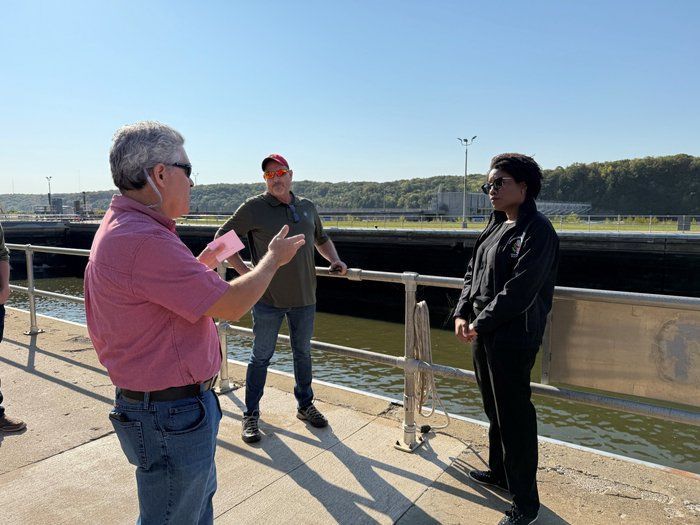
A man in a pink shirt is talking to a group of people standing next to a body of water.

OTTAWA, Ill. — On October 11, 2024, the Illinois Soybean Association (ISA) and IL Corn Growers Association (ICGA) joined the U.S. Army Corps of Engineers to host Rep. Lauren Underwood at the Starved Rock Lock and Dam. During the visit, Underwood toured the lock and dam system and discussed the system’s vital role in the transportation of agricultural products such as corn, soybeans, grain, and other goods critical to the state’s economy.


As the largest soybean-producing state and second largest corn-producing state in the country, Illinois plays a critical role in feeding both domestic and international markets. Efficient infrastructure at locks and dams like Starved Rock is vital not only for Illinois farmers but for all American farmers, ensuring that U.S. crops, including corn and soybeans, can be transported swiftly and cost-effectively, keeping American agriculture competitive on the global stage.

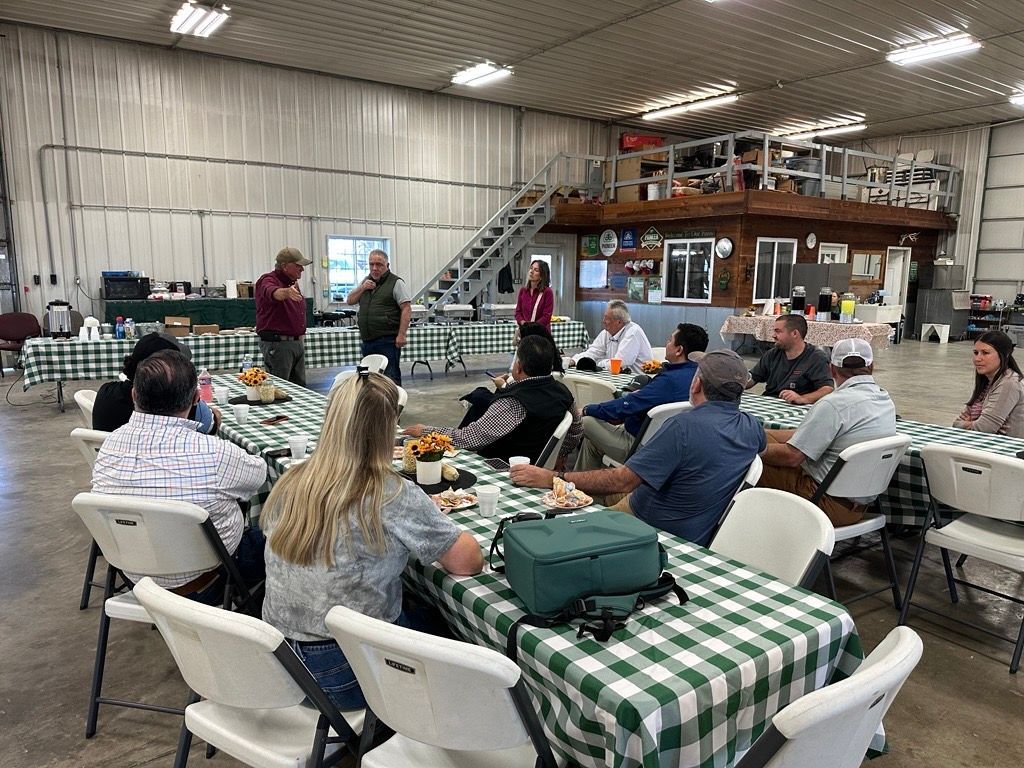
 ISA and ICGA leadership joined the Congresswoman for discussions on the future of infrastructure investment and the need for federal support in modernizing and maintaining the locks and dams across the Midwest to support corn and soybean farmers.


“Illinois farmers feed our nation and the world, and they count on our infrastructure being modern and efficient to get their goods to market,” Underwood said. “The Starved Rock Lock and Dam here in our community is a vital pathway that's built and maintained by skilled union workers. They make sure the Lock and Dam runs smoothly and safely for us all, and I’ll continue to support them and work to bring home federal investments for this critical infrastructure.”


"The Illinois Soybean Association is proud to convene this important discussion and tour," said Andrew Larson, ISA director of government relations and strategy. "Modern infrastructure is crucial to the success of Illinois farmers, and today's visit underscores the need for ongoing investment to ensure the efficient and safe movement of our crops."


“Illinois corn farmers export more corn out of the state than any other state in the union,” said Jim Tarmann, managing director of the Illinois Corn Growers Association (ICGA). “ICGA appreciates Congresswoman Underwood’s attention to the needs of our inland waterway system because it continues to be the US’s comparative advantage in the global marketplace. “The farm economy is already in a bad place so any unforeseeable disruptions impacting the export of corn, just makes a bad financial situation worse.”


The ISA and ICGA remain committed to advocating for policies and investments that benefit Illinois soybean and corn farmers, respectively, and the agricultural community at large.


About the Illinois Soybean Association: The Illinois Soybean Association (ISA) checkoff and membership programs represent more than 43,000 soybean farmers in Illinois. The checkoff funds market development, soybean production and government relations efforts, while the membership program and the Illinois Soybean Growers (ISG) actively advocate for positive and impactful legislation for farmers at local, state, and national levels. ISA upholds the interests of Illinois soybean farmers through promotion, advocacy, research, and education with the vision of becoming a trusted partner of Illinois soybean farmers to ensure their profitability now and for future generations.


About IL Corn Growers Association: IL Corn Growers Association is a state-based organization that represents the interests of corn farmers in Illinois, maintaining a high profile on issues in Washington, D.C., and Springfield, Illinois. Through grassroots advocacy, ICGA creates a future for Illinois farmers in which they can operate freely, responsibly, and successfully. In order to fulfill this mission, the organization conducts governmental affairs activities at all levels, market development projects, and educational and member service programs. For further information regarding their work and involvement, visit their website www.ilcorn.org.


###

Lou Lamoreux Farm
By Tara Desmond September 3, 2026
Livestock farmer Lou Lamoreux talks about his farming operation.
captain Cornelius at shake it up cocktail lounge
By Tara Desmond September 3, 2026
4.29M bushels of U.S. corn fueled beverage alcohol production in July 2026 alone — up 54% from July 2025. Corn's in your Labor Day toast!
aerial view of short corn
By Tara Desmond September 3, 2026
Illinois farmer Steve Fourez tests short stature corn against conventional hybrids, exploring yield potential and late-season management benefits.
USDA building
By Lyndi Allen September 3, 2026
This week, U.S. Secretary of Agriculture Brooke L. Rollins announced the U.S. Department of Agriculture (USDA) Data Modernization Plan to put Farmers First, reduce unnecessary burdens on producers, and improve the timeliness, accuracy, and usefulness of the data that informs agricultural decisions. USDA data informs crop and livestock estimates, risk-management tools, disaster assistance, and critical business decisions made by farmers, ranchers, agribusinesses, researchers, and policymakers. In February 2026, Secretary Rollins issued a Request for Information seeking feedback on the opportunities, challenges, and emerging areas in USDA data. That feedback helped shape the USDA Data Modernization Plan and its four pillars: Modernize the Data Reporting Experience: USDA will expand use of administrative data, improve mobile access to surveys, explore opportunities to use prefilled information where appropriate, and strengthen coordination across the Department. These changes will reduce duplicative requests and limit the amount of time producers spend reporting information. Enhance Acreage and Yield Estimation: USDA will conduct a pilot to evaluate the use of improved satellite imagery, geospatial tools, crop models, and other emerging technologies combined with essential producer-reported information to enhance acreage and yield estimations. USDA will also assess the use of optional field inputs to enhance and ground truth yield estimates and continue advancing yield research through collaboration with agricultural partners and land-grant universities. Integrate Data and Technology Platforms: USDA will modernize its technology infrastructure, expand secure data-sharing capabilities, and evaluate the responsible use of tools such as artificial intelligence and machine learning. Better integrated systems will improve efficiency, reduce duplication, and allow USDA to produce more timely and useful information. Expand Trust and Transparency with Producers: USDA will protect producer privacy, clearly explain why information is requested and how it is used, and create additional opportunities for producers to provide feedback. USDA will also improve communication surrounding reports, methodologies, response rates, and data limitations. USDA will begin implementing actions under the plan immediately and will continue engaging farmers, ranchers, and agricultural stakeholders throughout the process. The Department will evaluate new approaches carefully, protect privacy and confidentiality, and publish clear methodologies and supporting information to maintain the integrity of USDA’s agricultural statistics. See USDA’s Full Data Modernization Plan
Cornfield beside a dirt path under a blue sky with wispy clouds
By Lyndi Allen September 2, 2026
EPA has granted 1.76 billion RIN exemptions to small refiners, raising concerns among farmers and biofuel producers about the potential impact on demand for renewable fuel.
Weekly News
By Lyndi Allen August 28, 2026
News from IL Corn for week ending 8/28/26
Show More