
South Korea’s Largest Feed Miller Visits Illinois Corn Crop

June 10, 2021
A group of people are posing for a picture in front of a swing set.

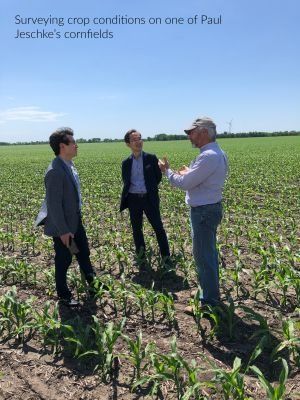
IL Corn hosted grain buyers from Nonghyup Feed Inc. (NOFI) on June 3, 2021, primarily to showcase Illinois’s corn crop. NOFI is the largest cooperative feed mill in South Korea. Their main goals were to examine crop conditions as well as communicate with local farmers and company representatives regarding the changes in supply and demand of corn. It also sparked the opportunity to build closer business relationships with U.S. feed and food grain industry professionals.


NOFI is the world’s 8th largest cooperative with 2.4 million farmer members and is based in Seoul, South Korea. The company operates as a subsidiary of NongHyup Agribusiness Group Inc. NOFI is a crucial business unit of the National Agricultural Cooperatives Federation (NACF). The company, including the NACF, bought 2,597 thousand-metric-tons of corn in 2020, with 100% of the corn being imported. That is roughly 102,000,000 bushels of corn.

Consistency in the supply of corn was a concern of NOFI because of the large quantities purchased. Their contracts are planned and consist of buying quantities of corn within a period of 6 months to a year. Illinois corn farmers are vital to ensuring exports are fulfilled in a timely manner. Access to waterways and rail roads creates an advantage for exporters to continue to buy corn from Illinois.


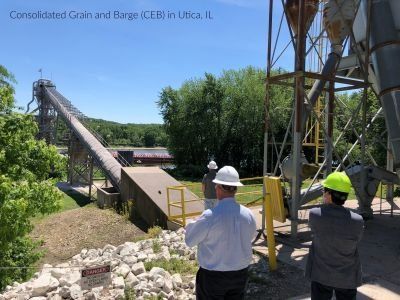
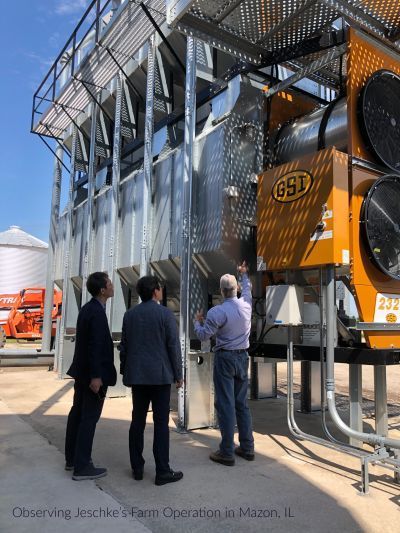
Mr. Yungchuk Bang and Mr. Sangyum Baek are the first trade team to visit our home office in Bloomington, Illinois since the Fall of 2019. They are also the first trade team the U.S. Grains Council has met with since early March of 2020. This a great sign that normalcy in communication with global exporters and importers is on the horizon. Their visit consisted of tours through grain trading houses, corn farms, and local river elevators. They also consulted with representatives from Cargill and Archer Daniels Midland to discuss expectations on supply and demand of corn.


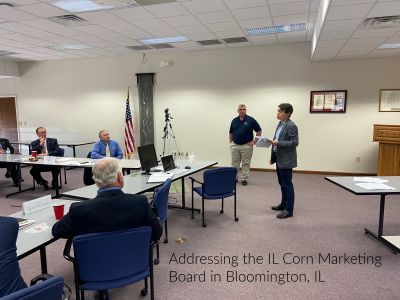
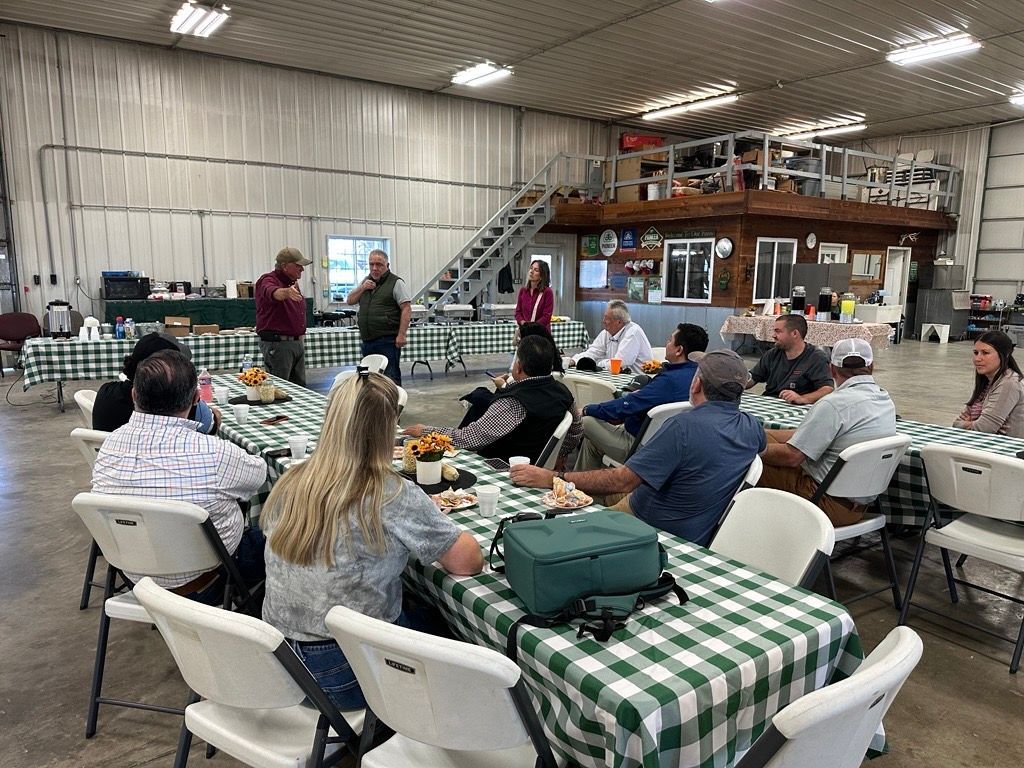
At the end of their visit, they were able to say a few words to the Illinois Corn Marketing Board. They admired Illinois’s rich soil and commended Illinois farmers for annually producing a substantial corn crop. The U.S. Grains Council and all Illinois corn farmers, hope to reassure NOFI of the ability and commitment of the United States as a reliable corn producer and by-products supplier.

A group of people are sitting at tables in a room.
Two men wearing hard hats are standing in front of a conveyor belt.
Three men are standing in a corn field talking to each other
Three men are standing in front of a machine with the number 693 on it
Lou Lamoreux Farm
By Tara Desmond September 3, 2026
Livestock farmer Lou Lamoreux talks about his farming operation.
captain Cornelius at shake it up cocktail lounge
By Tara Desmond September 3, 2026
4.29M bushels of U.S. corn fueled beverage alcohol production in July 2026 alone — up 54% from July 2025. Corn's in your Labor Day toast!
aerial view of short corn
By Tara Desmond September 3, 2026
Illinois farmer Steve Fourez tests short stature corn against conventional hybrids, exploring yield potential and late-season management benefits.
USDA building
By Lyndi Allen September 3, 2026
This week, U.S. Secretary of Agriculture Brooke L. Rollins announced the U.S. Department of Agriculture (USDA) Data Modernization Plan to put Farmers First, reduce unnecessary burdens on producers, and improve the timeliness, accuracy, and usefulness of the data that informs agricultural decisions. USDA data informs crop and livestock estimates, risk-management tools, disaster assistance, and critical business decisions made by farmers, ranchers, agribusinesses, researchers, and policymakers. In February 2026, Secretary Rollins issued a Request for Information seeking feedback on the opportunities, challenges, and emerging areas in USDA data. That feedback helped shape the USDA Data Modernization Plan and its four pillars: Modernize the Data Reporting Experience: USDA will expand use of administrative data, improve mobile access to surveys, explore opportunities to use prefilled information where appropriate, and strengthen coordination across the Department. These changes will reduce duplicative requests and limit the amount of time producers spend reporting information. Enhance Acreage and Yield Estimation: USDA will conduct a pilot to evaluate the use of improved satellite imagery, geospatial tools, crop models, and other emerging technologies combined with essential producer-reported information to enhance acreage and yield estimations. USDA will also assess the use of optional field inputs to enhance and ground truth yield estimates and continue advancing yield research through collaboration with agricultural partners and land-grant universities. Integrate Data and Technology Platforms: USDA will modernize its technology infrastructure, expand secure data-sharing capabilities, and evaluate the responsible use of tools such as artificial intelligence and machine learning. Better integrated systems will improve efficiency, reduce duplication, and allow USDA to produce more timely and useful information. Expand Trust and Transparency with Producers: USDA will protect producer privacy, clearly explain why information is requested and how it is used, and create additional opportunities for producers to provide feedback. USDA will also improve communication surrounding reports, methodologies, response rates, and data limitations. USDA will begin implementing actions under the plan immediately and will continue engaging farmers, ranchers, and agricultural stakeholders throughout the process. The Department will evaluate new approaches carefully, protect privacy and confidentiality, and publish clear methodologies and supporting information to maintain the integrity of USDA’s agricultural statistics. See USDA’s Full Data Modernization Plan
Cornfield beside a dirt path under a blue sky with wispy clouds
By Lyndi Allen September 2, 2026
EPA has granted 1.76 billion RIN exemptions to small refiners, raising concerns among farmers and biofuel producers about the potential impact on demand for renewable fuel.
Weekly News
By Lyndi Allen August 28, 2026
News from IL Corn for week ending 8/28/26
Show More