

Winter Farm Memories From Illinois Farmers
Tara Desmond
January 16, 2025
Tara Desmond
Winter on the farm isn’t just about battling the cold—it’s a season full of memories, both challenging and heartwarming. Here are a few favorite (and sometimes hilarious) winter moments from Illinois farmers:
- Snow Tunnels and Sled Rides
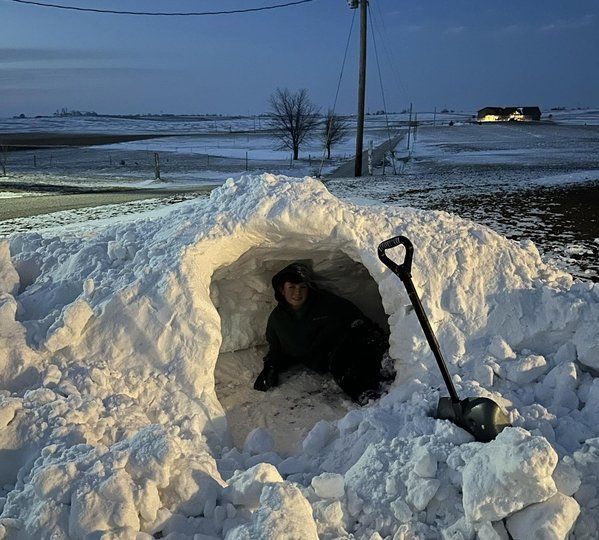
After Dad plowed the driveway, we’d dig tunnels through the snow piles and carve sled paths down the biggest drifts. Forget the hill—we had our own winter playground right outside the house. - The Human Sled
One winter, when the driveway was snowed in, my grandparents had to park their car at the end of the lane and trek home. My grandpa pulled my grandma on her back (in coveralls) through the snow like sled. She laughed about it for years! - Staying Warm, Farm Style
Sitting on top of heat registers to stay warm was a classic. This triggered multiple tea parties on the register with our mom—it was the coziest spot in the house during winter storms. - Cold-Weather Calving
Nothing says winter like an unexpected calf born during a snowstorm. We’d haul buckets of hot water to warm them up in the field or bring them into makeshift heaters to save their lives. - Resourceful Meals
When the lane was drifted shut and trips to the grocery store weren’t an option, we got creative. Freezer-burned corn, random cuts of meat, and whatever else we could find turned into a "meal." Not gourmet, but it got the job done! - Boot Battles
Wet, frozen boots were a morning nightmare until heated boot mats came along. Before that, boots got tossed onto heat registers—until the smell of manure spread through the house, earning some choice words from the family!

Winter on the farm is never boring. These memories remind us of the resilience, creativity, and humor it takes to get through the coldest months.
By Lyndi Allen
•
September 3, 2026
This week, U.S. Secretary of Agriculture Brooke L. Rollins announced the U.S. Department of Agriculture (USDA) Data Modernization Plan to put Farmers First, reduce unnecessary burdens on producers, and improve the timeliness, accuracy, and usefulness of the data that informs agricultural decisions. USDA data informs crop and livestock estimates, risk-management tools, disaster assistance, and critical business decisions made by farmers, ranchers, agribusinesses, researchers, and policymakers. In February 2026, Secretary Rollins issued a Request for Information seeking feedback on the opportunities, challenges, and emerging areas in USDA data. That feedback helped shape the USDA Data Modernization Plan and its four pillars: Modernize the Data Reporting Experience: USDA will expand use of administrative data, improve mobile access to surveys, explore opportunities to use prefilled information where appropriate, and strengthen coordination across the Department. These changes will reduce duplicative requests and limit the amount of time producers spend reporting information. Enhance Acreage and Yield Estimation: USDA will conduct a pilot to evaluate the use of improved satellite imagery, geospatial tools, crop models, and other emerging technologies combined with essential producer-reported information to enhance acreage and yield estimations. USDA will also assess the use of optional field inputs to enhance and ground truth yield estimates and continue advancing yield research through collaboration with agricultural partners and land-grant universities. Integrate Data and Technology Platforms: USDA will modernize its technology infrastructure, expand secure data-sharing capabilities, and evaluate the responsible use of tools such as artificial intelligence and machine learning. Better integrated systems will improve efficiency, reduce duplication, and allow USDA to produce more timely and useful information. Expand Trust and Transparency with Producers: USDA will protect producer privacy, clearly explain why information is requested and how it is used, and create additional opportunities for producers to provide feedback. USDA will also improve communication surrounding reports, methodologies, response rates, and data limitations. USDA will begin implementing actions under the plan immediately and will continue engaging farmers, ranchers, and agricultural stakeholders throughout the process. The Department will evaluate new approaches carefully, protect privacy and confidentiality, and publish clear methodologies and supporting information to maintain the integrity of USDA’s agricultural statistics. See USDA’s Full Data Modernization Plan