

5 Things to Know About the Emergency Commodity Assistance Program

Lyndi Allen
March 20, 2025
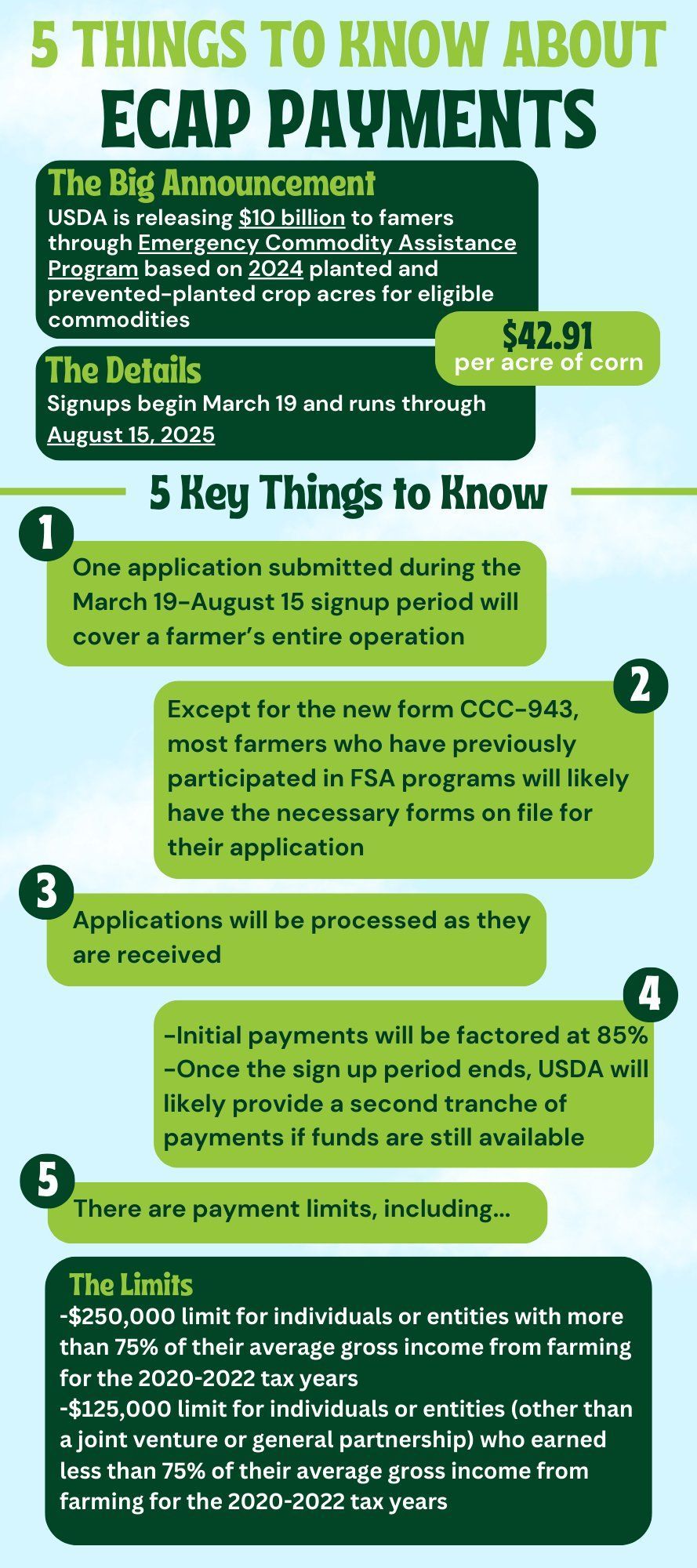
A poster that says 5 things to know about ecap payments

The U.S. Department of Agriculture (USDA) announced up to $10 billion issued directly to agricultural producers through the Emergency Commodity Assistance Program (ECAP) for the 2024 crop year. 


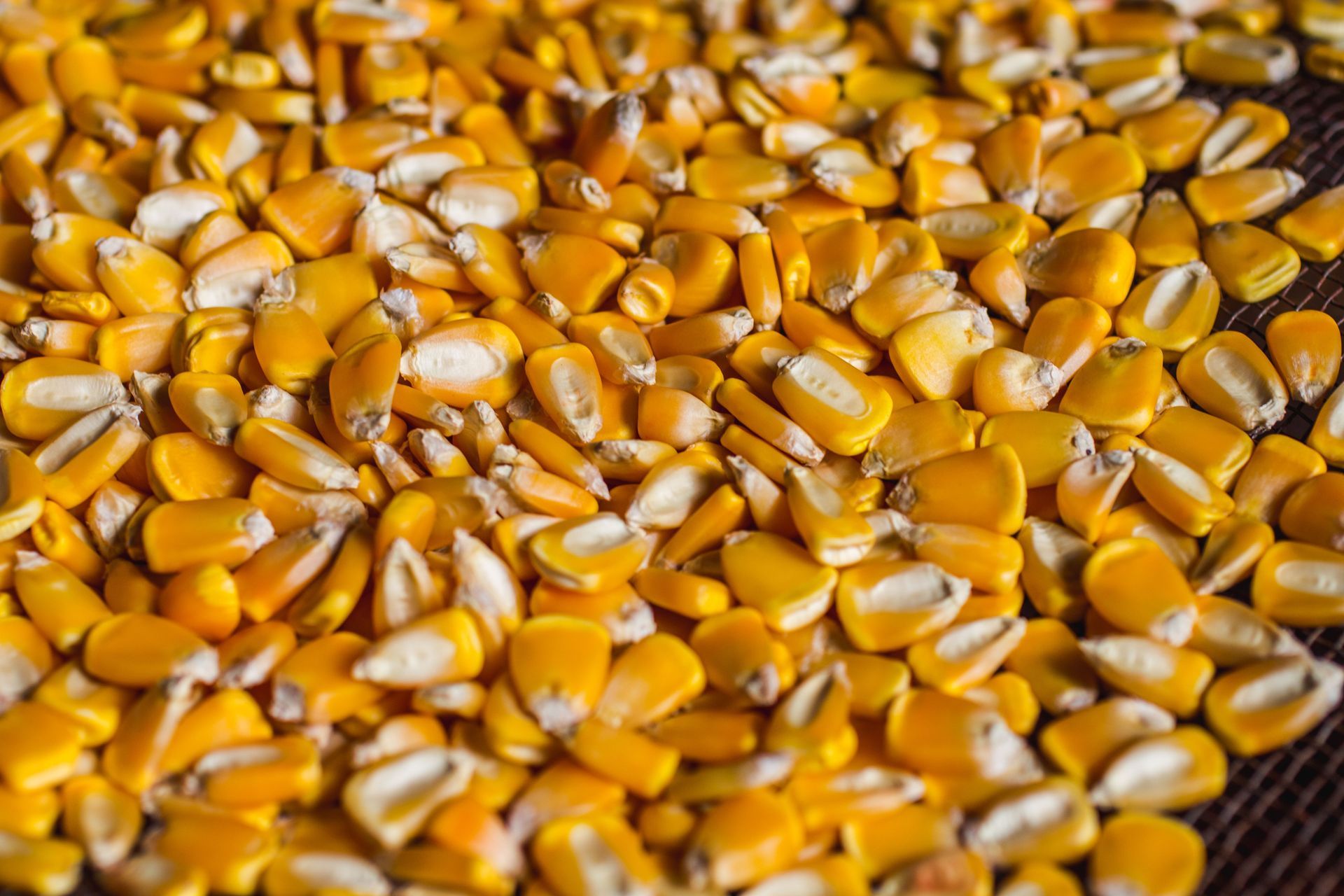
Officially, corn will have a payment rate of $42.91 per acre for the 2024 crop year. 


Authorized by the American Relief Act, 2025, these economic relief payments are based on planted and prevented planted crop acres for eligible commodities for the 2024 crop year. 


The sign-up period starts now and will run through August 15, 2025. The USDA will mail pre-filled applications to farmers over the coming days. Farmers can also go online or to their local Farm Service Agency to complete the process. 

Dr. Yan Zhang, Justin Moore, Rod Weinzierl, Rep. Nikki Budzinski, Dr. Christopher Slaten, and Dr. Pr
By Lyndi Allen May 26, 2026
Congresswoman Nikki Budzinski is requesting federal funding for the National Corn-to-Ethanol Research Center through her Community Project Funding requests.
Shane and Taylor
By Tara Desmond May 21, 2026
Solinftec's Solix robot uses AI to target weeds in real time, cutting chemical use up to 90%. Solar-powered, autonomous, and built for Midwest farms.
Photo taken in McLean County Museum of History
By Tara Desmond May 21, 2026
Illinois Ag Across Time - Episode 2: Tracing 200 years of Illinois farm families, innovation, and the land that fed a nation.
Don Meyer
By Tara Desmond May 21, 2026
Illinois Ag Across Time — Tracing 200 years of Illinois farm families, innovation, and the land that fed a nation.
Hammer striking corn kernels on a wooden surface, with kernels scattering in a rustic barn setting
By Lyndi Allen May 21, 2026
Ethanol is a powerhouse for American farms, fuels American vehicles, and has strengthened America’s economy for decades, but remains one of the most misunderstood fuels on the road today.
Cargo containers lined up at a port beside a canal, under a bright sky
By Lyndi Allen May 21, 2026
For decades, America’s inland waterways operated on a system that couldn’t keep up—aging infrastructure, delayed projects, and a funding model that forced farmers and shippers to wait.
Show More