
Agronomy Angle: Reviewing Stalk Rot
By Matt from Becks • September 16, 2026
The closing story for the 2026 corn crop is one of compromised stalk quality. Excessive rain and depleted nitrogen from the soil profile have hit many areas of Illinois, while excessive heat pummeled and bruised the crop as we entered September. The combination of these stresses has resulted in stalk cannibalization and increased susceptibility to stalk and crown rot.
Scouting for Stalk Rot Risk
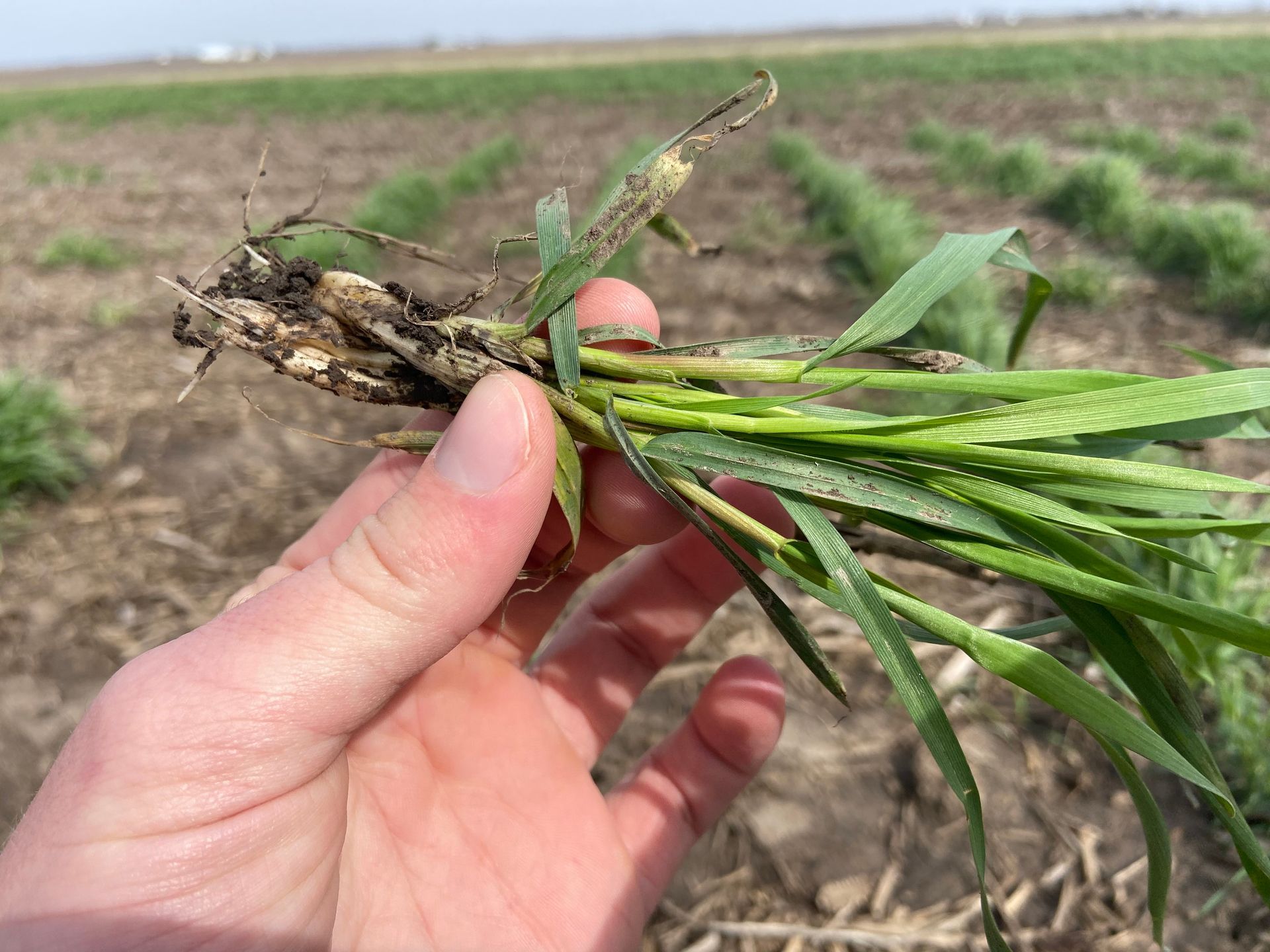
Growers absolutely must keep an eye on fields for stalk and crown rot as harvest proceeds. Take the time to scout: push plants about 30 degrees off center (several inches at the top) to see if the lower stalk gives way. Examine brace root material, watching for roots that have wrinkled and gone soft. Pinch the lower stalk to check whether it collapses.
Do not rely on windshield observations alone to detect stalk and crown rot risk. Where you find issues, get those fields picked early; don't let fields with compromised stalks or crowns linger. Both problems only get worse with time.
With that, let's move on to some of the major culprits behind stalk rot.


Diplodia Stalk Rot
Corn is the only host, and the disease overwinters as small fungal fruiting bodies and fungal strands within crop debris. Infection is often favored when the plant is stressed by dry conditions early, followed by ample rainfall around the reproductive period. Infection eventually reduces the pith of the stalk to a weakened, straw like mass of vascular material. Eventually, the disease produces small black fruiting structures in the rind that cannot be "rubbed away." The presence of these small, immovable specks on the outside of the softened stalk helps identify Diplodia in the field.
Anthracnose Stalk Rot
Unlike Diplodia, this disease can infect many different grass crops. The fungus overwinters as fungal strands and spores in residue and soil. While it can infect corn at various stages of development, infection after pollination is typically of greatest concern. As with Diplodia, the pith is reduced to a stringy mass of vascular material, and the rind often displays a distinct, shiny black discoloration. While Diplodia rot is often confined to the crown and nearby stalk areas, Anthracnose stalk rot can extend several nodes up the plant.
Gibberella and Fusarium Stalk Rots
These fungi typically survive as fungal fruiting bodies, spores with thick walls, and fungal strands within crop residue or the soil itself. They often stain the interior of the plant (the pith) a pinkish color. Pith is again shredded into straw like material, and the plant may "gray off" before stalk and crown issues are detected. Gibberella produces small black spots near the nodes that can be rubbed away, which helps differentiate it from Diplodia.
Management Takeaways
Regardless of the culprit, stalk and crown rot issues can point to a need for improved fertility management, stress mitigation, and drainage. Hybrid selection favoring products better suited to handle wet feet or crown rot should also be considered to reduce future issues.