
Farmers Call for Fairness in Fertilizer Market at “Fed Up” Event in Iowa


By Lindsay Croke September 15, 2026

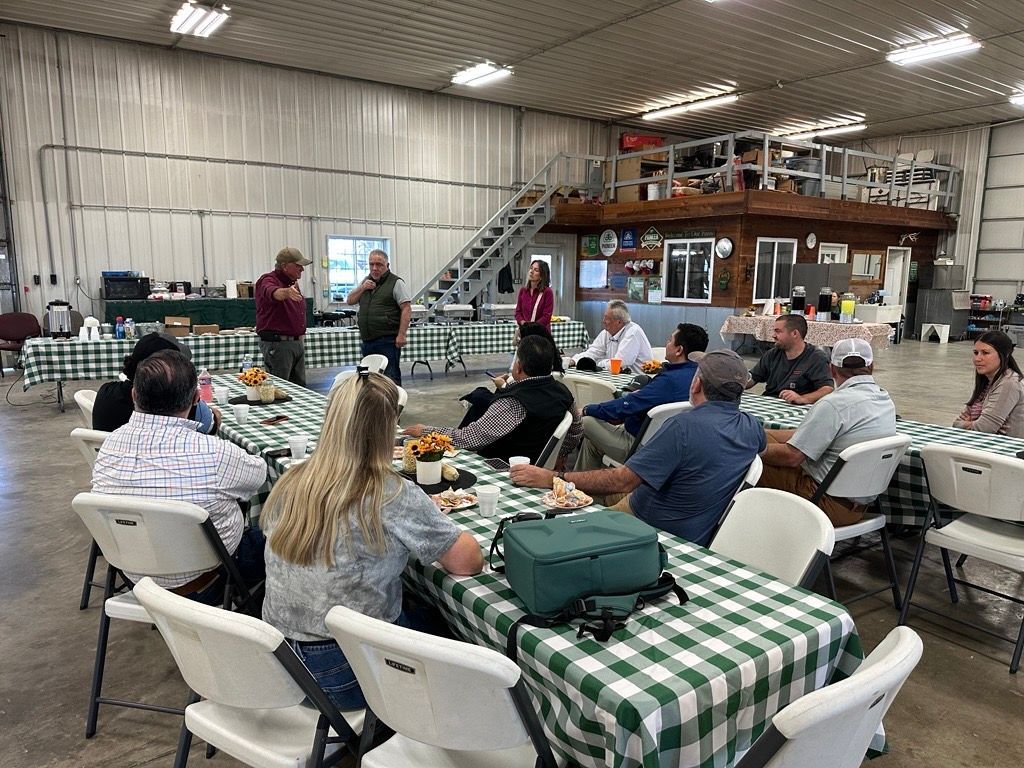
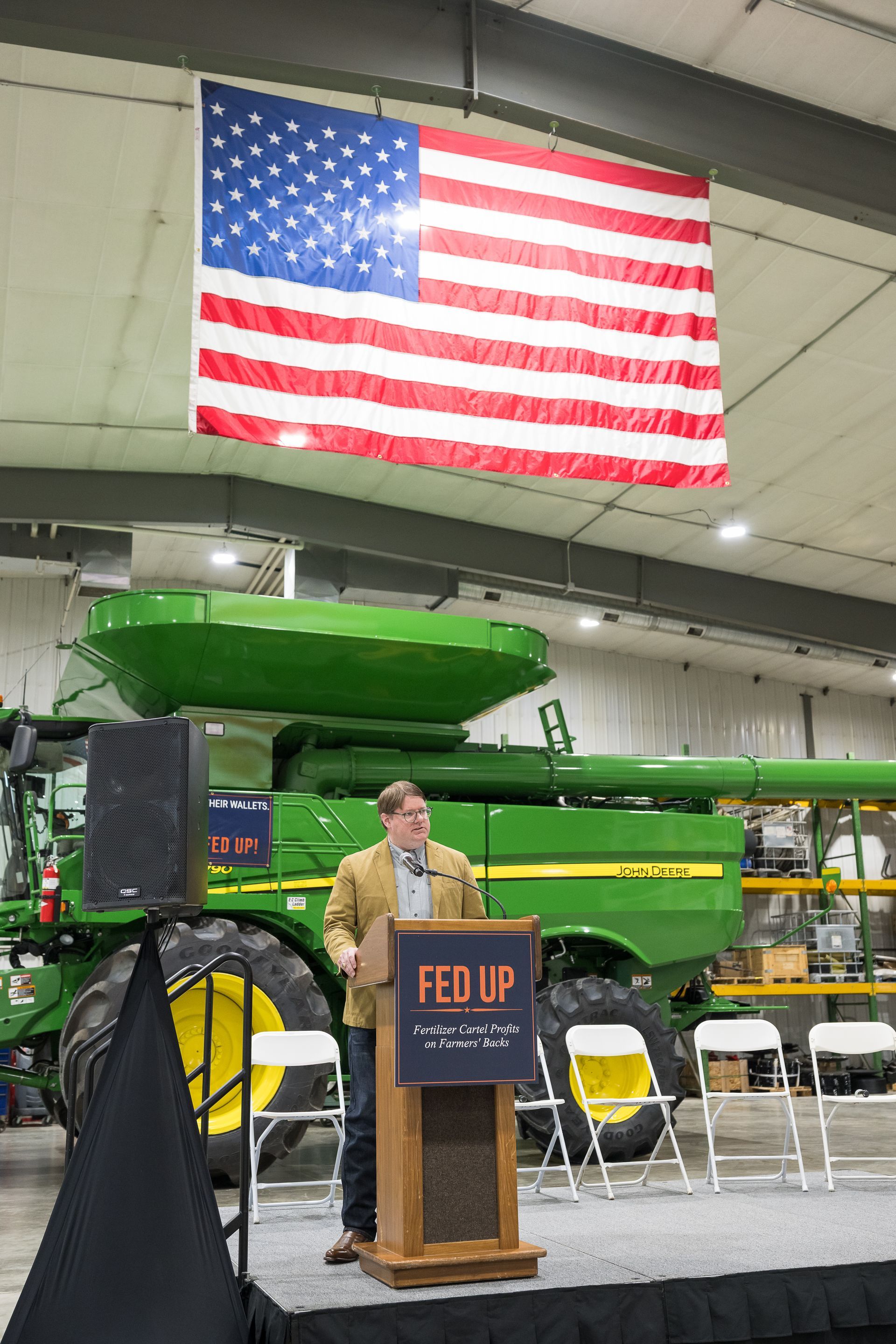
United States Department of Agriculture (USDA) Deputy Secretary of Agriculture Stephen A. Vaden joined 170 farmers from 13 states on September 11 to learn about farmer and fertilizer retailer experiences with the highly consolidated and uncompetitive fertilizer manufacturing industry. 


“I want to make clear, to each and every one of you in this room, that I’m not here wasting my time in Iowa, just to pretend like I care. I’m here because I care about this issue and we are working to bring actions down the pike that will seek to shine a light on what’s been going on in the fertilizer market,” Deputy Secretary Vaden said. “And rectify, not only from the new supply end, but from a justice end, in terms of seeing to it that the antitrust laws are enforced in this country, and we have a free market where you can depend on the price that’s quoted is a result of competition instead of collusion.”  

Fed up event in Iowa - Deputy Secretary of Agriculture Stephen A. Vaden

Addressing farmer profitability is the top priority of IL Corn; addressing input costs like skyrocketing fertilizer prices remains an important tactic. 


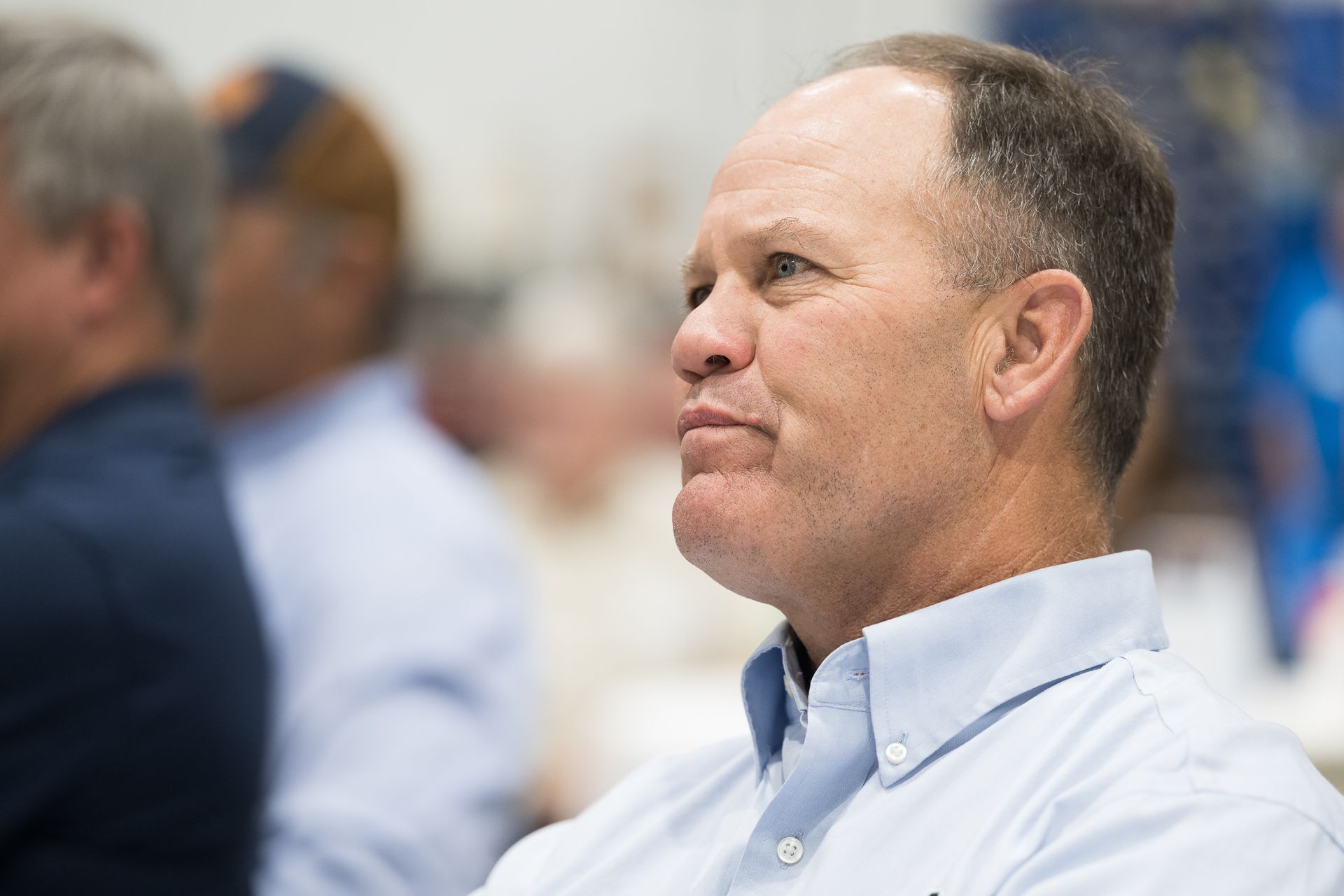
IL Corn Growers Association Director Phil Fuhr, an Illinois City family farmer, attended the event to give voice to the experience of Illinois corn farmers. 


“Our ICGA members are struggling with extremely tight margins and no end in sight. I was proud to be their ‘seat at the table,’ sharing my own experiences and those of our members with the Secretary in hopes that the USDA continues to make this fertilizer investigation a priority,” Fuhr said.

Illinois Farmer Phil Fuhr

Farmers with information about unfair practices or pricing from the fertilizer cartel can visit savefamilyfarms.us to confidentially participate in the Department of Justice investigation. Firsthand experiences from farmers will be critical as investigations move forward.  


IL Corn thanks the Iowa Corn Growers Association for hosting the “Fed Up” fertilizer hearing. The event was made possible by the Colorado Corn Council, Georgia Corn Growers Association, Iowa Corn Growers Association, IL Corn, Kansas Corn, Kansas Wheat, Kentucky Corn, Michigan Corn, Minnesota Corn, Missouri Corn, Nebraska Corn Growers Association, North Dakota Corn Growers Association, Ohio Corn & Wheat, South Carolina Corn and Soybean Association, South Dakota Corn Utilization Council, South Dakota Wheat Growers Association, Texas Corn Producers and Wisconsin Corn.  


Not a member?

Become one today!

SHARE THIS

Latest Posts

Person crouching in a green field, inspecting crops by hand under bright sunlight
By Lyndi Allen September 10, 2026
The IRS released guidance to provide farmers with more clarity on the 45Z Clean Fuel Production Tax Credit and its role in supporting domestic biofuel production.
interactive game
By Tara Desmond September 10, 2026
See how corn travels the world in this new interactive game!
Citroniq
By Radicle Growth September 10, 2026
Citroniq and Future Origins Selected to Receive Investment Through Competition Designed to Drive New Demand for Corn
unshucked thumbnail with Tara and corn blowing out her ears
By Tara Desmond September 9, 2026
Meet Pervis Ellis: 104-Degree Harvest, No-Till, and White Corn for Mexico
Ron Miller on his farm
By Tara Desmond September 9, 2026
From Illinois fields to African villages, Ron Miller shares the farming lessons, friendships and one life-changing story he’ll never forget.
Evan Blind at NCERC
By Tara Desmond September 8, 2026
Step inside NCERC to see how Illinois corn growers are helping drive research into ethanol, new technologies and the next big opportunities for corn.
Lou Lamoreux Farm
By Tara Desmond September 3, 2026
Livestock farmer Lou Lamoreux talks about his farming operation.
captain Cornelius at shake it up cocktail lounge
By Tara Desmond September 3, 2026
4.29M bushels of U.S. corn fueled beverage alcohol production in July 2026 alone — up 54% from July 2025. Corn's in your Labor Day toast!
aerial view of short corn
By Tara Desmond September 3, 2026
Illinois farmer Steve Fourez tests short stature corn against conventional hybrids, exploring yield potential and late-season management benefits.
USDA building
By Lyndi Allen September 3, 2026
This week, U.S. Secretary of Agriculture Brooke L. Rollins announced the U.S. Department of Agriculture (USDA) Data Modernization Plan to put Farmers First, reduce unnecessary burdens on producers, and improve the timeliness, accuracy, and usefulness of the data that informs agricultural decisions. USDA data informs crop and livestock estimates, risk-management tools, disaster assistance, and critical business decisions made by farmers, ranchers, agribusinesses, researchers, and policymakers. In February 2026, Secretary Rollins issued a Request for Information seeking feedback on the opportunities, challenges, and emerging areas in USDA data. That feedback helped shape the USDA Data Modernization Plan and its four pillars: Modernize the Data Reporting Experience: USDA will expand use of administrative data, improve mobile access to surveys, explore opportunities to use prefilled information where appropriate, and strengthen coordination across the Department. These changes will reduce duplicative requests and limit the amount of time producers spend reporting information. Enhance Acreage and Yield Estimation: USDA will conduct a pilot to evaluate the use of improved satellite imagery, geospatial tools, crop models, and other emerging technologies combined with essential producer-reported information to enhance acreage and yield estimations. USDA will also assess the use of optional field inputs to enhance and ground truth yield estimates and continue advancing yield research through collaboration with agricultural partners and land-grant universities. Integrate Data and Technology Platforms: USDA will modernize its technology infrastructure, expand secure data-sharing capabilities, and evaluate the responsible use of tools such as artificial intelligence and machine learning. Better integrated systems will improve efficiency, reduce duplication, and allow USDA to produce more timely and useful information. Expand Trust and Transparency with Producers: USDA will protect producer privacy, clearly explain why information is requested and how it is used, and create additional opportunities for producers to provide feedback. USDA will also improve communication surrounding reports, methodologies, response rates, and data limitations. USDA will begin implementing actions under the plan immediately and will continue engaging farmers, ranchers, and agricultural stakeholders throughout the process. The Department will evaluate new approaches carefully, protect privacy and confidentiality, and publish clear methodologies and supporting information to maintain the integrity of USDA’s agricultural statistics. See USDA’s Full Data Modernization Plan
Show More