



Did the Spring Rains Kill Your Rootworms? Here's the Honest Answer
By Matt Montgomery • May 18, 2026
The Agronomy Angle with The Short Bald Agronomist (Matt Montgomery, Beck’s)
The beginning of the rootworm season will soon be upon us, and it will begin with the hatching of overwintering eggs. Rootworm eggs are nestled in the soil profile. That might make you think that the period of egg hatch is difficult, perhaps even impossible, to detect. That is not the case though.
It is rather easy to gauge when rootworm egg hatch has begun, and you do not need to dig in the soil to figure it out.
The temperature requirements for rootworm egg hatch synchronize with two things that we note “above ground.” Rootworm egg hatch coincides with “lightning bug emergence,” and it coincides with “cottonwood shed.” In other words, as fireflies start to “light up,” rootworms begin to hatch and feed. Little tufts of whit fluff, floating across the yard, signal the same as well.
It’s an interesting fact, but that synchronization also has some practical applications.
Can Heavy Rainfall Reduce Rootworm Populations?
Recent rains have led to questions about rootworm survival. Did some of our recent saturated conditions reduce rootworm numbers? Let’s begin to answer that question, but as we do so – keep our signals of rootworm hatch in mind.
Rootworm adults prefer to lay their eggs in moist areas. When ample but not excessive moisture is present, the larvae survive well. However, when rainfall “skyrockets,” moisture can be bad news. The impact depends upon how long saturated conditions persist and when they arrive.
Understanding the Rootworm Life Cycle
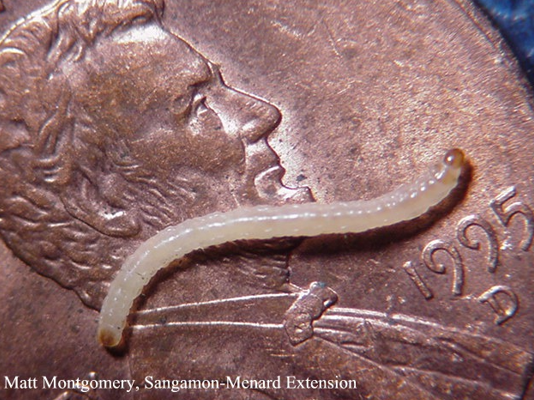
Rootworm beetles emerge toward mid-July and begin to feed on corn silks and pollen. They mate and lay several dozen eggs in mass near the base of individual corn plants. Those eggs begin to develop but “suspend” development once winter conditions arrive. In late May to mid-June of the following year, eggs hatch. Extremely small white worms with brown heads and a brown basal plate emerge.
A Note on Northern Corn Rootworm
A quick sidenote is needed here. We should note that our description of egg hatch is simplified. Northern Corn Rootworm, a particularly troublesome pest in Northwestern Illinois, may not hatch the next season. Eggs may remain in a suspended state for more than one year. For the purpose of this article, let’s continue with our simplified description.
Why Timing Matters Most for Survival
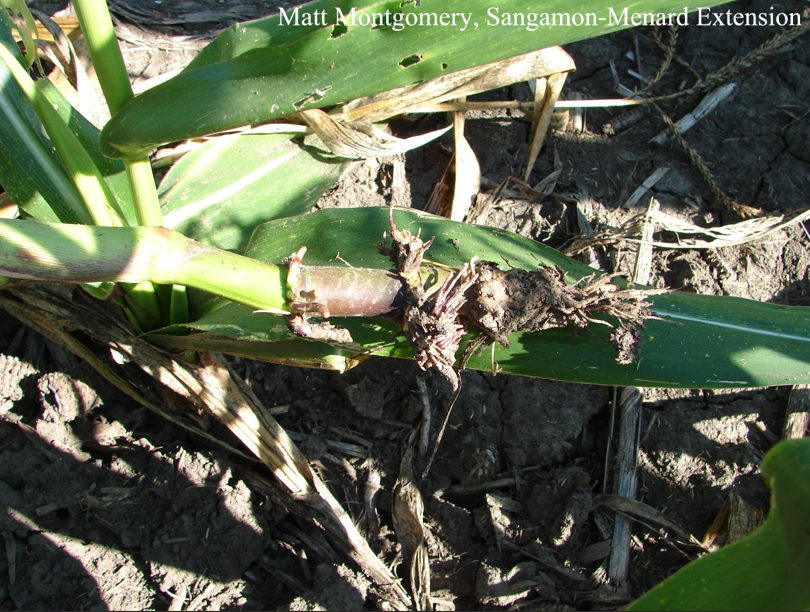
The early stage of the larva’s life (the “rootworm”) is critical. The young larva must find corn roots or it will starve to death. If the rootworm successfully detects and moves to corn roots, it typically begins to feed on the ring of root material (termed a node) nearest the soil surface, progressively working its way down to lower nodes.
Saturated soil conditions can inhibit the rootworm’s ability to “home in” on corn roots. However, rainfall and resulting flooding of nooks and crannies in the soil profile must be timed right. It must be prolonged enough to result in mortality. Research has shown that such conditions only decrease the population significantly if they are present at the time of hatch and persist for the next couple weeks.
So, Did the Spring Rains Actually Help?
What does that mean for the impact of late April and early May rainfall on rootworm numbers? Remember our earlier discussion about how we can estimate rootworm egg hatch?
We have not observed lightning bugs as I write this article and we have just begun to note cottonwood shed. Saturated conditions were present, but late April to early-May saturation was not present at the critical moment.
Get some saturated conditions in late May to mid-June that persist for weeks, and we can talk about population reductions.


Latest Posts