

Farmer Kent Bohnhoff Recognized for a Career Built on Conservation
By Tara Desmond • August 4, 2026
Kent Bohnhoff didn't know his name had been put forward for the award. When the notice came through in early May, the longtime conservationist and IL Corn Growers Association (ICGA) member was surprised and thrilled to see decades of work recognized by the people who know that work best.
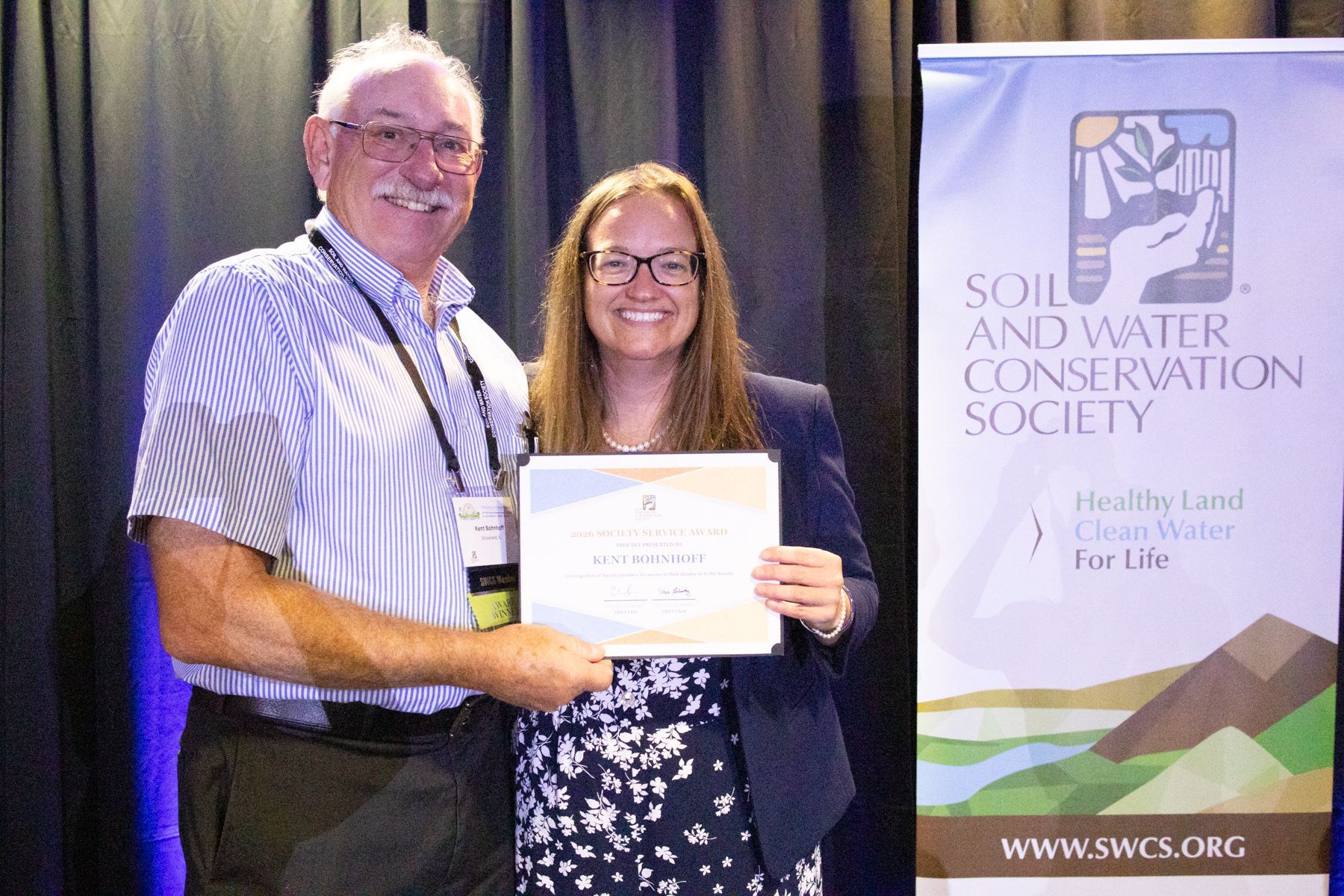
Bohnhoff received the Society Service Award from the Soil and Water Conservation Society at last week's conference, nominated by the Land of Lincoln chapter and his peers in the Professional Soil and Water Conservation Society.

A career spent in the field
Bohnhoff graduated from the University of Illinois in 1982 and spent about five years working as a herdsman on swine farms before joining the Soil Conservation Service in 1987. Over the next three decades, he served as a district conservationist (DC) across the state for Natural Resources Conservation Service (NRCS), starting as a soil conservationist at Edwardsville, then as a DC in Paxton, then Mount Vernon, before settling in for 19 years in McLean County. He closed out his NRCS career in Macon, Piatt and DeWitt counties before retiring from the agency.
While building that career, Bohnhoff also operated his family's 250-acre row crop farm in Effingham county for about 25 years, stepping back from farming in 2021.
Retirement from NRCS didn't mean stepping away from conservation work. Bohnhoff spent about three years as an enrollment coordinator for Precision Conservation Management (PCM), wrote grazing plans for roughly 20 producers across southern and central Illinois, spent a year with American Farmland Trust documenting soil health success stories, developed a curriculum and training session for training technical service providers in Indiana to write grazing plans, and assisted in conservation planning with producers for a private company, Taranis, for the past year and half.
Busting Conservation Myths
Ask Bohnhoff what conservation myth he'd most like to bust, and the answer comes quickly: no-till and strip-till. He's spent years encouraging central Illinois farmers to make the switch, even when generations of heavy tillage habits make that a hard sell. If he could get every Illinois farmer to adopt one practice tomorrow, it would be cover crops for the soil health benefits and the downstream impact on water quality in the state's lakes, streams and rivers.
His years with PCM reinforced a simple lesson: no two operations are alike. But the fundamentals hold across the board of right source, right rate, right time, right place with nutrients, and fewer passes across the field, which the data shows costs money without delivering much in return.
One story from his time with American Farmland Trust has stuck with him: a Maryland farmer named David who built a diverse rotation of corn, soybeans and wheat, that allowed him to begin selling high quality wheat straw to Pimlico Race Course.
By using no till, cover crops, contour strips, and dialed in nutrient management, David was able to show a net income increase, compared to his previous system, that resulted in six figure plus jump.
Still practicing what he preaches
Bohnhoff's own farm is now run by a tenant who uses cereal rye and annual ryegrass as cover crops, some crimson clover, continued strip-till, and a drainage water management system that holds water on the field for the crop instead of letting tile drain it all away.
When asked what he hopes his legacy will be, Bohnhoff points to the next generation of farmers: he hopes they keep looking for what works on their own ground and stay open to new technology as it becomes available (the same approach that shaped his career).
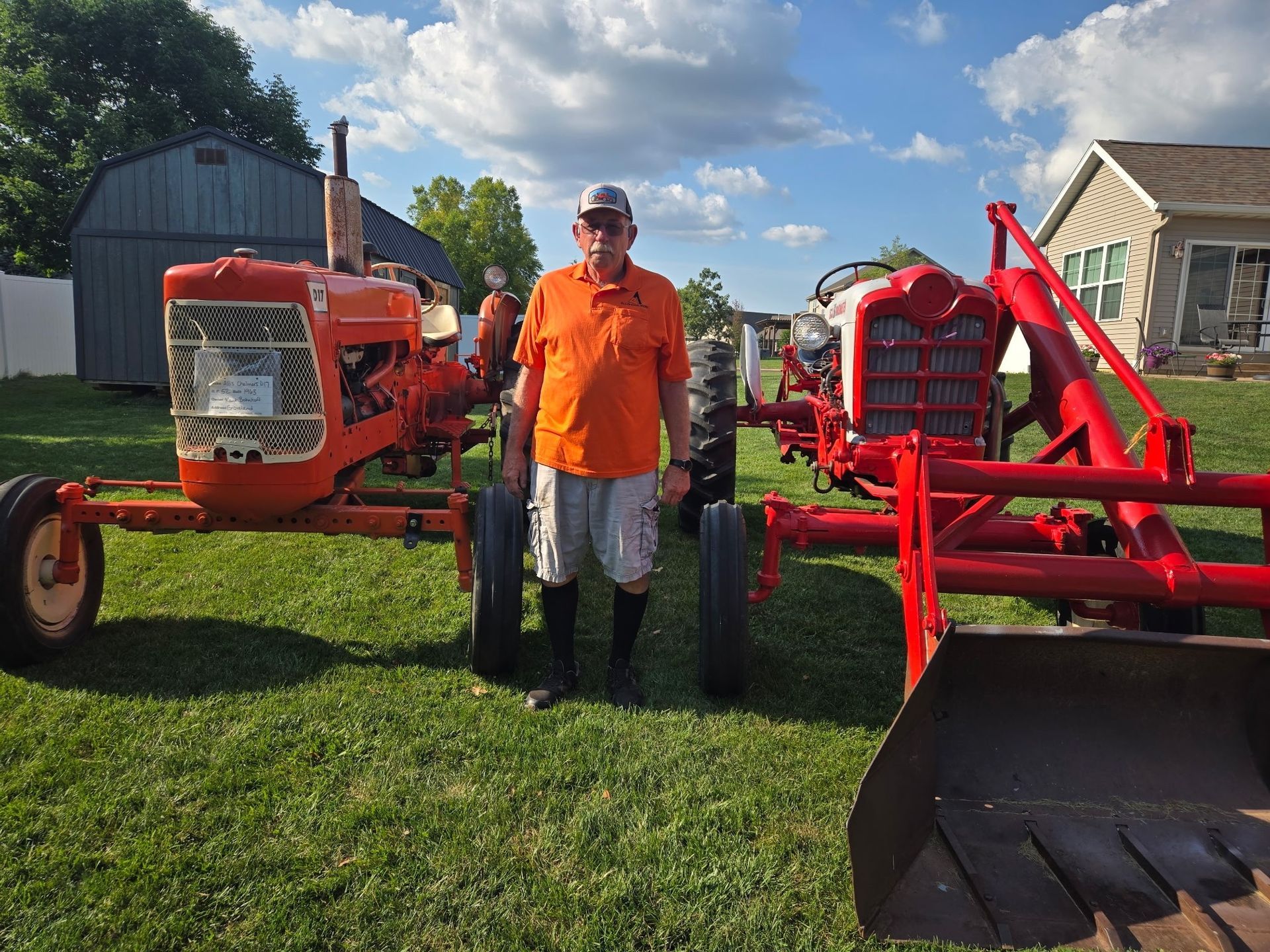
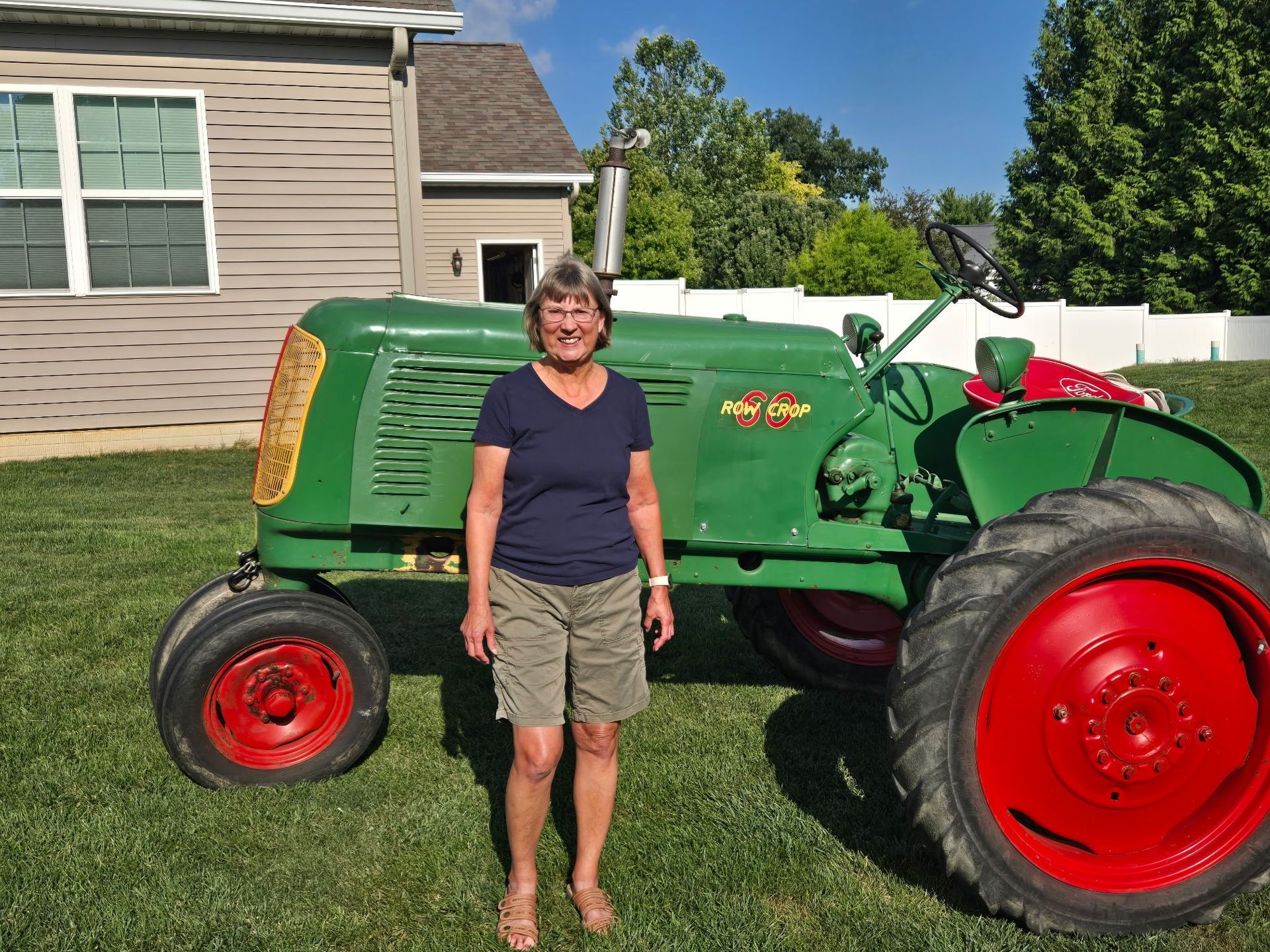
Outside of conservation work, Bohnhoff and his family collect and restore antique tractors, including a 1948 Oliver 60, a 1963 Allis-Chalmers D17, series III, a 1955 John Deere 70, a 1963 Case 310 bucket loader, a 1958 Ford 961 tractor with a one-arm loader, and a 1970 Case 442 garden tractor. They show them at events throughout the summer. He also spends time watching his grandchildren's activities, something he's looking forward to more of in retirement.
As for why he's an ICGA member, Bohnhoff points to the organization's role in advocating for corn growers, strengthening markets and helping launch initiatives like the Precision Conservation Management program. He sees that work as a natural extension of the conservation career he's built protecting the land while creating opportunities that benefit farmers for generations to come.