Three finalists have been selected for the inaugural Illinois Leopold Conservation Award®.
Given in honor of renowned conservationist Aldo Leopold, the prestigious award is presented in 27 states to farmers, ranchers, and forestland owners who inspire others with their dedication to land, water, and wildlife habitat in their care.
In Illinois the award is presented annually by Sand County Foundation, national sponsor American Farmland Trust, and state partners: IL Corn and Illinois Soybean Association.
The finalists are:
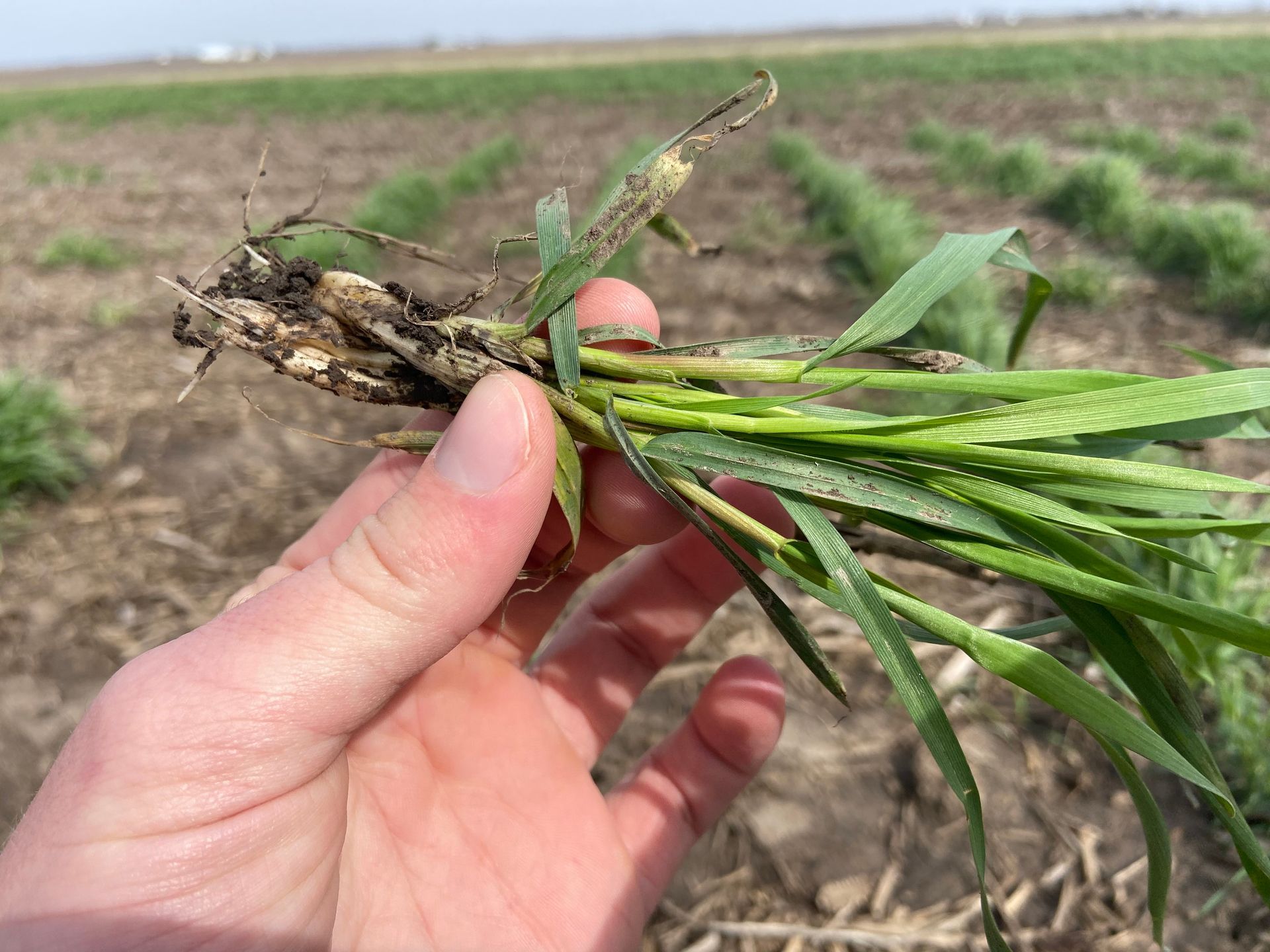
- Frey Family Farms of Dahlgren in Hamilton County: Dennis and Jackie Frey have planted more than 20,000 trees and wetland areas have been created to refurbish ground water supplies and provide wildlife and beneficial insect pollinator habitat. Cover crops and no-till practices are used on corn and soybean fields to reduce erosion, increase biological activity, sequester carbon, and retain moisture. Dennis has served as a member and chairman of the local Soil and Water Conservation District for more than 25 years.
- Rademacher Farms of Gifford in Champaign County: Frank and Eric Rademacher have adopted a crop production system that utilizes no-till practices and roller-crimped cover crops before corn and soybean crops to improve water quality and soil health. High biomass cover crops provide weed control and prevents runoff. The Rademachers provide outreach to other farmers and policymakers to explain how conservation practices allow them to maximize profit while minimizing environmental impact.
- Jean Stewart of Rossville in Vermilion County: Stewart has utilized no-till practices on his farmland for the past 36 growing seasons to improve soil health, prevent erosion, and reduce diesel costs. In addition to being an early adopter of cover crops to increase soil fertility, he also grows alfalfa to improve soil health on fields that had long been in a rotation of corn and soybeans. He installed buffer strips and terraces to control soil and water erosion and has served as a drainage district commissioner for 15 years.
The award recipient will be revealed at the Farm Progress Show in Decatur in August. The recipient receives $10,000, and their conservation success story will be featured in a video and in other outreach.
Earlier this year, owners of Illinois farmland and forests were encouraged to apply (or be nominated) for the award. Applications were reviewed by an independent panel of agricultural and conservation leaders.
The Illinois Leopold Conservation Award is made possible through the generous support of American Farmland Trust, IL Corn, Illinois Soybean Association, Sand County Foundation, Haglund Ecology Fund, Farm Credit Illinois, American Farmland Trust of Illinois, Association of Illinois Water & Soil Conservation Districts, Illinois Department of Agriculture, Illinois Sustainable Ag Partnership, The Nature Conservancy, and the USDA Natural Resources Conservation Service of Illinois.
“IL Corn is proud to be part of this important farmer recognition opportunity. We were so impressed with the quality of the applicants and felt good about the effort and time that is going into implementing conservation practices around Illinois,” said Jim Reed, IL Corn Chairman. “The passion for conservation and the desire to leave a family farm and a legacy of investment in the earth for the next generation of farmers floated off the pages of these applications.”
“We are living in a new time in U.S. history when climate smart agriculture and protecting our natural resources is a high priority and an important topic of discussion,” said Steve Pitstick, Illinois Soybean Association Chairman. “It is wonderful to be able to recognize farmers that are going above and beyond, paving new roads and setting a higher bar for future conservation efforts. The excitement for this award will build on itself, year after year, and we can’t wait to be a part of that.”
“Leopold Conservation Award recipients are examples of how Aldo Leopold’s land ethic is alive and well today. Their dedication to conservation shows how individuals can improve the health of the land while producing food and fiber,” said Kevin McAleese, Sand County Foundation President and CEO.
“As the national sponsor for Sand County Foundation’s Leopold Conservation Award, American Farmland Trust celebrates the hard work and dedication of farmers, ranchers and forestland owners,” said John Piotti, AFT President and CEO. “At AFT we believe that conservation in agriculture requires a focus on the land, the practices and the people and this award recognizes the integral role of all three.”
# # #
LEOPOLD CONSERVATION AWARD PROGRAM is a competitive award that recognizes landowner achievement in voluntary conservation. Sand County Foundation presents the award in California, Colorado, Illinois, Iowa, Kansas, Kentucky, Maryland, Missouri, Montana, Nebraska, New Mexico, New York, North Carolina, North Dakota, Oklahoma, Pennsylvania, South Carolina, South Dakota, Texas, Utah, Wisconsin, and in New England (Connecticut, Maine, Massachusetts, New Hampshire, Rhode Island, and Vermont). www.leopoldconservationaward.org
AMERICAN FARMLAND TRUST is the only national organization that takes a holistic approach to agriculture, focusing on the land itself, the agricultural practices used on that land, and the farmers and ranchers who do the work. AFT launched the conservation agriculture movement and continues to raise public awareness through its No Farms, No Food message. Since its founding in 1980, AFT has helped permanently protect over 6.5 million acres of agricultural lands, advanced environmentally sound farming practices on millions of additional acres, and supported thousands of farm families. www.farmland.org
IL CORN is made up of two farmer-led organizations that serve corn farmers in Illinois: IL Corn Growers Association (ICGA) and IL Corn Marketing Board (ICMB). ICGA represents the interests of Illinois corn farmers in Washington, DC and Springfield, IL, while ICMB is focused on growing demand, creating new markets, and fostering understanding of corn farmers and the corn industry. Through these two organizations, IL Corn seeks to position corn farmers to create and capture profit opportunities, preserve their independence, and prosper for generations. www.ilcorn.org
ILLINOIS SOYBEAN ASSOCIATION (ISA) checkoff and membership programs represent more than 43,000 soybean farmers in Illinois. The checkoff funds market development and utilization efforts while the membership program supports the government relations interests of Illinois soybean farmers at the local, state, and national level, through the Illinois Soybean Growers (ISG). ISA upholds the interests of Illinois soybean producers through promotion, advocacy, and education with the vision of becoming a market leader in sustainable soybean production and profitability. For more information, visit the website www.ilsoy.org and www.ilsoygrowers.com.
SAND COUNTY FOUNDATION inspires and empowers a growing number of private landowners to ethically manage natural resources in their care, so future generations have clean and abundant water, healthy soil to support agriculture and forestry, plentiful habitat for wildlife and opportunities for outdoor recreation. www.sandcountyfoundation.org