

PCM Receives Grant From International HSBC Bank

May 24, 2021
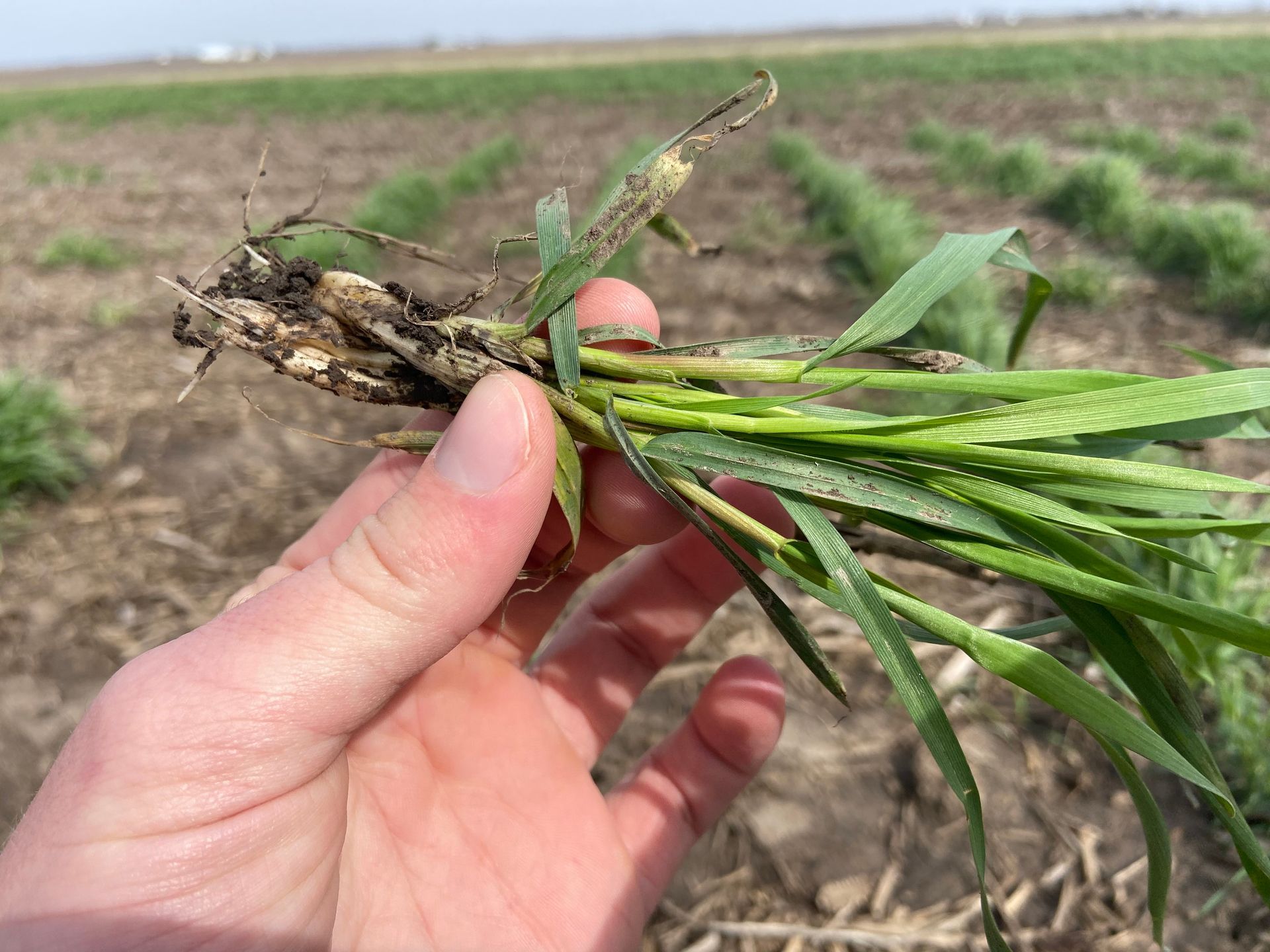
A field with a lot of straw and grass growing out of it.

The Precision Conservation Program Management (PCM) will receive grant funds from HSBC Bank via the Midwest Row Crop Collaborative (MRCC), the only U.S.-based project included in their Climate Solutions Partnership. PCM will expand into a new region around Paris, Illinois using the funds, allowing more farmers access to the one-on-one partnership with a conservation specialist and the economic analysis of conservation practices that is a hallmark of the program.


“HSBC’s new global Climate Solutions Partnership is about investing in tangible, high-potential methods to attack climate change, and there were no other efforts in the U.S. that impressed us as much as the work being done by MRCC,” said Kelly Fisher, Head of Corporate Sustainability, HSBC USA. “These regenerative agriculture practices will help farmers to keep producing food in a meaningful and sustainable way long into the future.”

The U.S.-based work, driven by MRCC members Kellogg Company, PepsiCo, and The Nature Conservancy partnering with members Unilever and Cargill, is made possible through direct relationships with row crop farmers, in a region where row crops account for 75 percent of agricultural land. As farmers depend on healthy soil and water resources, which are being depleted rapidly, the benefits of regenerative practice adoption can offer a lifeline for individual farms over the long term. These practices protect against the flooding and erosion impacts of increasingly extreme weather, improve crop yields, and reduce production costs.


The Climate Solutions Partnership is part of HSBC’s ambitious climate strategy. HSBC aims to align its provision of financing to net zero by 2050 or sooner, in line with the Paris Agreement goals, and to work across the financial sector and beyond to accelerate solutions that increase the pace of change.


The grant funds will also benefit farmers in Iowa and Nebraska, building on existing projects being implemented by Practical Farmers of Iowa and farmers in Michigan through a sustainably grown grain pilot program.


Precision Conservation Management

PCM is a conservation program that integrates conservation practices and financial data to help farmers understand how specific management changes can impact both their environmental impact and their bottom line. The program was born from USDA Regional Conservation Partnership Program funding with the leadership from IL Corn. Today, IL Corn and Illinois Soybean Association partner to provide the farmer leadership and direction of the program.


Midwest Row Crop Collaborative

Administered by Environmental Initiative, the Midwest Row Crop Collaborative explores new approaches to agricultural challenges to find solutions that increase productivity while ensuring soil health, protecting water, addressing the factors contributing to climate change, and supporting farm families. Members include Bayer, Cargill, Environmental Defense Fund, Kellogg Company, PepsiCo, The Nature Conservancy, Unilever, Walmart, and World Wildlife Fund.


HSBC

HSBC Bank USA, National Association (HSBC Bank USA, N.A.) serves customers through retail banking and wealth management, commercial banking, private banking, and global banking and markets segments. It operates bank branches in: California; Washington, D.C.; Florida; Maryland; New Jersey; New York; Pennsylvania; Virginia; and Washington. HSBC Bank USA, N.A. is the principal subsidiary of HSBC USA Inc., a wholly owned subsidiary of HSBC North America Holdings Inc. In the United States, deposit products are offered by HSBC Bank USA, N.A., Member FDIC, investment and brokerage services are provided through HSBC Securities (USA) Inc., (Member NYSE/FINRA/SIPC) and insurance products are provided through HSBC Insurance Agency (USA) Inc.


HSBC Holdings plc, the parent company of the HSBC Group, is headquartered in London. HSBC serves customers worldwide from offices in 64 countries and territories in its geographical regions: Europe, Asia, North America, Latin America, and Middle East and North Africa. With assets of $2,959bn at 31 March 2021, HSBC is one of the world’s largest banking and financial services organizations.

Lou Lamoreux Farm
By Tara Desmond September 3, 2026
Livestock farmer Lou Lamoreux talks about his farming operation.
captain Cornelius at shake it up cocktail lounge
By Tara Desmond September 3, 2026
4.29M bushels of U.S. corn fueled beverage alcohol production in July 2026 alone — up 54% from July 2025. Corn's in your Labor Day toast!
aerial view of short corn
By Tara Desmond September 3, 2026
Illinois farmer Steve Fourez tests short stature corn against conventional hybrids, exploring yield potential and late-season management benefits.
USDA building
By Lyndi Allen September 3, 2026
This week, U.S. Secretary of Agriculture Brooke L. Rollins announced the U.S. Department of Agriculture (USDA) Data Modernization Plan to put Farmers First, reduce unnecessary burdens on producers, and improve the timeliness, accuracy, and usefulness of the data that informs agricultural decisions. USDA data informs crop and livestock estimates, risk-management tools, disaster assistance, and critical business decisions made by farmers, ranchers, agribusinesses, researchers, and policymakers. In February 2026, Secretary Rollins issued a Request for Information seeking feedback on the opportunities, challenges, and emerging areas in USDA data. That feedback helped shape the USDA Data Modernization Plan and its four pillars: Modernize the Data Reporting Experience: USDA will expand use of administrative data, improve mobile access to surveys, explore opportunities to use prefilled information where appropriate, and strengthen coordination across the Department. These changes will reduce duplicative requests and limit the amount of time producers spend reporting information. Enhance Acreage and Yield Estimation: USDA will conduct a pilot to evaluate the use of improved satellite imagery, geospatial tools, crop models, and other emerging technologies combined with essential producer-reported information to enhance acreage and yield estimations. USDA will also assess the use of optional field inputs to enhance and ground truth yield estimates and continue advancing yield research through collaboration with agricultural partners and land-grant universities. Integrate Data and Technology Platforms: USDA will modernize its technology infrastructure, expand secure data-sharing capabilities, and evaluate the responsible use of tools such as artificial intelligence and machine learning. Better integrated systems will improve efficiency, reduce duplication, and allow USDA to produce more timely and useful information. Expand Trust and Transparency with Producers: USDA will protect producer privacy, clearly explain why information is requested and how it is used, and create additional opportunities for producers to provide feedback. USDA will also improve communication surrounding reports, methodologies, response rates, and data limitations. USDA will begin implementing actions under the plan immediately and will continue engaging farmers, ranchers, and agricultural stakeholders throughout the process. The Department will evaluate new approaches carefully, protect privacy and confidentiality, and publish clear methodologies and supporting information to maintain the integrity of USDA’s agricultural statistics. See USDA’s Full Data Modernization Plan
Cornfield beside a dirt path under a blue sky with wispy clouds
By Lyndi Allen September 2, 2026
EPA has granted 1.76 billion RIN exemptions to small refiners, raising concerns among farmers and biofuel producers about the potential impact on demand for renewable fuel.
Weekly News
By Lyndi Allen August 28, 2026
News from IL Corn for week ending 8/28/26
Show More