Citroniq and Future Origins Selected to Receive Investment Through the $1.75M Competition Designed to Drive New Demand for Corn
Radicle Growth today announced
Citroniq and
Future Origins as the winners of
The Radicle Corn Challenge Sponsored by U.S. Corn Farmers during the Bio Innovations North America conference in Omaha, Nebraska. The global competition, launched in January 2026, was created to identify and support companies developing breakthrough technologies that create significant new demand for corn beyond traditional food, feed, and fuel markets. The Challenge attracted applicants from around the world working to transform corn and corn-derived feedstocks into higher-value products across industrial, chemical, materials, and emerging bioeconomy applications.
As winners of the Challenge, Citroniq and Future Origins will receive investment from Radicle Growth and the coalition of corn grower organizations supporting the initiative. Together, the two companies represent compelling opportunities to expand the role of corn as a sustainable feedstock for high-value global industries.
"The quality of innovation we saw throughout this Challenge was exceptional," said
Kirk Haney, Managing Partner at Radicle Growth. "Citroniq and Future Origins stood out for their ability to create entirely new demand pathways for corn at
commercial scale. Both companies are addressing highly valuable existing markets with technologies that offer sustainability, supply chain resilience, and economic value, which is exactly the type of innovation this Challenge was designed to accelerate."
"What distinguished these companies was not only the value of the market opportunities they are pursuing, but also the strength of their technology platforms and their pathway to scale," said
Neal Gutterson, Partner and Chief Technology Officer at Radicle Growth. "Citroniq and Future Origins are applying innovative chemistry and biotechnology to convert corn-derived feedstock into products that can compete in large, established markets. Their ability to leverage existing agricultural supply chains and replace non-renewable alternatives while delivering meaningful sustainability benefits makes them particularly compelling examples of how innovation can expand the role of corn in the bioeconomy."
Citroniq
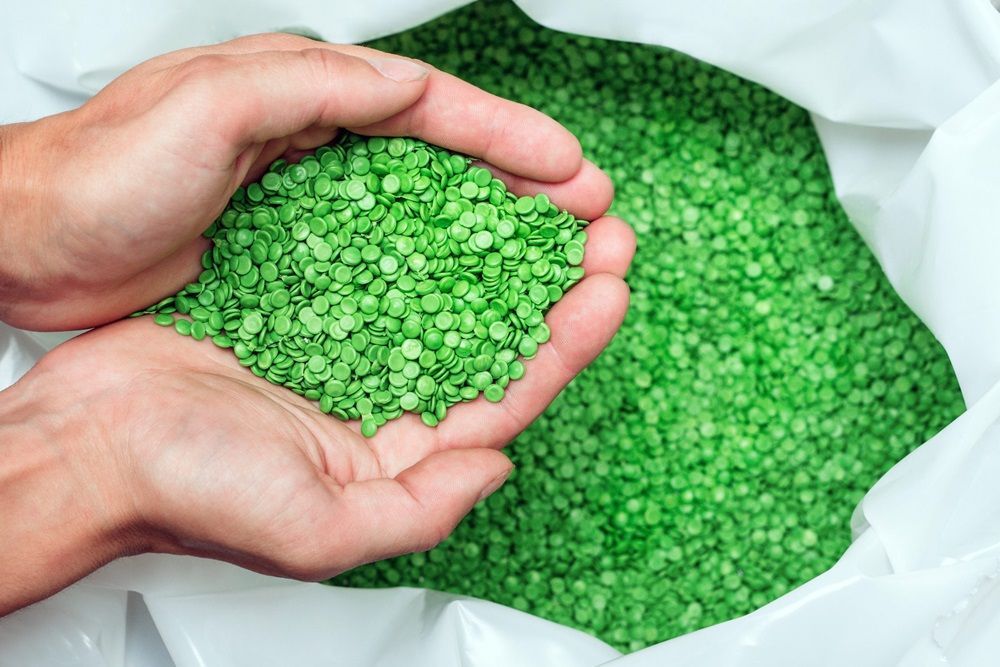
Citroniq is transforming the plastics industry with the world's largest next-generation, commercial-scale platform for producing 100% bio-based polypropylene using fuel-grade ethanol derived from corn. By combining proven technologies through its proprietary E2O production platform, Citroniq produces carbon-negative resins and olefin intermediates that eliminate dependence on fossil-based hydrocarbons while helping companies reduce their carbon footprint and advance Net Zero objectives.
The company's approach utilizes domestically produced corn ethanol to create sustainable alternatives for one of the world's most widely used plastics, opening a substantial new avenue for corn utilization across packaging, consumer goods, automotive, and industrial applications.
"We're honored to receive the 2026 Radicle Corn Challenge Award," said
Kelly Knopp, CEO & Co-Founder of Citroniq. "This recognition is especially meaningful to our team and validates our goal of creating an economic path to sustainable plastics. We're proud to be part of writing the next chapter for U.S. corn demand, to drive a broader shift toward a more sustainable and resilient plastics industry."
Future Origins
Future Origins is commercializing fermentation-based technology to produce sustainable alternatives to ingredients widely used in home and personal care products. The company utilizes renewable feedstocks, including corn-derived dextrose, to create more resilient and traceable supply chains for ingredients traditionally produced from palm oil and fossil-based feedstocks.
Formed in 2022 as a joint venture between Genomatica, Unilever, Kao, and L'Oréal, Future Origins has successfully scaled its technology through a large-scale demonstration campaign producing more than ten tons of drop-in product validated by strategic partners. The company is now advancing toward commercial-scale production in the United States using corn-based feedstocks.
"We are thrilled to win the Radicle Corn Challenge," said
Priti Pharkya, Chief Business Officer and Founder of Future Origins. "By transforming corn into existing widely used home and personal care ingredients, Future Origins is opening an entirely new high-value use for Midwest corn. It's great to have the growers join us in the journey and build awareness, as the market opportunity here is massive."
The winners were selected following a rigorous evaluation process that included scientific, technical, commercial, and market diligence conducted by Radicle Growth and representatives from participating corn grower organizations, assessing market potential, technology readiness, commercialization pathways, and expected impact on future corn demand. The companies were formally recognized during the Bio Innovations North America conference, which brings together leaders across agriculture, biotechnology, energy, and advanced materials to explore innovations shaping the future of the bioeconomy.
The Radicle Corn Challenge was established to identify innovations capable of developing durable new markets for corn and corn-derived feedstocks. Sponsored by twelve leading U.S. corn grower organizations, Colorado Corn Promotion Council, Corn Marketing Program of Michigan, IL Corn Marketing Board, Iowa Corn Promotion Board, Kansas Corn Commission, Kentucky Corn Promotion Council, Missouri Corn Merchandising Council, National Corn Growers Association, Nebraska Corn Board, Ohio Corn Marketing Program, South Dakota Corn Utilization Council, and Tennessee Corn Promotion Board, the initiative was created in response to the need for expanded demand opportunities beyond traditional food, feed, and fuel applications.
"Illinois corn farmers are always looking for new markets that reward us for what we produce," said Matt Raben, IL Corn Marketing Board Chairman and farmer from Ridgway, IL. "Citroniq and Future Origins are clear examples of how creative firms can help corn producers develop products out of our raw material that consumers use every day. Using plant-based products will help companies reduce their carbon footprint and advance Net Zero objectives. Supporting this Challenge is about building demand that lasts, bushel by bushel, for the long term."
The selection of Citroniq and Future Origins reflects the growing opportunity to position U.S. corn as a foundational feedstock for the next generation of sustainable materials and consumer products. By supporting technologies that unlock new, high-value markets for corn, the Radicle Corn Challenge and its sponsoring grower organizations are helping create opportunities for increased demand, new value chains, and long-term growth across rural America and the broader bioeconomy.