

What Farmers Still Need to Know About Black Cutworm in Seedling Corn


By Matt Montgomery, Becks April 22, 2026

The Agronomy Angle with The Short Bald Agronomist (Matt Montgomery, Beck’s)

A Pest Worth Remembering

Black cutworm is an easily forgotten pest for many farmers. After all, we have traits and seed treatments to help keep it in check. Occasionally though, especially in weedy spring fields, the pest can bypass traits and treatment putting the young crop at risk. Let’s spend a little time getting familiar with this once more frequent pest.


Spring Migration Brings Black Cutworm Back

Black cutworm does not winter in Illinois. Instead, the adult moths overwinter along the Gulf Coast. As spring storms work their way through Illinois, those storm fronts carry adult black cutworm moths back into the state. This annual spring migration eventually leads to young cutworms being reintroduced into area fields.


Nighttime Behavior and Life Cycle

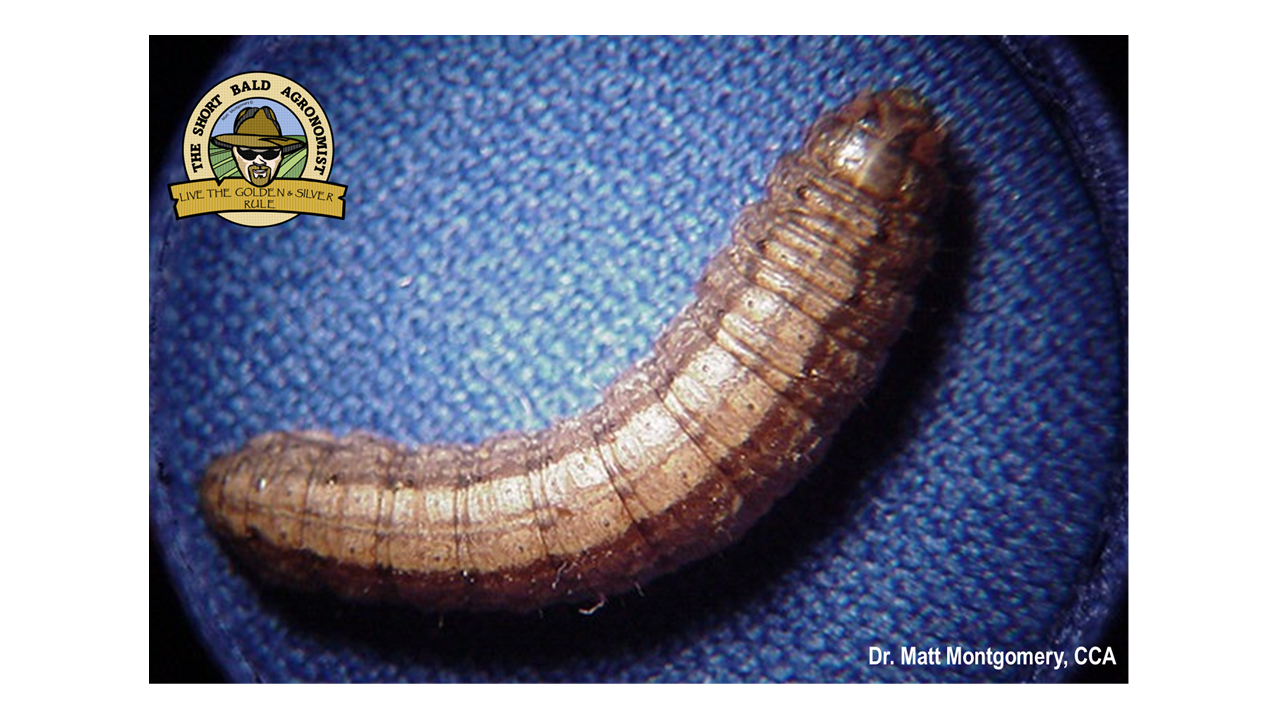
Adult moths mate and lay eggs, at night, on the lower portions of many different plants including chickweed and curly dock. The resulting black or gray colored larvae (cutworms) also feed at night and rest during the day, curled up in a ball just beneath the soil surface or just under soil clods. 


How Cutworms Damage Corn

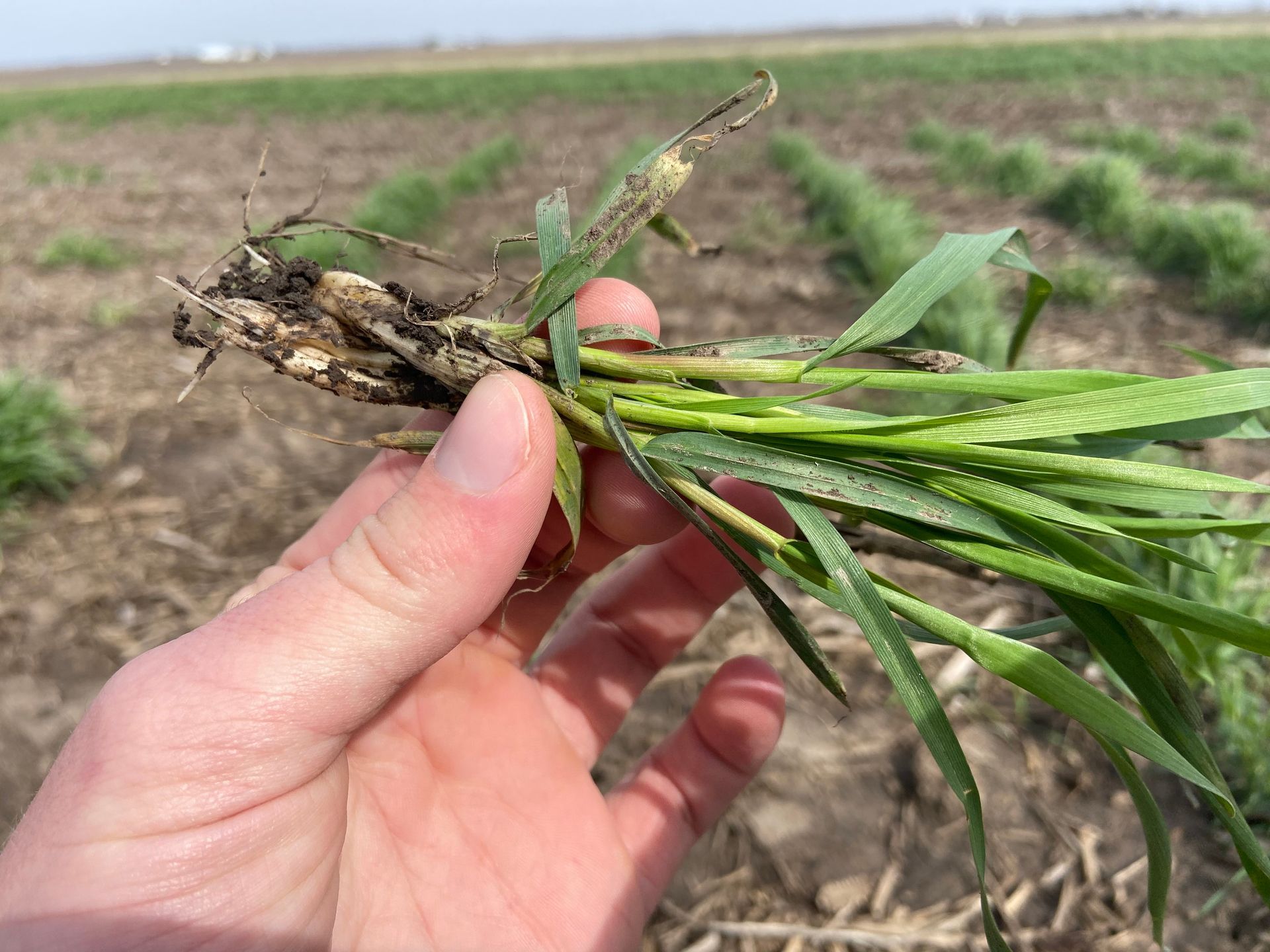
The pest is, of course, given its name because larvae often chew into corn seedlings, clipping those seedlings below the growing point. They can thus reduce stand which can translate into a replant scenario. 

Matt from Becks Agronomy Logo
Beck's Hybrids logo

Field Conditions That Increase Risk

Infestations of cutworm are favored by several factors. First, black cutworms are more likely to appear in late-planted corn fields. Weed infestations are more likely in delayed corn, and cutworm moths like fields with plenty of "options" when depositing eggs. In a similar fashion, broadleaf weed infestations, reduced tillage, and corn following soybeans also favor egg laying by cutworm moths and thus increase the potential for damage from the pest. The presence of substantial spring weed pressure can provide larvae a non-traited and non-treated food source, allowing larvae to reach large sizes. Larger larvae then move over to and feed upon the corn crop, inflicting substantial damage before traits and treatment kill them off.


The Threat Still Exists, Although Diminished, Today

The above scenarios mean that cutworm injury potential has not been entirely eliminated. While the potential for injury has been slashed over the past 25 years, occasional issues can still arise and growers should still watch out for cutworm issues.


Trap Monitoring vs. Scouting

Adult moth trapping can be used to track the overall movement of this pest, but trapping only provides a broad view of overall regional pressure. Scouting is still a critical need. Producers should scout corn weekly, for the first month of the young corn plant’s life. After about a month, the size of the corn plant outpaces the pest’s ability to reduce stand and scouting priority shifts to other pests.


When Rescue Treatments Make Sense

Rescue treatments are warranted when larvae have clipped around 3% of seedlings, and growers will want to consult their agronomist because a look-a-like, non-stand-reducing larva can appear in our area as well. Correct identification will make the difference between wasted dollars and dollars well spent.


Not a member?

Become one today!

SHARE THIS

Latest Posts

Sarah Hastings, Melinda Fourez, Sen. Chapin Rose, Mark Degler, Steve Fourez, and Dale Haudrich
By Lyndi Allen April 16, 2026
Illinois farmers came to the state capitol this week to draw attention to the poor farm economy as the planting season begins. Farmers met with their representatives and key legislators
thumbnail of  Phillips
By Tara Desmond April 16, 2026
Illinois Fair Queen Krista Phillips shares how her role goes beyond the crown connecting communities and advocating for agriculture statewide.
Ashley, Lindsay and Laura in DC
By Lindsay Croke April 16, 2026
Lindsay Croke is the IL Corn Director of Communications and Marketing today, but she’s served many roles over her 20+ years at IL Corn and brings a lot of historical perspective of IL Corn’s work and goals to IL Corn TV show as a host. We sat down with Lindsay to figure out how she landed at IL Corn, what the work here has meant to her and to our industry, and why she sticks around.
Steve Koeller, Justin Moore, Shane Gray, Rep. Katie Stuart, Chad Dillenberger, and Dale Haudrich
By Lyndi Allen April 8, 2026
Representative Katie Stuart and Illinois farmers visited NCERC for a tour, to learn about its expansion plans, and interview Illinois farmers
thumbnail from farmdoc webinar
By Tara Desmond April 8, 2026
Researchers reveal most farmers operate from a single, highly consistent production plan and change it far less often than conservation advisors typically assume.
thumbnail of different videos
By Tara Desmond April 8, 2026
Catch up on IL Corn’s top stories and videos from Q1 2026, featuring farmers, yields, policy updates, and must-see moments from the field.
Shane and Marty
By Tara Desmond April 8, 2026
Farmer and past ICGA President Marty Marr shares insights on policy, conservation, and leadership and why staying involved matters in agriculture.
Randy thumbnail
By Tara Desmond April 2, 2026
An Illinois farmer shares lessons from 30 years of no-till, concerns about profitability, and opportunities for new corn demand in evolving markets.
Jared and his father
By Tara Desmond April 2, 2026
Illinois farmer Jared shares how 168 lbs of nitrogen produced 308 bu/acre and why cutting rates outperformed a high-input field by $200/acre.
Congresswoman Nikki Budzinski of Illinois District 13
By Lyndi Allen April 1, 2026
Congresswoman Nikki Budzinski responds to the Illinois Congressional District 13 farmers’ concerns on the current challenges and opportunities farmers are facing in today’s poor farm economy
Show More