IL PORK AND IL CORN DONATED MORE THAN 100,000 POUNDS OF PORK

January 2, 2020
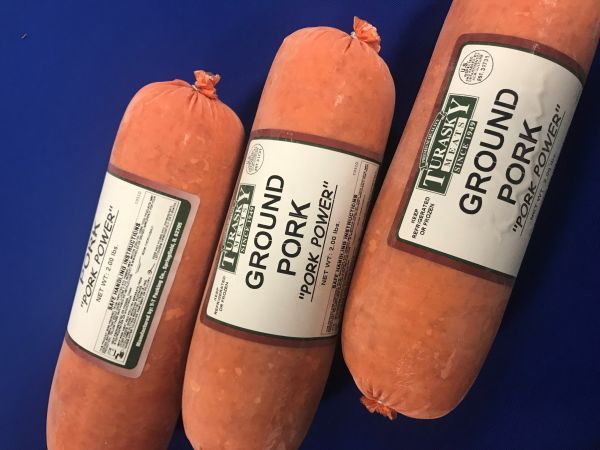
Three rolls of ground pork on a blue surface

Illinois Pork Producers Association (IPPA) and the Illinois Corn Marketing Board (ICMB) donated 100,263 pounds of ground pork to foodbanks throughout the state in 2019 on behalf of the Pork Power program.
 

Since its inception in 2008, Pork Power has generated over 721,000 pounds of pork - nearly 3.8 million servings - for families throughout Illinois. Farmers and partnering commodity groups contribute to the program year-round in order to help feed hungry neighbors.


“It is a rewarding feeling knowing that we are supplying communities with vital protein that may be hard to come by,” said Matt Frizzo, an Illinois Pork Producer Association board director from Gillespie. "Ranging from the South to the North, Pork Power allows us to give back in big ways.”

Towards the end of each calendar year IPPA turns the remaining funds into ground pork and divides it among the regional foodbanks in the state. In the months of November and December alone, over 53,000 pounds were delivered to the regional foodbanks in Illinois as part of the end-of-year giving campaign, just in time for the Holidays. Compeer Financial also contributed to the year-end donations at Greater Chicago, Riverbend and Northern.


“IL Corn really enjoys and feels good about our partnership with IPPA on this important program. As farmers, feeding hungry people is a core value and something that everyone on our board feels passionate about,” said Roger Sy, ICMB Chairman. “To be able to work with our fellow pig farmers to feed hungry people and use more pork, benefits everyone. This is a win-win program that we all feel good about.”


Those who received pork in 2019 were: Greater Chicago Food Depository in Chicago; Northern Illinois Food Bank in St. Charles; Peoria Area Food Bank in Peoria; River Bend Foodbank in Davenport, IA; Central Illinois Foodbank in Springfield; Eastern Illinois Foodbank in Urbana; St. Louis Area Foodbank in St. Louis, MO; Tri-State Foodbank in Evansville, IN; and Midwest Foodbank in Bloomington.


IPPA encourages pig farmers to participate in the program by covering the processing fees of their donated pigs. Farmers can go to ilpork.com to learn more about the donation process. This program would not be possible without the help of local packers and processors across the state.


In 2019, the following processors contributed time and talent towards ground pork donations:


  • AJ’s Lena Maid Meats, Inc.
  • Behrmann Meat & Processing Inc.
  • Dutch Valley Meats
  • Eickman’s Processing Co. Inc.
  • Enfield Packing Plant
  • Hartrich Meat Inc.
  • Humphrey’s Market
  • Johnson’s Processing Plant
  • Jones Meat & Locker
  • Korte Meat Processing
  • Leiding’s Meats & Catering
  • Magro’s Processing Inc.
  • Miller’s Meat Market
  • Norrenberns Foods Inc.
  • Peoria Packing LTD
  • Raber Packing Co.
  • Salt & Strings Butchery
  • Schneider’s Quality Meat
  • Schubert’s Smokehouse
  • Steidinger Foods
  • Trenton Processing Center Inc.
  • Thrushwood Farms
  • Turkasy Meats
  • Vancil Locker
  • Wenneman Meat Co.


“We recognize the need for high quality protein is year-round and Pork Power offers a practical way for Illinois farmers to work together to feed our communities,” said Pam Janssen, IPPA president from Minonk.

Lou Lamoreux Farm
By Tara Desmond September 3, 2026
Livestock farmer Lou Lamoreux talks about his farming operation.
captain Cornelius at shake it up cocktail lounge
By Tara Desmond September 3, 2026
4.29M bushels of U.S. corn fueled beverage alcohol production in July 2026 alone — up 54% from July 2025. Corn's in your Labor Day toast!
aerial view of short corn
By Tara Desmond September 3, 2026
Illinois farmer Steve Fourez tests short stature corn against conventional hybrids, exploring yield potential and late-season management benefits.
USDA building
By Lyndi Allen September 3, 2026
This week, U.S. Secretary of Agriculture Brooke L. Rollins announced the U.S. Department of Agriculture (USDA) Data Modernization Plan to put Farmers First, reduce unnecessary burdens on producers, and improve the timeliness, accuracy, and usefulness of the data that informs agricultural decisions. USDA data informs crop and livestock estimates, risk-management tools, disaster assistance, and critical business decisions made by farmers, ranchers, agribusinesses, researchers, and policymakers. In February 2026, Secretary Rollins issued a Request for Information seeking feedback on the opportunities, challenges, and emerging areas in USDA data. That feedback helped shape the USDA Data Modernization Plan and its four pillars: Modernize the Data Reporting Experience: USDA will expand use of administrative data, improve mobile access to surveys, explore opportunities to use prefilled information where appropriate, and strengthen coordination across the Department. These changes will reduce duplicative requests and limit the amount of time producers spend reporting information. Enhance Acreage and Yield Estimation: USDA will conduct a pilot to evaluate the use of improved satellite imagery, geospatial tools, crop models, and other emerging technologies combined with essential producer-reported information to enhance acreage and yield estimations. USDA will also assess the use of optional field inputs to enhance and ground truth yield estimates and continue advancing yield research through collaboration with agricultural partners and land-grant universities. Integrate Data and Technology Platforms: USDA will modernize its technology infrastructure, expand secure data-sharing capabilities, and evaluate the responsible use of tools such as artificial intelligence and machine learning. Better integrated systems will improve efficiency, reduce duplication, and allow USDA to produce more timely and useful information. Expand Trust and Transparency with Producers: USDA will protect producer privacy, clearly explain why information is requested and how it is used, and create additional opportunities for producers to provide feedback. USDA will also improve communication surrounding reports, methodologies, response rates, and data limitations. USDA will begin implementing actions under the plan immediately and will continue engaging farmers, ranchers, and agricultural stakeholders throughout the process. The Department will evaluate new approaches carefully, protect privacy and confidentiality, and publish clear methodologies and supporting information to maintain the integrity of USDA’s agricultural statistics. See USDA’s Full Data Modernization Plan
Cornfield beside a dirt path under a blue sky with wispy clouds
By Lyndi Allen September 2, 2026
EPA has granted 1.76 billion RIN exemptions to small refiners, raising concerns among farmers and biofuel producers about the potential impact on demand for renewable fuel.
Weekly News
By Lyndi Allen August 28, 2026
News from IL Corn for week ending 8/28/26
Show More