Illinois Agriculture Unites to Donate Over 109,000 Pounds of Pork to Food Banks Across the State

Tara Desmond
December 11, 2025

Feeding Illinois Doubles Impact Through IL Farm to Food Bank Program

Illinois agriculture is once again stepping up to fight hunger. Through the Pork Power: Partnering to Fight Hunger in Illinois campaign, the Illinois Pork Producers Association (IPPA), Feeding Illinois, IL Corn, Illinois Meat Processors Association, and the Illinois Soybean Association (ISA) checkoff programs are donating more than 109,000 pounds of ground pork to regional food banks across Illinois.


This end-of-year donation reflects the shared commitment of Illinois farmers, livestock producers, commodity organizations, and processors to provide high-quality protein to families in need.

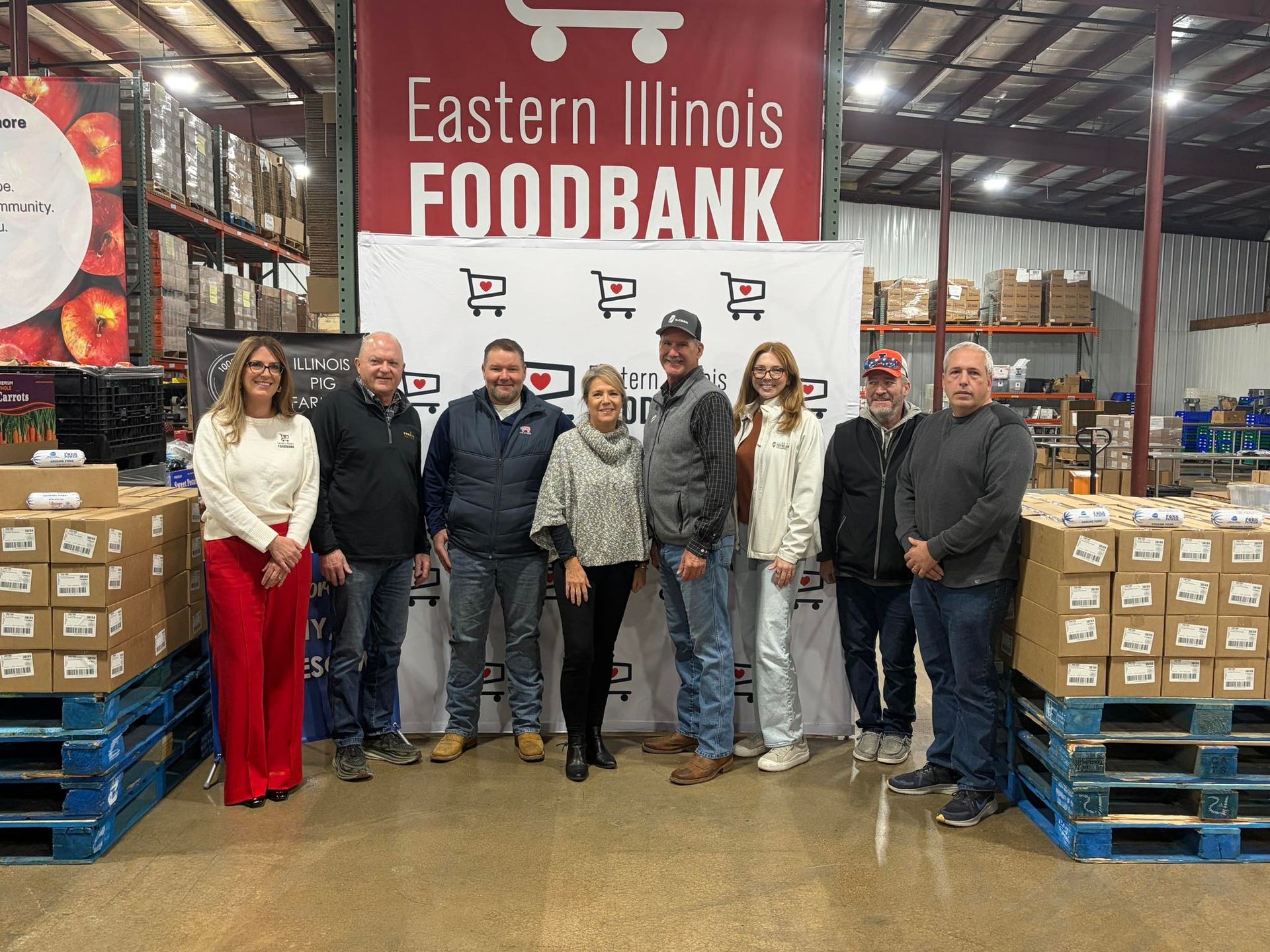
foodbank donation - farmers standing in front of a sign at a food bank

A Powerful Partnership to Combat Hunger

Each year, IPPA pools funds to purchase ground pork, distributing it among Illinois food banks. For 2025, Feeding Illinois matched IPPA’s contribution, doubling the amount of pork available thanks to support from the Illinois Farm to Food Bank Program, a state initiative connecting farmers directly with food banks to supply fresh, local food.


“Matching Illinois Pork Producers’ Pork Power program with Feeding Illinois’ Farm to Food Bank funding combines two impactful programs,” said Steve Ericson, Feeding Illinois. “This partnership puts more fresh, high-quality protein on the tables of our state’s hungry neighbors while investing in our Illinois hog farmers and supporting our Feeding Illinois food bank.”


The Illinois Association of Meat Processors (IAMP) also plays a key role by preparing an 85% lean ground pork product sourced from Illinois hogs.


“The Pork Power program once again is a full-circle effort from the farm to the tables of those in need, just in time for the holiday season,” said Dianne Handsaker, IAMP.


Corn Farmers Supporting Food Security

Livestock and grain farmers are deeply interconnected, and Illinois corn farmers are proud to contribute to this effort.


“Corn farmers help feed Illinois hogs, and those hogs in turn help feed Illinois families,” said Dan Meyer, Illinois farmer and IL Corn Marketing Board Director, who attended this year’s donation event. “Programs like Pork Power show what can happen when agriculture works together. We’re not just growing crops — we’re strengthening our communities.”


Agriculture Leaders Agree: This Matters

“Pork Power gives corn farmers a tangible way to support local food insecurity, strengthen relationships across commodity groups, and remind everyone that agriculture is about more than production — it’s about people,” said Tim Thompson, IL Corn Marketing Board Chairman.


“ISA values our long-standing partnership with IPPA, and the Pork Power program reflects what’s possible when Illinois agriculture works together,” added Todd Main, Illinois Soybean Association Director of Market Development.


Food Banks Receiving Pork in 2025

  • Central Illinois Food Bank
  • St. Louis Area Food Bank
  • Northern Illinois Food Bank
  • Midwest Food Bank
  • Greater Chicago Food Depository
  • River Bend Food Bank
  • Tri-State Food Bank
  • Eastern Illinois Food Bank

These donations were also supported by a contribution from Senator Doris Turner, Chairwoman of the Senate Agriculture Committee, whose gift was doubled through Feeding Illinois’ matching funds.


Thank You to the Partners Who Make This Possible

  • Feeding Illinois
  • IL Corn
  • Illinois Soybean Association
  • Illinois Meat Processors Association
  • Illinois Pork Producers Association
  • Senator Doris Turner
Lou Lamoreux Farm
By Tara Desmond September 3, 2026
Livestock farmer Lou Lamoreux talks about his farming operation.
captain Cornelius at shake it up cocktail lounge
By Tara Desmond September 3, 2026
4.29M bushels of U.S. corn fueled beverage alcohol production in July 2026 alone — up 54% from July 2025. Corn's in your Labor Day toast!
aerial view of short corn
By Tara Desmond September 3, 2026
Illinois farmer Steve Fourez tests short stature corn against conventional hybrids, exploring yield potential and late-season management benefits.
USDA building
By Lyndi Allen September 3, 2026
This week, U.S. Secretary of Agriculture Brooke L. Rollins announced the U.S. Department of Agriculture (USDA) Data Modernization Plan to put Farmers First, reduce unnecessary burdens on producers, and improve the timeliness, accuracy, and usefulness of the data that informs agricultural decisions. USDA data informs crop and livestock estimates, risk-management tools, disaster assistance, and critical business decisions made by farmers, ranchers, agribusinesses, researchers, and policymakers. In February 2026, Secretary Rollins issued a Request for Information seeking feedback on the opportunities, challenges, and emerging areas in USDA data. That feedback helped shape the USDA Data Modernization Plan and its four pillars: Modernize the Data Reporting Experience: USDA will expand use of administrative data, improve mobile access to surveys, explore opportunities to use prefilled information where appropriate, and strengthen coordination across the Department. These changes will reduce duplicative requests and limit the amount of time producers spend reporting information. Enhance Acreage and Yield Estimation: USDA will conduct a pilot to evaluate the use of improved satellite imagery, geospatial tools, crop models, and other emerging technologies combined with essential producer-reported information to enhance acreage and yield estimations. USDA will also assess the use of optional field inputs to enhance and ground truth yield estimates and continue advancing yield research through collaboration with agricultural partners and land-grant universities. Integrate Data and Technology Platforms: USDA will modernize its technology infrastructure, expand secure data-sharing capabilities, and evaluate the responsible use of tools such as artificial intelligence and machine learning. Better integrated systems will improve efficiency, reduce duplication, and allow USDA to produce more timely and useful information. Expand Trust and Transparency with Producers: USDA will protect producer privacy, clearly explain why information is requested and how it is used, and create additional opportunities for producers to provide feedback. USDA will also improve communication surrounding reports, methodologies, response rates, and data limitations. USDA will begin implementing actions under the plan immediately and will continue engaging farmers, ranchers, and agricultural stakeholders throughout the process. The Department will evaluate new approaches carefully, protect privacy and confidentiality, and publish clear methodologies and supporting information to maintain the integrity of USDA’s agricultural statistics. See USDA’s Full Data Modernization Plan
Cornfield beside a dirt path under a blue sky with wispy clouds
By Lyndi Allen September 2, 2026
EPA has granted 1.76 billion RIN exemptions to small refiners, raising concerns among farmers and biofuel producers about the potential impact on demand for renewable fuel.
Weekly News
By Lyndi Allen August 28, 2026
News from IL Corn for week ending 8/28/26
Show More