The U.S. Department of Agriculture (USDA) and the Trump Administration
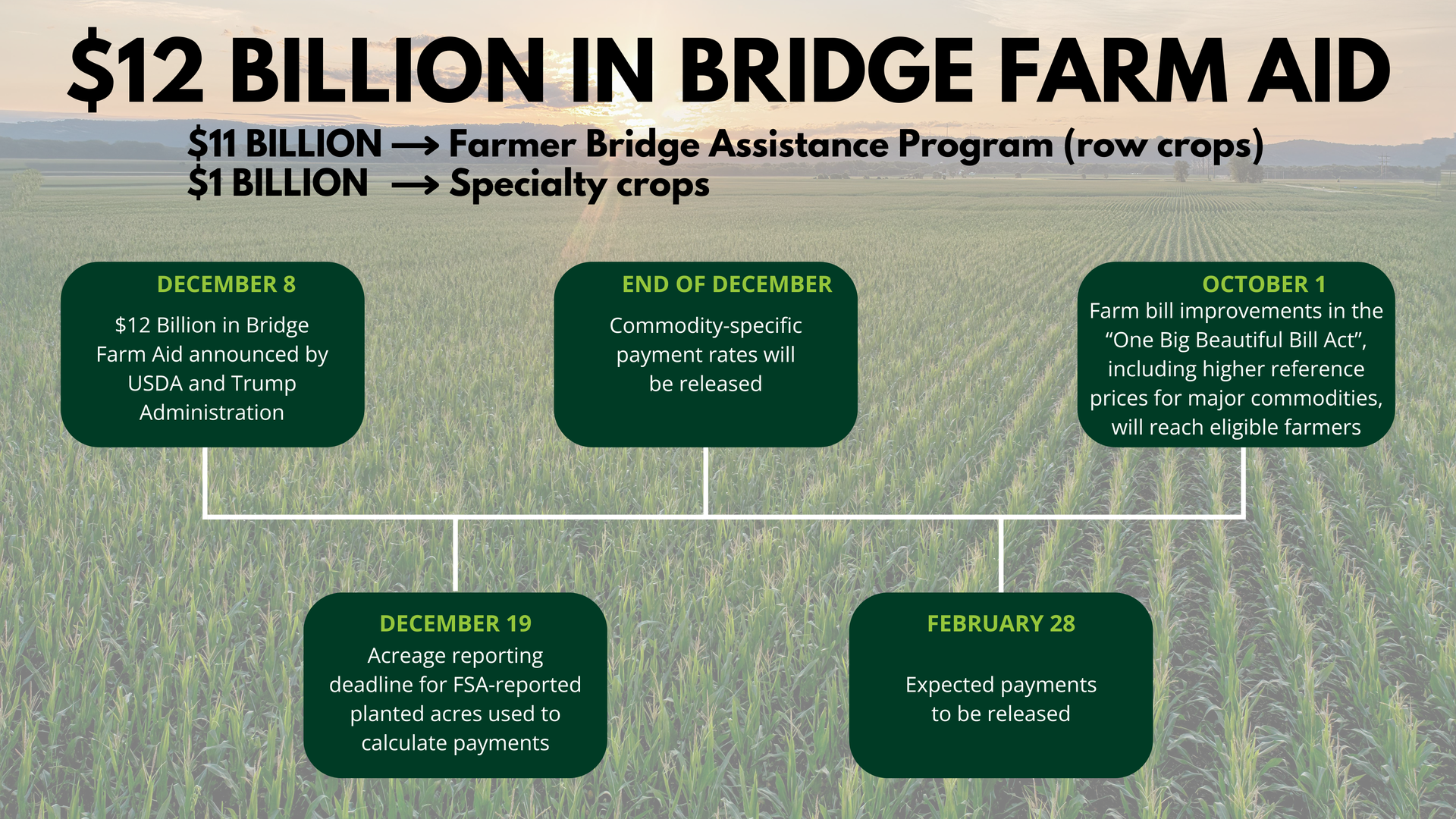
announced a one-time package of $12 billion in “bridge payments” to support American farmers. Of that total, up to $11 billion will go to the new Farmer Bridge Assistance Program (FBA), aimed at row crop farmers who suffered from market disruptions, high input costs, inflation, and market loss from foreign competitors. The remaining $1 billion is reserved for specialty crop producers, like sugar farmers.
“As farmers, we’re grateful for this bridge payment, but our focus is on strengthening the markets that sustain us year after year. Building demand through high-octane fuel policy, growing export markets, and improving domestic opportunities will help ensure Illinois farmers remain competitive and independent,” Mark Bunselmeyer, Illinois farmer and Illinois Corn Growers Association President.
In a recent IL Corn survey, both active Illinois farmers and landowners/retired farmers were clear about what would most effectively address today’s low corn prices. In that survey, 43 percent stated expanding export markets as the best solution (the highest-ranked option), while only 2 percent pointed to government payments, highlighting that farmers prefer market-driven growth over financial aid.
When Will You Receive it?
- Farmers who qualify for the FBA Program can expect payments to be released by February 28, 2026
- Eligible farmers should ensure their 2025 acreage reporting is factual and accurate by 4 pm CT on December 19, 2025, as USDA will be using Farm Service Agency-reported planted acres for crops
- Payment rates are likely to be released during the week of December 22nd, after the acreage reporting deadline is complete
- Commodity-specific payment rates will be released by the end of the month
- Crop insurance linkage will not be required for the FBA Program; however, USDA strongly urges producers to take advantage of the new OBBBA risk management tools to best protect against price risk and volatility in the future
How will it work?
- Payment limit of $155,000 per person / legal entity
- Adjusted gross income (AGI) limit of $900,000, no waivers for 75% of income coming from farming
- Corn silage is eligible, as well as double crop acres, Prevent Plant (PP) acres are not eligible
- FSA is still debating whether or not they will mail out pre-filled applications or just have them available online and/or in the county office
- The timing of sign-ups and the deadlines have not yet been announced, just their intention that payments will start by the end of February
The Farmer Bridge Assistance Program offers needed support heading into the 2026 crop season, but long-term stability depends on the strengthening markets over the next year. Advancing high-octane legislation, expanding global markets, and growing domestic demand will provide farmers the opportunity to be truly self-sufficient without the need for government payments.
The USDA will target improvements in farm bill components in the “One Big Beautiful Bill” (OBBBA), including higher reference prices for major commodities, which will reach eligible farmers.
IL Corn will continue to advocate for policies that allow farmers to reach their farming and financial goals.