
The Evolution of Ethanol: 40 Years of Progress


By Pearl McDade July 31, 2026

For over 40 years, IL Corn has championed ethanol policy across the state and nation.

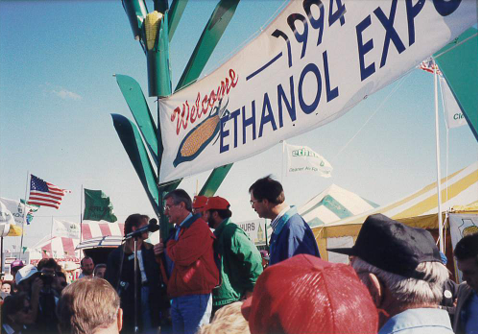
1994 Ethanol Expo opening IL Corn

From the oxygenate debates of the 1990s to today’s push for year-round E-15, ethanol has remained central to conversations about corn prices, cleaner fuel, and energy security. As policymakers revisit fuel standards and consumers look for relief at the gas pump, Illinois corn farmers continue to play a vital role in advancing fuel infrastructure that supports both American agriculture and domestic energy independence. 

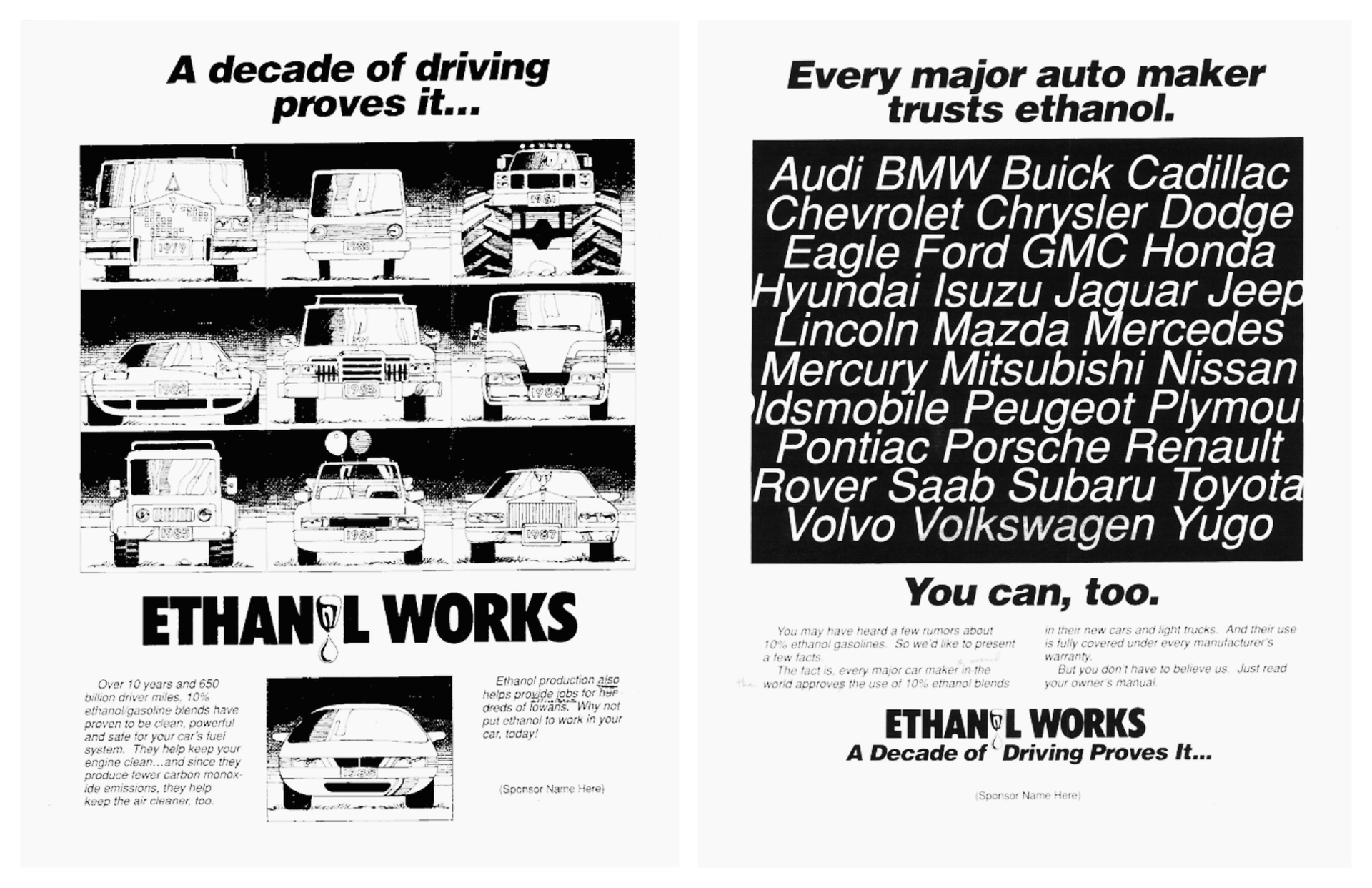
1988: Ethanol Works

Ethanol Works ad with car trust claims and a list of major auto makers.

In the late 1980s, IL Corn led a push for the adoption of a 10% blend of ethanol in gasoline (E-10) across fuel stations in the United States. 


In 2026, roughly 98% of gasoline in the U.S. contains ethanol.  In addition, all vehicles 2001+ and older are compatible with E-10 by design, with most 2001+ vehicles safe to use with E-15 as well.


Today, IL Corn has shifted its goals to the roll out of E-15, a blend that contains 5% more ethanol content. In May, the house passed HR 1346, which championed year-round protections for E-15 at the pump. This legislation was supported by all 17 Illinois representatives, demonstrating the state's strong commitment to E-15 legislation. 


17 manufacturers have also built "flex-fuel" vehicles (FFVs) that are compatible with ethanol blends up to 85%. 

1992: Corn to Ethanol Research Pilot Plant

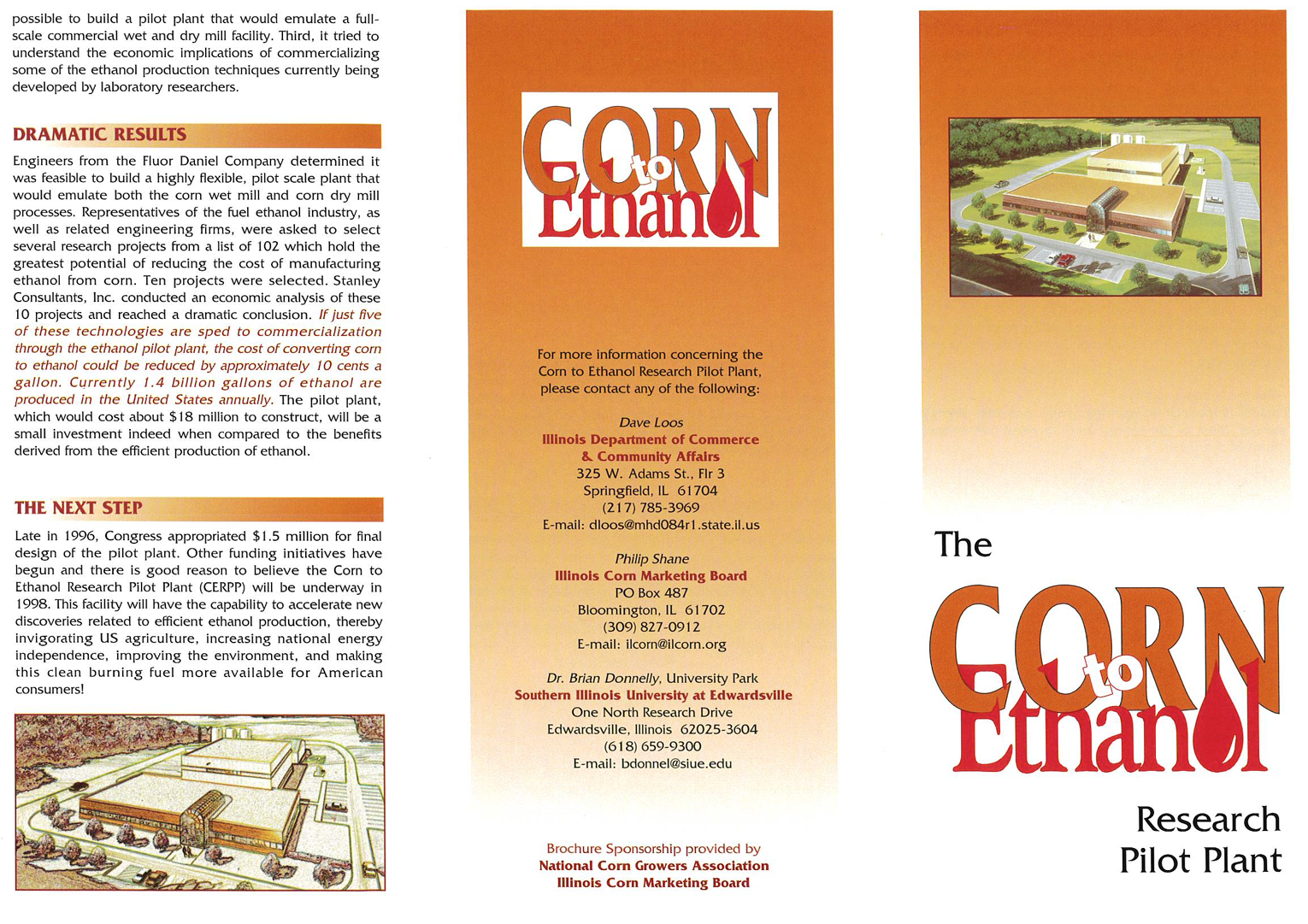
Corn Ethanol research pilot plant brochure cover and interior pages with photos and text
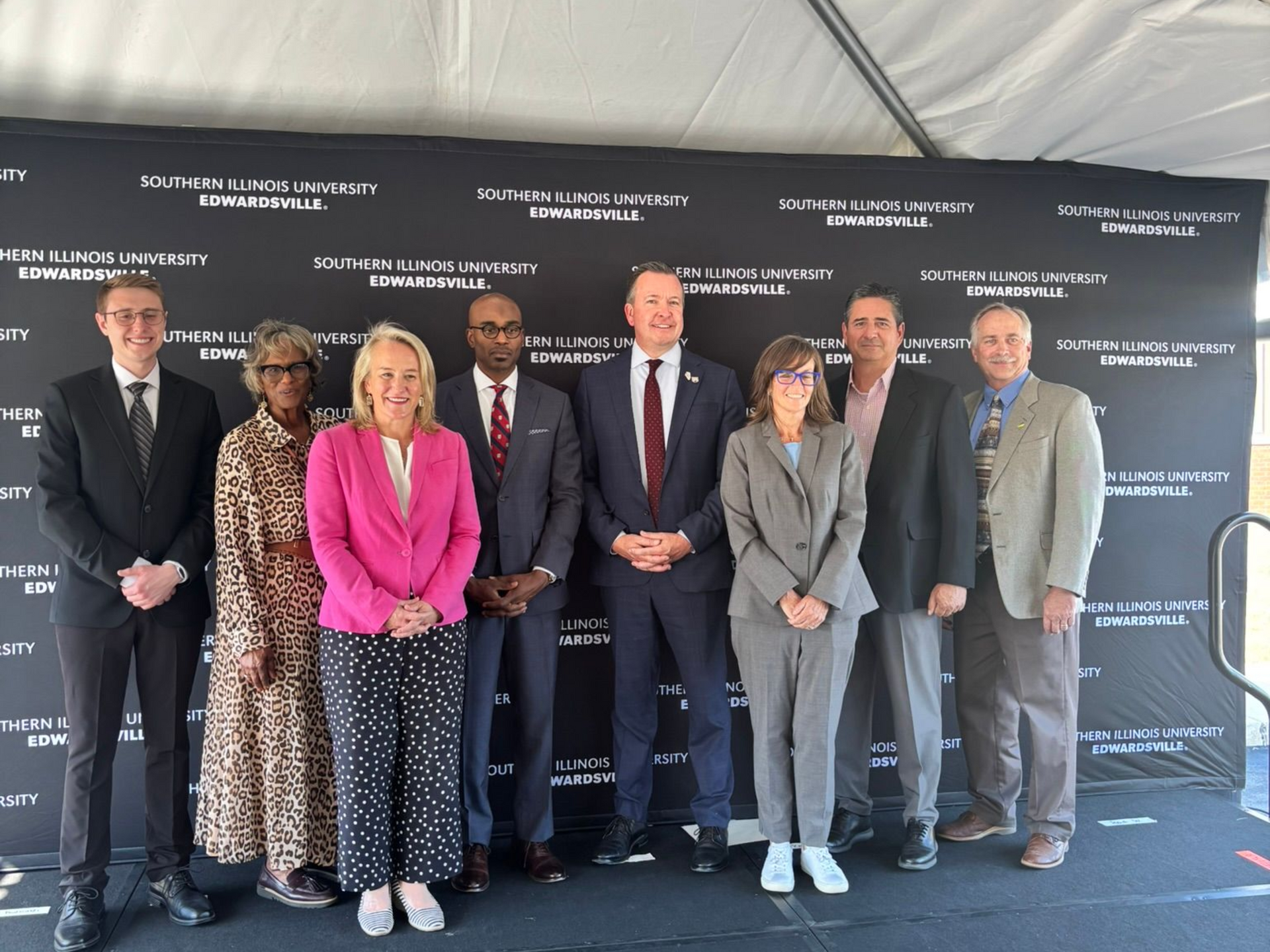
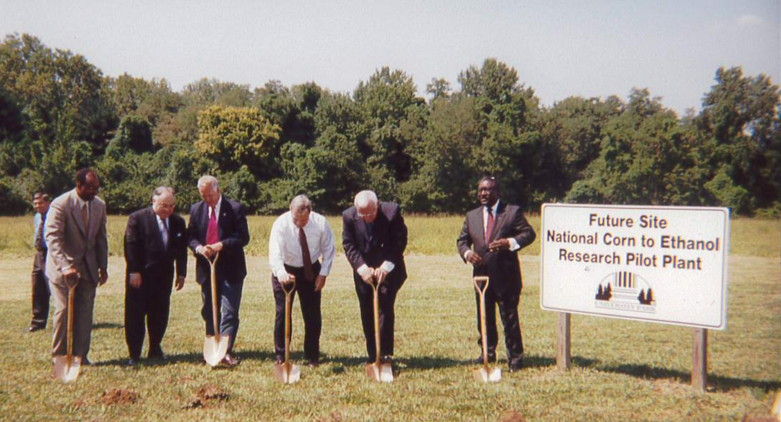
National Corn to Ethanol Research Center breaking ground August 2001

Suggested by the ICGA in 1992, The National Corn to Ethanol Research Center (NCERC) opened its doors at Southern Illinois University Edwardsville in 2003. Supported by the 1997 Farm Bill and the Illinois Department of Commerce and Economic Opportunity, NCERC quickly grew into a hub of innovation.


Today, it leads national renewable fuel research and has become a cornerstone for corn demand, continuing to push boundaries with new advancements in ethanol production.

1994: Protecting Ethanol's Market Share

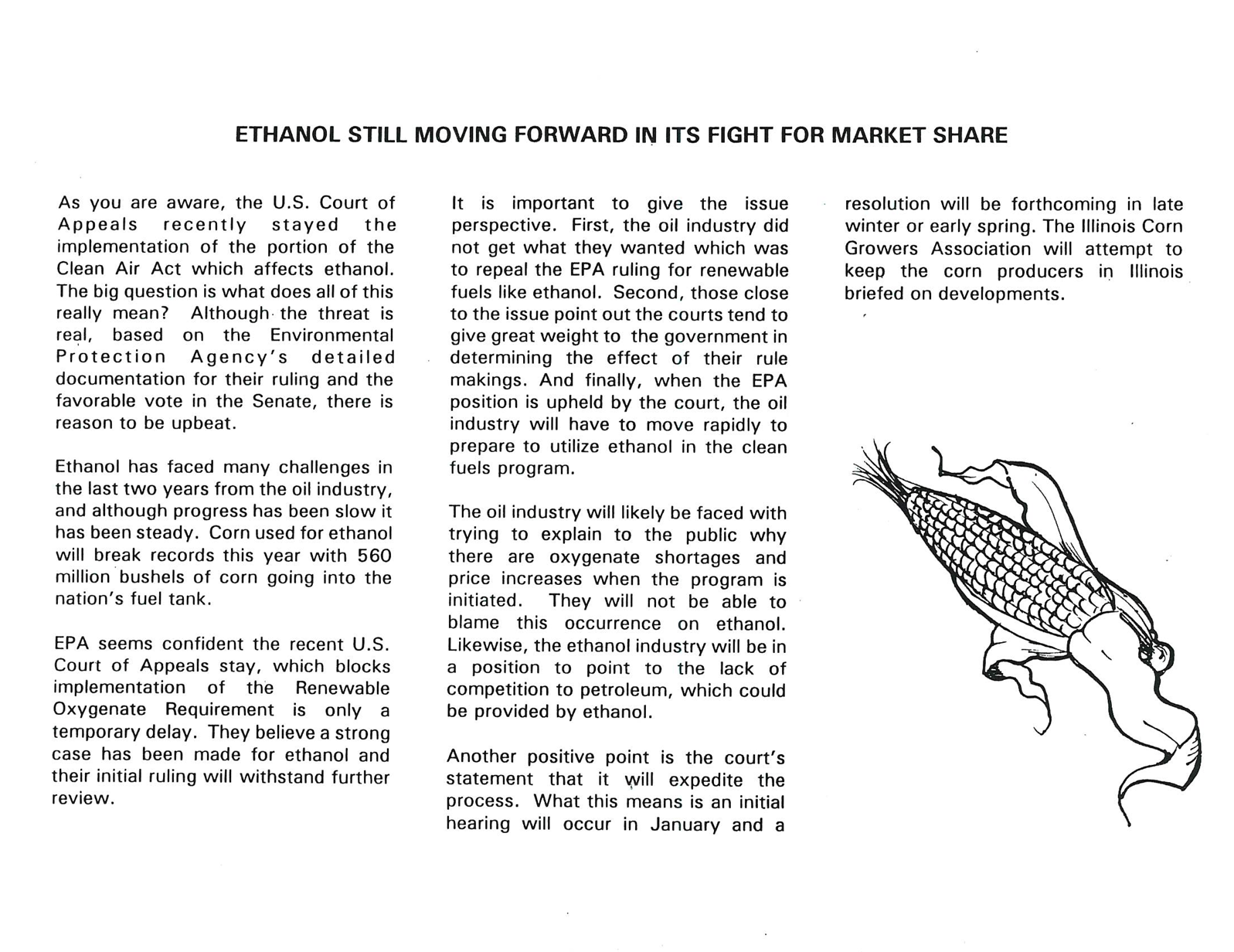
Ethanol market share news release IL Corn 1994

In the fall of 1994, the U.S. Court of Appeals issued a "stay" blocking the implementation of the Environmental Protection Agency’s (EPA) Renewable Oxygenate Requirement (ROR). In April 1995, the court permanently struck down the ROR, ruling that while the EPA had the authority to set clean air standards under the 1990 Clean Air Act, it exceeded it by trying to mandate a specific market share (like 30%). 


Refiners quickly began to favor a petroleum-based chemical oxygenate, MTBE, as opposed to corn-based ethanol. However, by the late 1990s MTBE was found to be leaking from underground storage tanks and contaminating public water supplies. As a result, Congress removed the 1990 Clean Air Act's 2% oxygenate requirement. 


Today, the Renewable Fuel Standard (RFS) serves as an alternative that promotes the use of 15 billion gallons of ethanol and other biofuels.

1998: Ethanol & Corn Prices

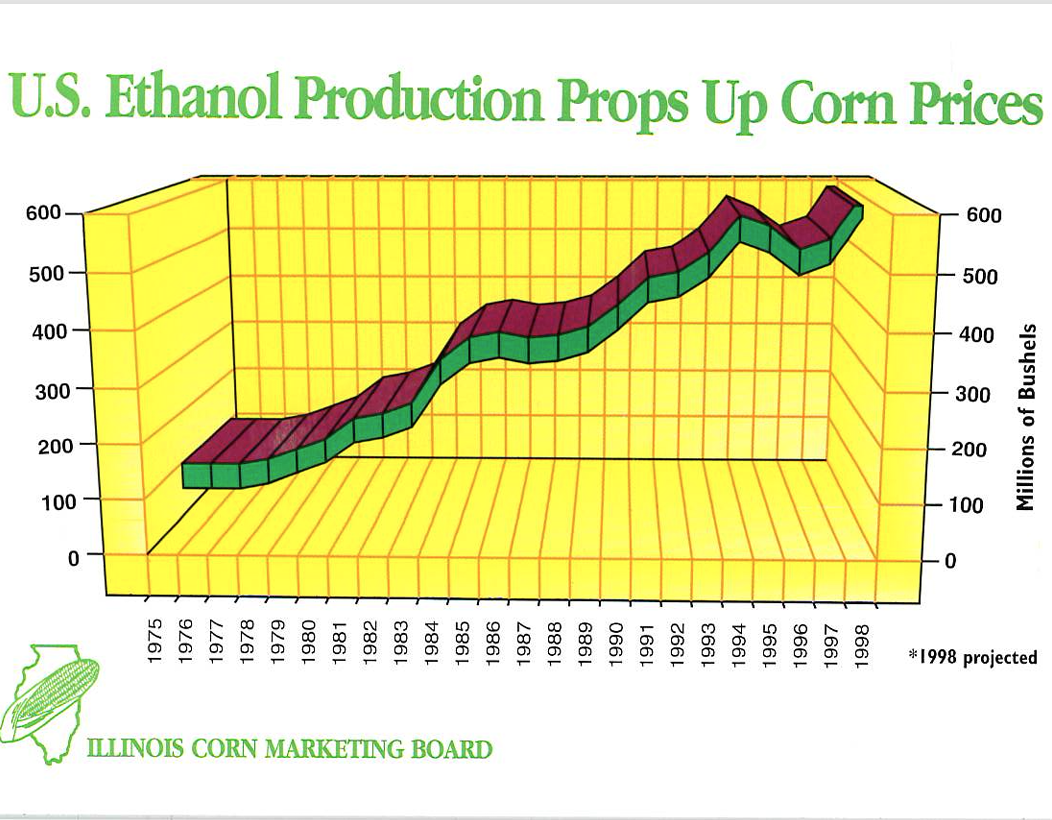
“U.S. Ethanol Production Props Up Corn Prices” IL Corn news 1998

In 1998, ethanol production used rough 526 million bushels of corn according to NCGA data. 


This year, an estimated 5.6 billion bushels of corn will be used for ethanol production according to the USDA's WADE Report. That's roughly 1/3 of all corn harvested in the United States. As corn yields steadily increase across Illinois, continued demand for ethanol will be essential for protecting corn prices in years to come.

2002: The American Fuel

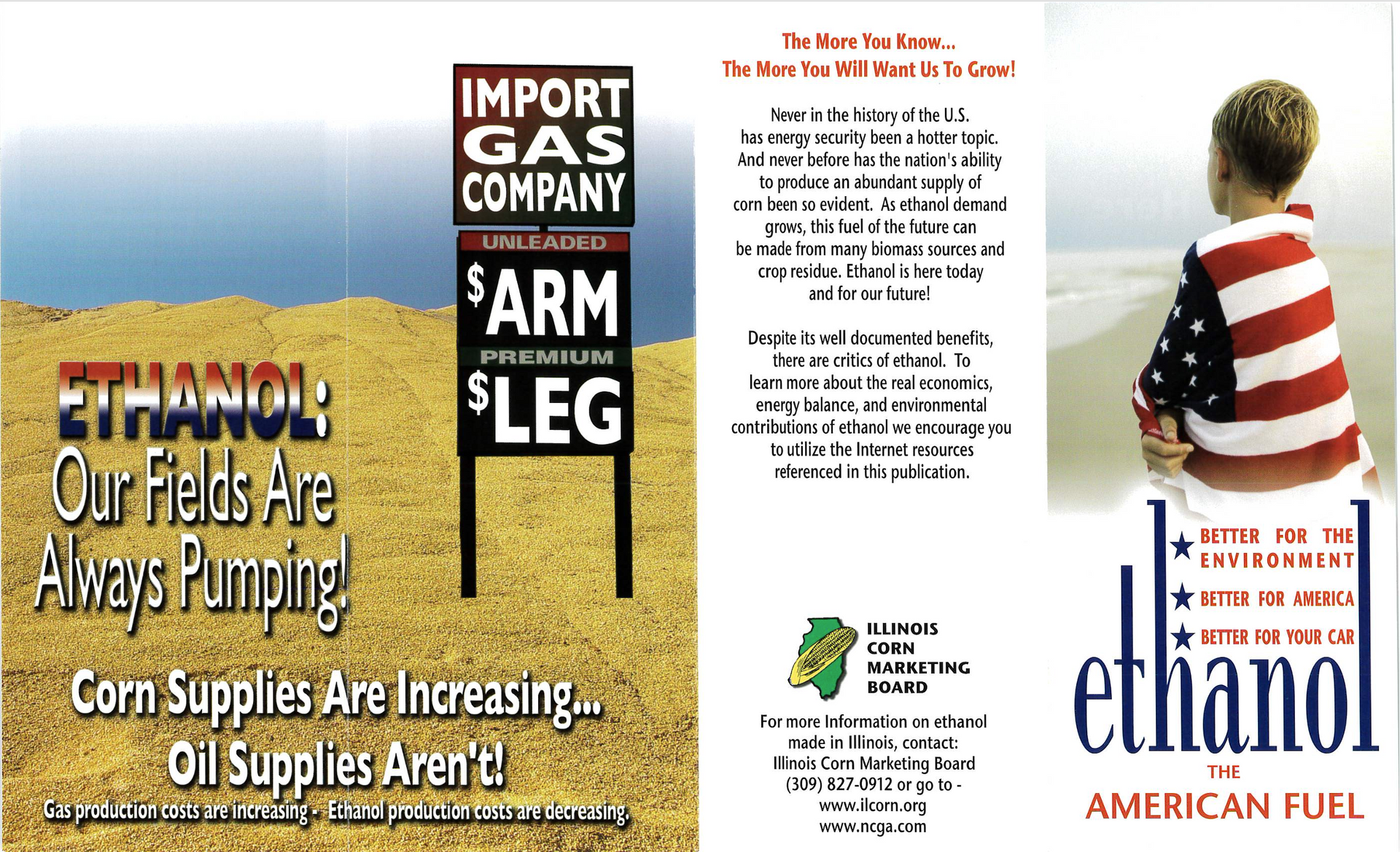
Ethanol the American Fuel IL Corn early 2000s

In the early-2000s, energy security was at the top of mind for many Americans. 


Today, among ongoing conflicts in the middle east, energy security remains top of mind. With the average gas price in Illinois peaking at almost $5 a gallon for regular and over $6 a gallon for diesel during the Iran conflict, consumers and farmers alike are searching for a solution. 


Time and time again, ethanol has proven that having a reliable home-grown energy alternative benefits Americans in times of conflict. IL corn continues to support E-15 legislation, which would reduce both financial and energy security concerns.

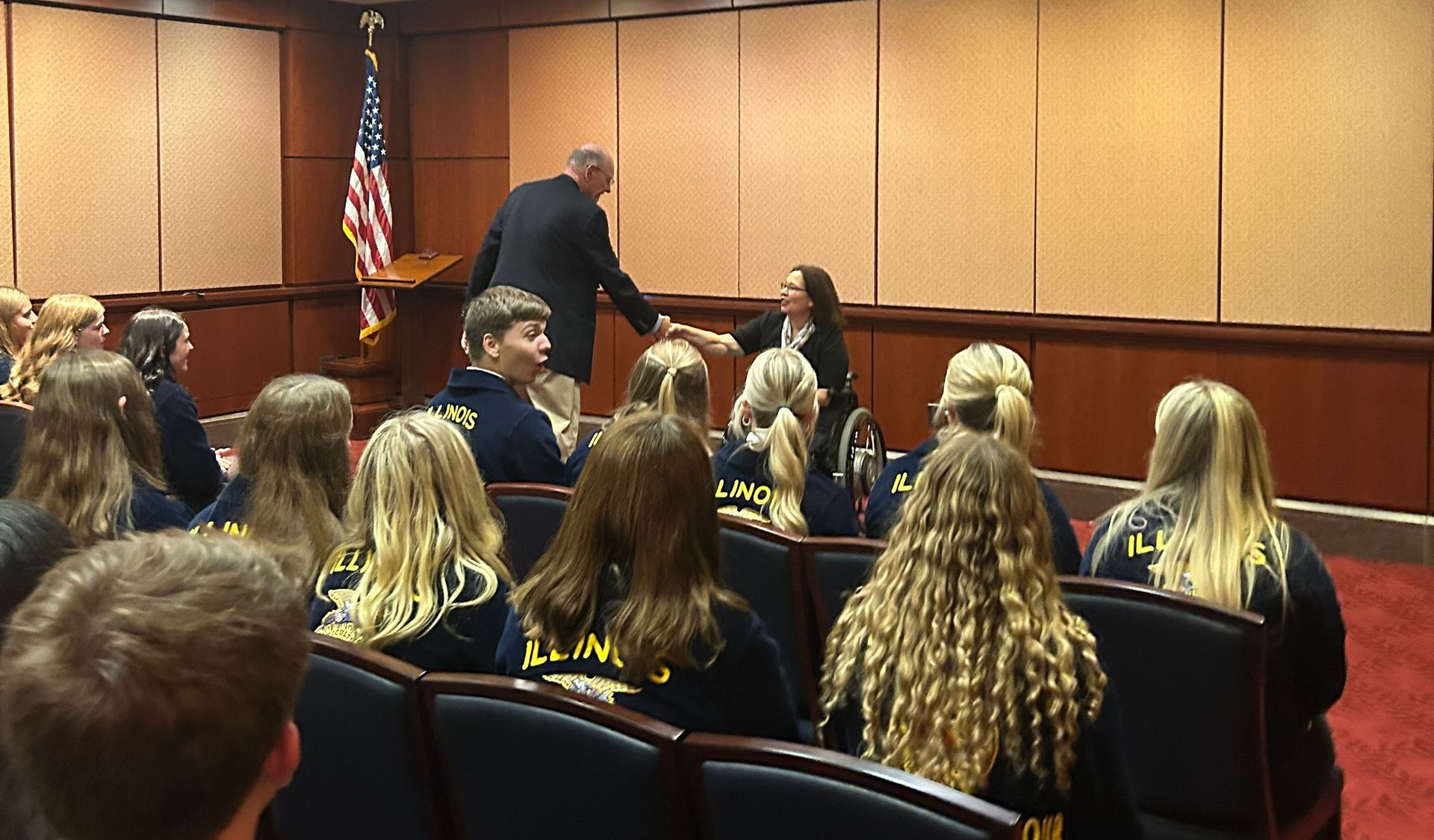
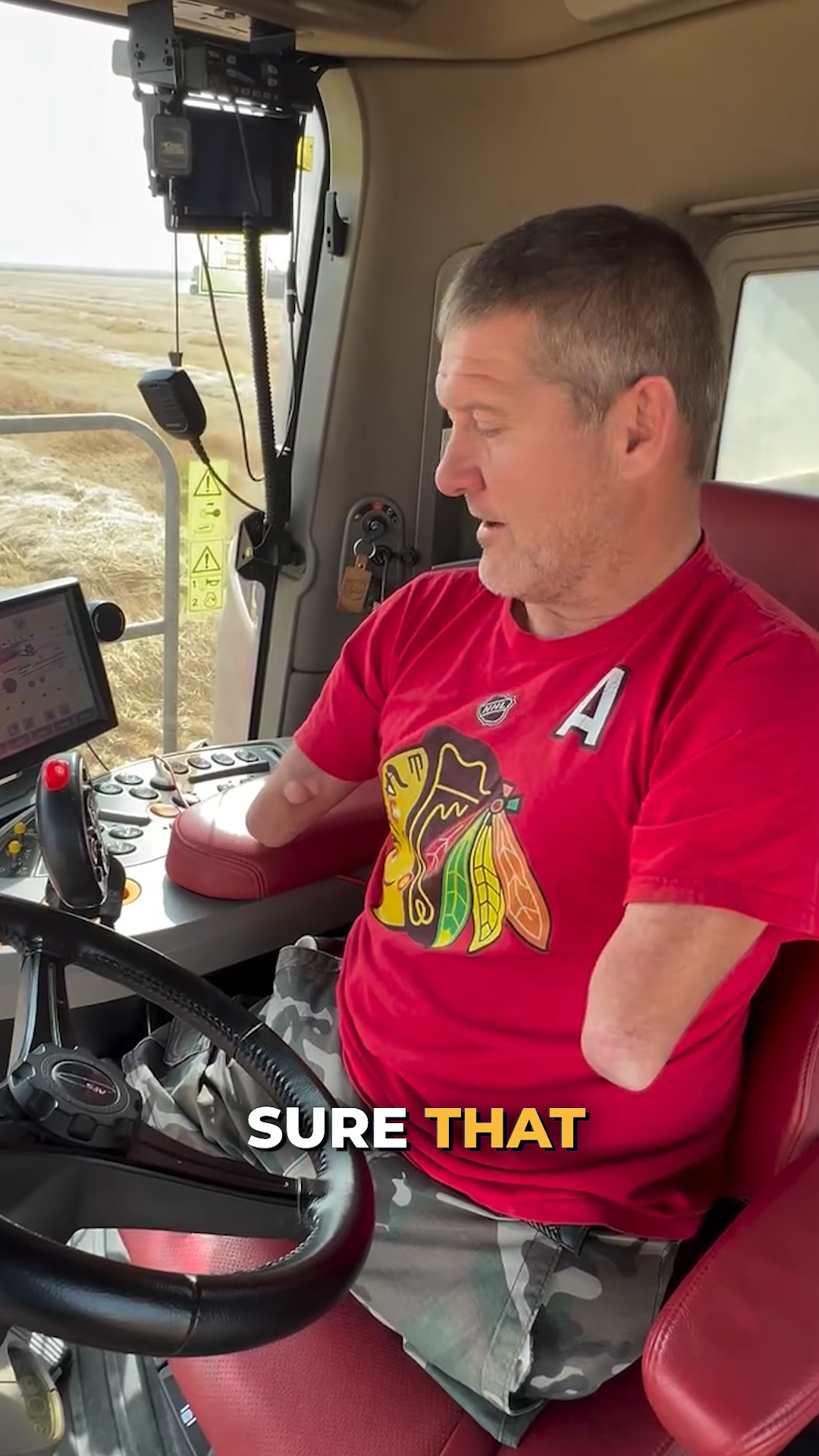
State Senator Tammy Duckworth, Illinois FFA students, and Illinois Farmer

Today, ICGA leaders continue to advocate for ethanol legislation and infrastructure on the state and national level. Most recently, ICGA leaders visited Washington, D.C. to discuss the state of E-15 and the farm economy.


To stay up to date on ethanol news, visit https://www.ilcorn.org/ethanol.


Not a member?

Become one today!

SHARE THIS

Latest Posts

pearl mcdade headshot il corn summer 2026 intern
By Pearl McDade July 31, 2026
After a 10-week summer internship with IL Corn, Pearl McDade leaves with new insights into advocacy, education, and leadership in agriculture.
Fred Below
By Tara Desmond July 30, 2026
Dr. Fred Below shares research on nitrogen timing, hybrid selection and the Seven Wonders of 300 Bushels to help maximize corn yield.
Collin Watters
By IL Corn Growers Association July 30, 2026
Learn why phosphate duties matter to Illinois corn farmers and how fertilizer imports, competition, and trade policy can impact input costs.
Makenna Frantz in Washington, D.C.
By Lyndi Allen July 30, 2026
Meet Makenna Frantz, a sixth-generation farmer in Arthur, IL, and a 2026 GR.O.W participant. Get to know the Heritage Family Farms operation and Makenna’s GROW experience.
Greg and Janis Thoren
By Lyndi Allen July 30, 2026
The Illinois 2026 Leopold Conservation Award recipient is Greg and Janis Thoren in Stockton, Illinois. The Leopold Conservation Award honors farmers who go above and beyond
Rep. Darin LaHood, Cliff Lane, and Mike Shane
By Lyndi Allen July 23, 2026
There are some common misconceptions that farmers want all lawmakers to understand about farming and agriculture.
Illinois Farmer Ron Miller
By Tara Desmond July 23, 2026
Learn how Illinois farmer Leslie Miller helped pioneer anhydrous ammonia use, transforming corn production and shaping modern nutrient management.
thumbnail of Rod Weinzierl
By Tara Desmond July 23, 2026
Rod Weinzierl breaks down what IL Corn really does — from crop insurance breakthroughs to river infrastructure to advice for the next generation of farmers.
Nicole (York) Racey
By Pearl McDade July 22, 2026
Nicole Racey reflects on her internship with IL Corn, her career in higher education, favorite memories, and advice for IL Corn interns
Tara Harvesting
By Tara Desmond July 22, 2026
Tara Barrett-Duzan left journalism to save her family's farm after tragedy struck twice - a story now told in the documentary "The Farmer's Daughter."
Show More