
Corn Congress to Capitol Hill


By Lyndi Allen July 16, 2026

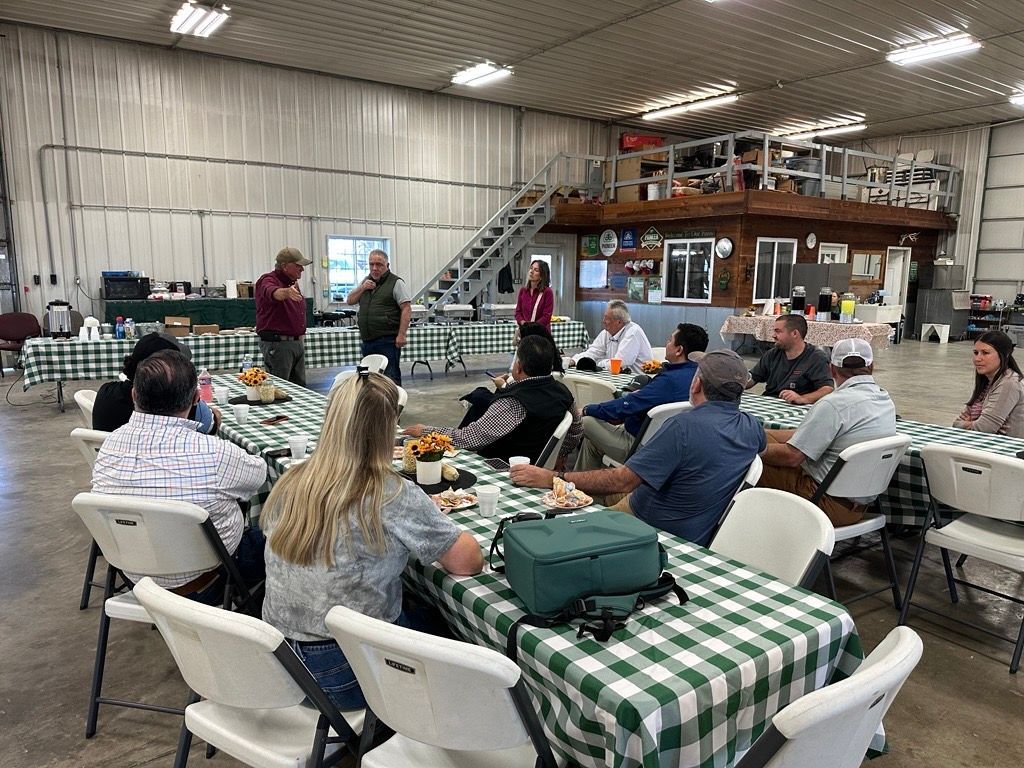
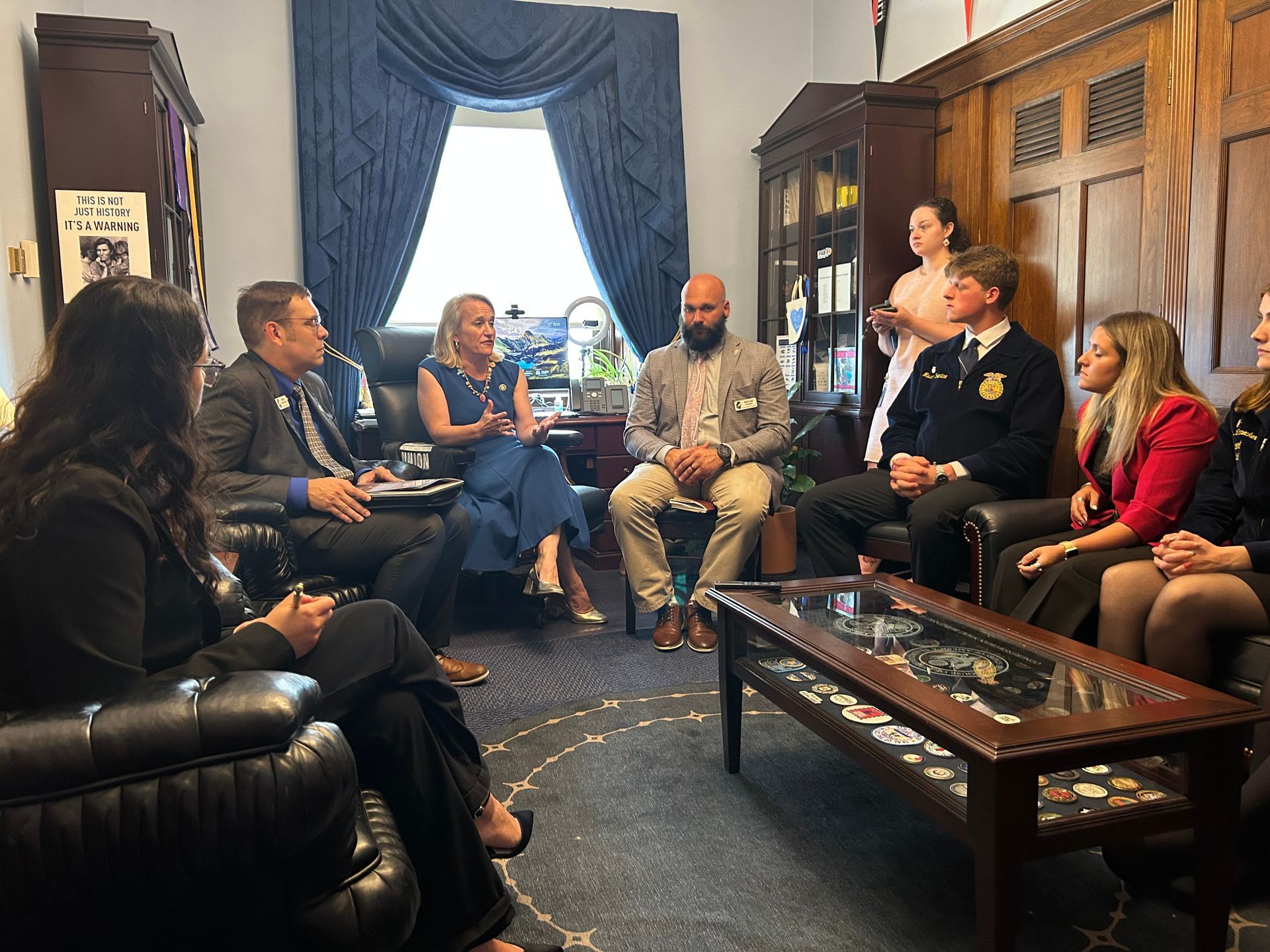
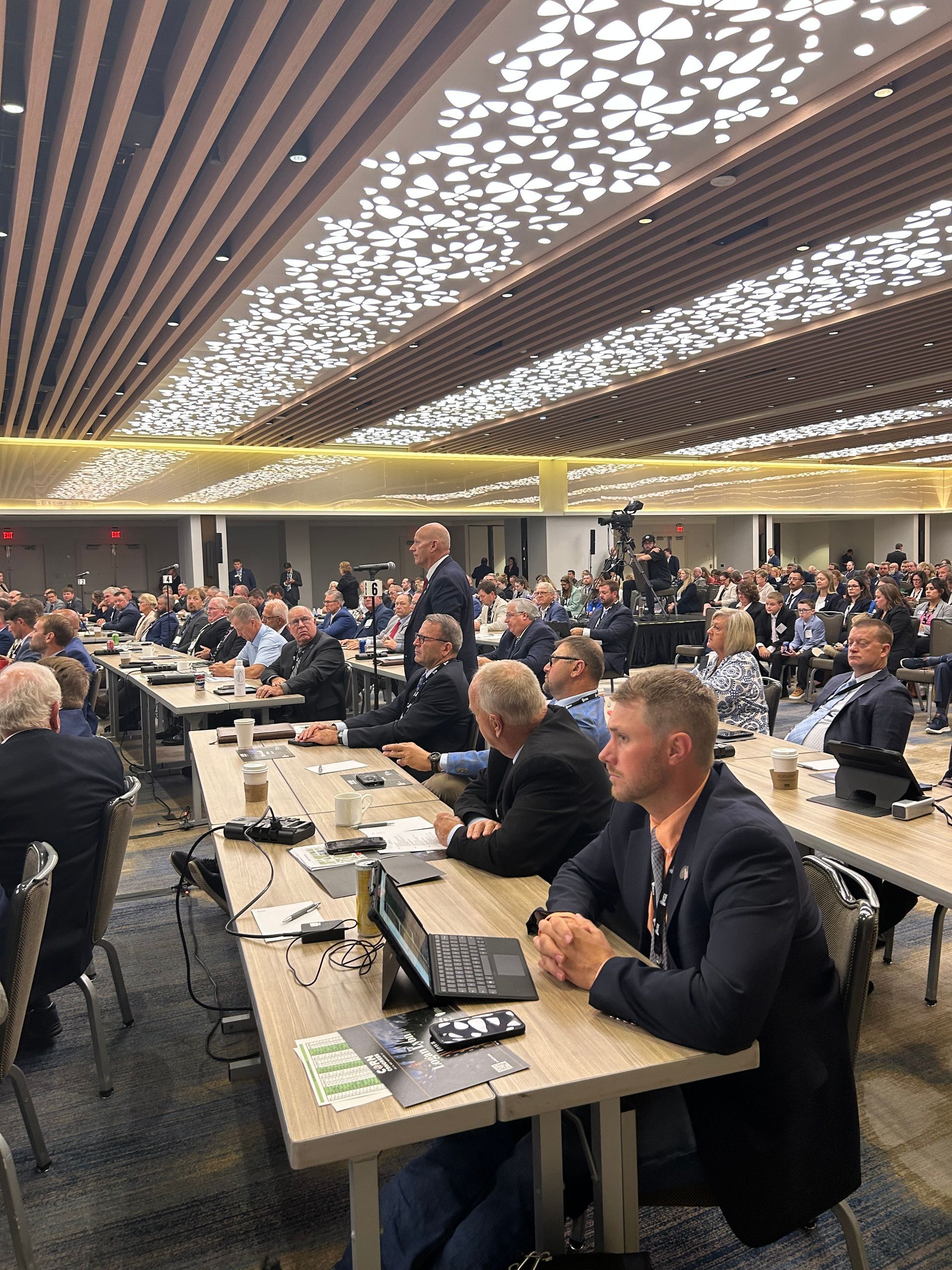
This week, farmer leaders of the IL Corn Growers Association advocated for their peers on Capitol Hill in Washington, DC. The National Corn Growers Association (NCGA) also held its annual Corn Congress, where IL Corn Growers Association (ICGA) and IL Corn Marketing Board (ICMB) leaders met with farmer leaders from other corn states to discuss policy priorities and goals.


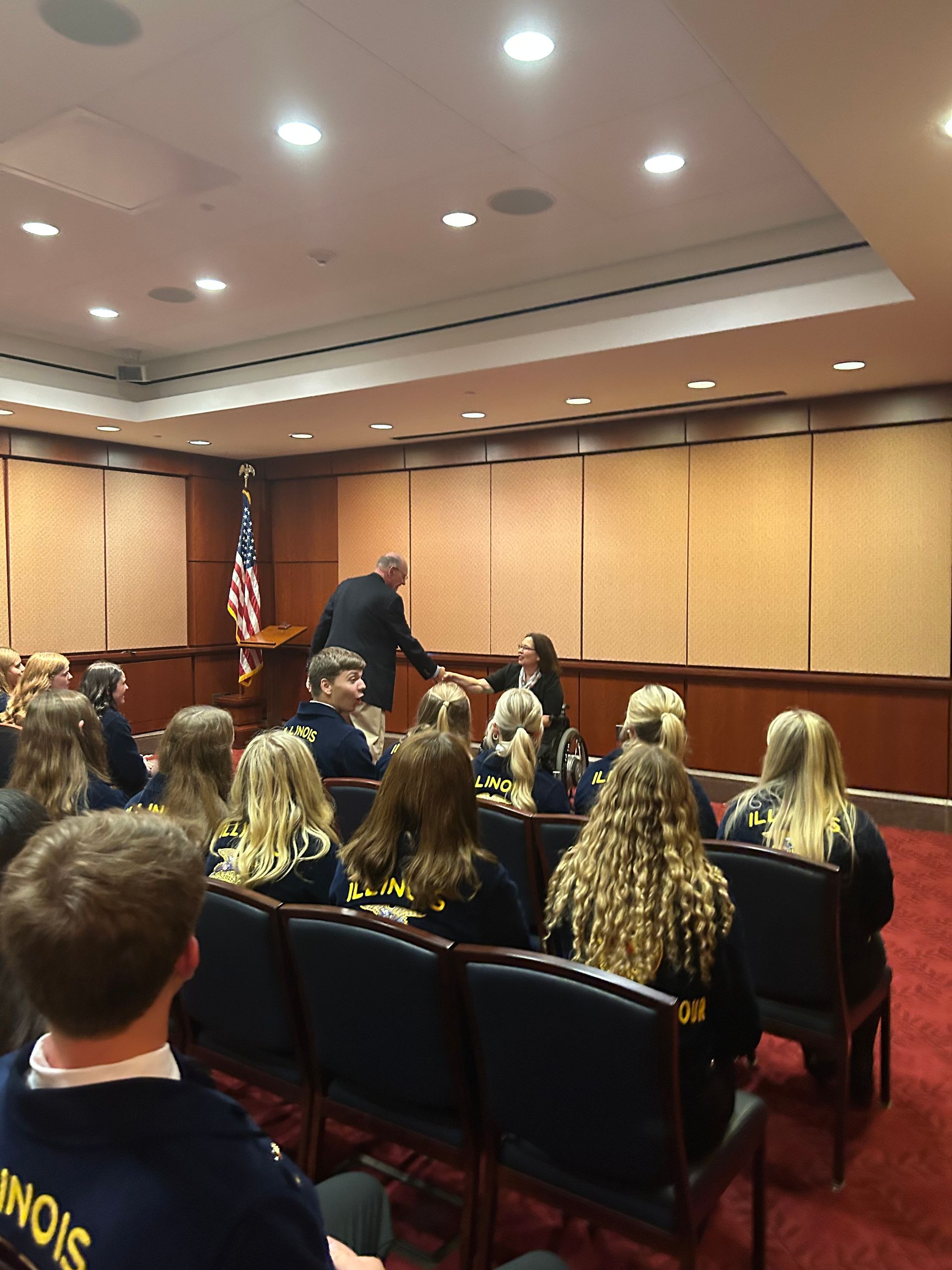
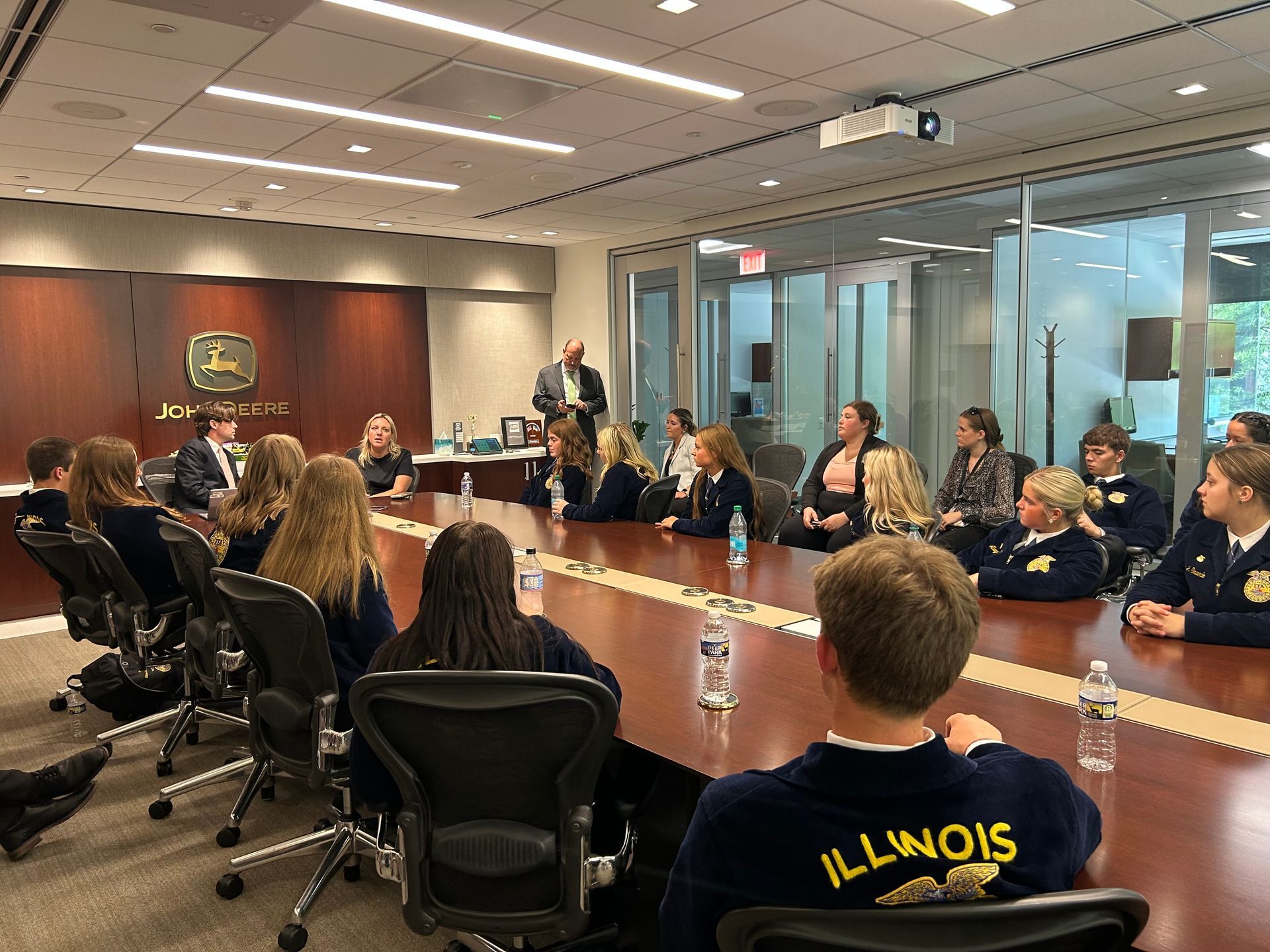
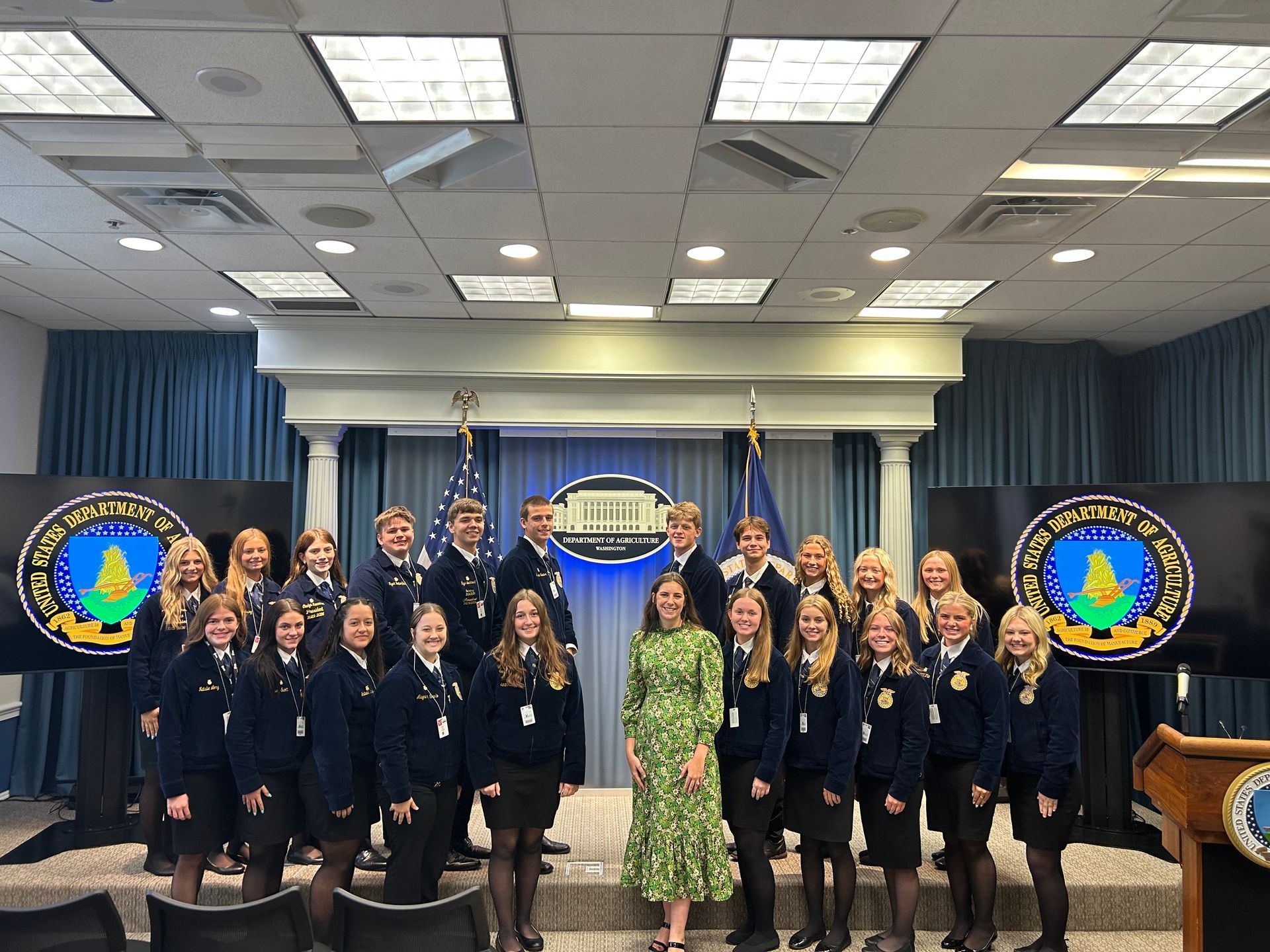
IL Corn invited the 25 Illinois FFA Section Presidents to Washington, D.C., to meet with ICGA, ICMB, and industry partners to learn more about corn systems, strategies, and the various avenues that affect corn in agriculture.


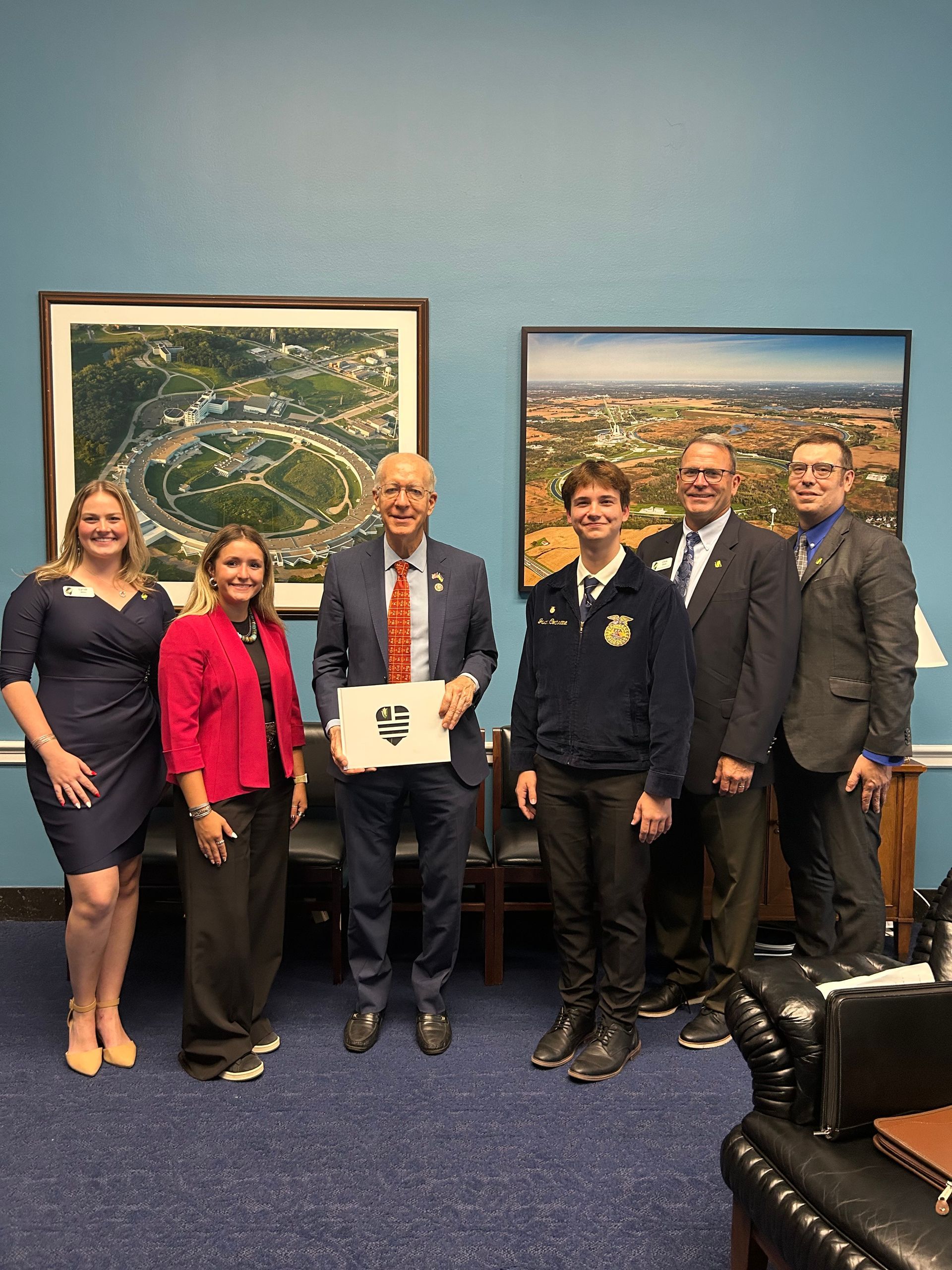
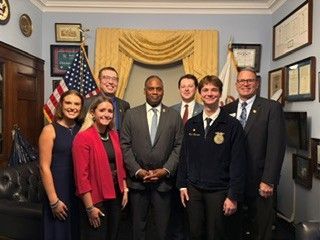
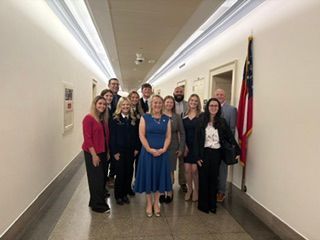
The Illinois congressional delegation heard firsthand from Illinois corn farmers about the downturn in the agricultural economy. During IL Corn’s time in D.C., ICGA and Illinois FFA District Presidents (FFA) met with 17 congressmen and both Senators.


IL Corn's policy priorities for the 119th Congress in July 2026 focus on farm economy, trade, Farm Bill, renewable fuels, conservation, and lock and dams.


Farm Economy 

  • Congress must protect our family farms amid declining commodity prices and destruction of corn demand. 
  • Farm income is decreasing and so is the number of farms 
  • Low commodity prices are hurting farmers as input costs remain high 
  • Policy uncertainty limits demand growth 
  • Illinois farmers seek profits from the market – not the government. Farmers need policies in place to bolster export and domestic demand while protecting the agriculture industry. 


Trade 

  • Congress must ensure that the U.S.-Mexico-Canada Agreement (USMCA) gets a renewal.
  • Congress must act to help farmers compete in the global marketplace by allowing farmers to access critical inputs and supporting a positive trade policy agenda that is mutually beneficial to farmers and their end customers. 


Farm Bill

  • Senate must pass a bipartisan Farm Bill.


Renewable Fuels 

  • Ethanol demand is declining while corn yields continue to increase, leading to financial losses for farmers 
  • Senate must pass permanent, year-round E15
  • ICGA supports both high octane fuel legislation and incentives for maritime and sustainable aviation fuel (SAF) 


Conservation 

  • ICGA wishes to work with the Congress and the appropriate agencies to protect profitable, resilient, and productive American farms  
  • We support policies that help farmers overcome barriers to conservation adoption  
  • Crop insurance integrations that improve resiliency on Illinois farms 
  • Congressional support for flexible and voluntary conservation programs  


Lock and Dams 

  • Enact fiscal year 2027 (FY27) Energy and Water Appropriations 
  • Oppose any potential tolling, lockage fees, or other onerous charges for commercial users of waterway systems 


Illinois corn farmers and their representatives discussed how current laws affect their livelihoods and lives on the farm in rural Illinois. IL Corn will continue to advocate in Washington, D.C. We encourage our members to join us in our advocacy efforts through our political action committee (PAC) and call-to-actions (CTAs).  


Not a member?

Become one today!

SHARE THIS

Latest Posts

Person crouching in a green field, inspecting crops by hand under bright sunlight
By Lyndi Allen September 10, 2026
The IRS released guidance to provide farmers with more clarity on the 45Z Clean Fuel Production Tax Credit and its role in supporting domestic biofuel production.
interactive game
By Tara Desmond September 10, 2026
See how corn travels the world in this new interactive game!
Citroniq
By Radicle Growth September 10, 2026
Citroniq and Future Origins Selected to Receive Investment Through Competition Designed to Drive New Demand for Corn
unshucked thumbnail with Tara and corn blowing out her ears
By Tara Desmond September 9, 2026
Meet Pervis Ellis: 104-Degree Harvest, No-Till, and White Corn for Mexico
Ron Miller on his farm
By Tara Desmond September 9, 2026
From Illinois fields to African villages, Ron Miller shares the farming lessons, friendships and one life-changing story he’ll never forget.
Evan Blind at NCERC
By Tara Desmond September 8, 2026
Step inside NCERC to see how Illinois corn growers are helping drive research into ethanol, new technologies and the next big opportunities for corn.
Lou Lamoreux Farm
By Tara Desmond September 3, 2026
Livestock farmer Lou Lamoreux talks about his farming operation.
captain Cornelius at shake it up cocktail lounge
By Tara Desmond September 3, 2026
4.29M bushels of U.S. corn fueled beverage alcohol production in July 2026 alone — up 54% from July 2025. Corn's in your Labor Day toast!
aerial view of short corn
By Tara Desmond September 3, 2026
Illinois farmer Steve Fourez tests short stature corn against conventional hybrids, exploring yield potential and late-season management benefits.
USDA building
By Lyndi Allen September 3, 2026
This week, U.S. Secretary of Agriculture Brooke L. Rollins announced the U.S. Department of Agriculture (USDA) Data Modernization Plan to put Farmers First, reduce unnecessary burdens on producers, and improve the timeliness, accuracy, and usefulness of the data that informs agricultural decisions. USDA data informs crop and livestock estimates, risk-management tools, disaster assistance, and critical business decisions made by farmers, ranchers, agribusinesses, researchers, and policymakers. In February 2026, Secretary Rollins issued a Request for Information seeking feedback on the opportunities, challenges, and emerging areas in USDA data. That feedback helped shape the USDA Data Modernization Plan and its four pillars: Modernize the Data Reporting Experience: USDA will expand use of administrative data, improve mobile access to surveys, explore opportunities to use prefilled information where appropriate, and strengthen coordination across the Department. These changes will reduce duplicative requests and limit the amount of time producers spend reporting information. Enhance Acreage and Yield Estimation: USDA will conduct a pilot to evaluate the use of improved satellite imagery, geospatial tools, crop models, and other emerging technologies combined with essential producer-reported information to enhance acreage and yield estimations. USDA will also assess the use of optional field inputs to enhance and ground truth yield estimates and continue advancing yield research through collaboration with agricultural partners and land-grant universities. Integrate Data and Technology Platforms: USDA will modernize its technology infrastructure, expand secure data-sharing capabilities, and evaluate the responsible use of tools such as artificial intelligence and machine learning. Better integrated systems will improve efficiency, reduce duplication, and allow USDA to produce more timely and useful information. Expand Trust and Transparency with Producers: USDA will protect producer privacy, clearly explain why information is requested and how it is used, and create additional opportunities for producers to provide feedback. USDA will also improve communication surrounding reports, methodologies, response rates, and data limitations. USDA will begin implementing actions under the plan immediately and will continue engaging farmers, ranchers, and agricultural stakeholders throughout the process. The Department will evaluate new approaches carefully, protect privacy and confidentiality, and publish clear methodologies and supporting information to maintain the integrity of USDA’s agricultural statistics. See USDA’s Full Data Modernization Plan
Show More