
Ag Data Transparent: Helping Farmers Understand What They're Signing
By Tara Desmond • July 16, 2026
Farm equipment today generates an enormous amount of data. Yield monitors track harvest results acre by acre, application records log fertilizer rates and timing, and planters record seeding populations down to the row. That data gets shared through contracts farmers sign with equipment manufacturers, software platforms, and service providers, and those contracts aren't always easy to interpret.
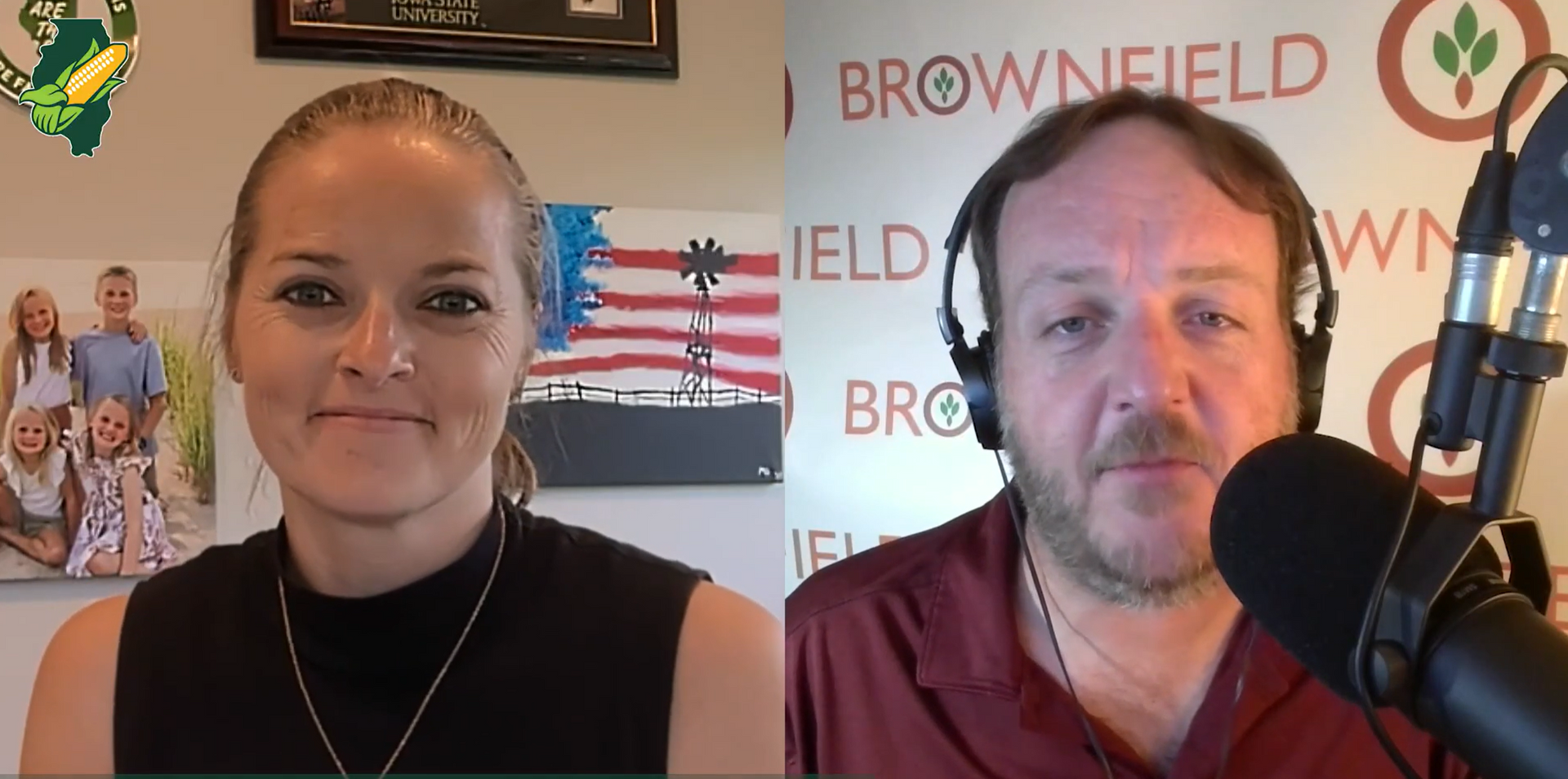
That's the problem Ag Data Transparent (ADT) was built to solve. On the latest episode of IL Corn TV, host Laura Gentry, Director of Water Quality Science for IL Corn, spoke with Todd Jansen, founder of Jansen Schroeder Agricultural Law and current president of the ADT board, about how the organization got started and why it matters to farmers today.
A Decade of Data Questions
Jansen, who grew up on a beef cattle and hay operation in south central Kansas before becoming an agricultural attorney, explained that ADT emerged from farmer concerns roughly ten years ago. American Farm Bureau organized roundtable discussions that produced a set of core principles for how companies should handle data collected from farms. When it became clear that getting companies to agree to those principles in theory didn't always translate into contracts that reflected them in practice, ADT was formed to certify that companies' actual contract language lived up to the standards.
How Certification Works
Over 50 companies have gone through the ADT certification process, with more than 30 currently active members. The list spans small ag-tech startups paying a modest certification fee up to major players like John Deere's Operations Center and Bayer's FieldView platform. The nonprofit is overseen by a board representing major farm organizations, including National Corn Growers Association, American Soybean Association, and American Farm Bureau, along with commodity groups for sorghum, wheat, and now the Canadian Federation of Agriculture.
Transparency, Not Restriction
Jansen was clear that ADT certification doesn't tell companies what they can or can't do with farm data — it simply requires them to be upfront about it. He pointed to two early ADT members as an example of how differently companies can approach data: Beck's Hybrids' Farm Server platform kept data siloed unless a farmer chose to share it elsewhere, while Farmers Business Network was built specifically for farmer-to-farmer benchmarking. Both approaches are valid under ADT's standards, as long as farmers understand which one they're signing up for.
For farmers who don't have time to read every line of a data contract, Jansen said, ADT's website offers a shortcut to see how a company has answered core questions about data use without wading through legal language. Still, he encouraged farmers to read their contracts fully whenever possible.
Latest Posts