Oliver Kragelund grew up in Iowa, served in the United States Marine Corps, worked his way through butcher shops, and eventually found his calling managing grain elevators across the Midwest. Then, one August morning in Atlanta, Illinois, a single slip changed everything.
A Morning That Shouldn't Have Been
The weekend before the accident, Oliver received word that his grandmother had passed away. Not unexpectedly but grief has its own timing, and it doesn't care about harvest prep season. Still, not knowing what else to do, Oliver went to work Monday morning the way many people do: by pushing through.
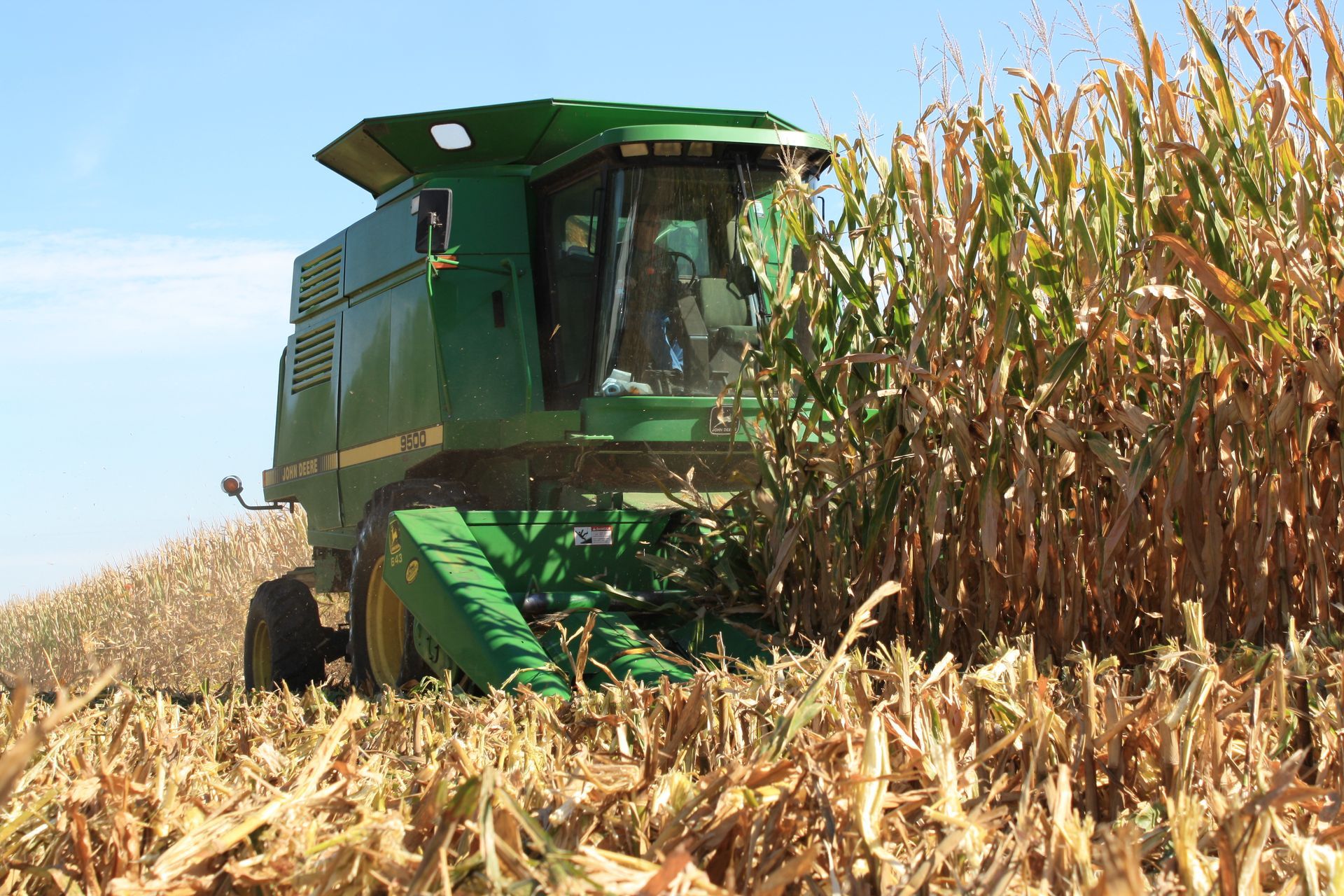
His crew of four or five men was cleaning out grain bins at the elevator in Atlanta, Illinois, a routine but high-risk task that kicks off every harvest season. Oliver's team was doing things right: a spotter at the door, emergency shutoffs within reach, safety protocols largely in place. Largely.
"I probably shouldn't have been inside that grain bin that Monday morning. But when you don't know what else to do, you just go to work."
The Accident
By end of day, the crew was nearly finished. Oliver, true to his Marine Corps instinct to lead from the front, sent the rest of the men out and stayed behind to finish the last few sweeps himself. It was the thinnest layer of soybeans near a sump hole (one small oversight, one momentary slip) and his right foot went in.
The paddle drag, a massive chain-driven conveyor similar to an auger, caught his foot and began pulling. Within seconds, the man stationed at the door heard Oliver yell and shut the equipment down. The machine stopped but Oliver's foot was pinned beneath two and a half feet of concrete, wedged in the chain.
A Concrete Silo, a Come-Along, and Two Hours of Waiting
Unlike a modern steel grain bin (where rescuers could cut through the floor) Oliver was inside an old concrete silo. The walls were thick. There was no easy way in or out. Once paramedics arrived, Oliver found himself in the unusual position of being the most knowledgeable person on scene about the facility's layout and equipment.
Conscious and calm he credits both his Marine Corps training and his familiarity with the equipment to help direct his own extraction. The team cut the chain on one end of the paddle drag, attached a come-along to the other half, and slowly, carefully, pulled the chain out while pulling Oliver with it. The full extraction took two to three hours. By the time he was medevac'd to a hospital in Peoria, he'd already made his peace with what came next.
"I knew it was likely just time to amputate. I told my doctor that. I'd made a mistake and I'm lucky to be alive, but it cost me my foot."
Nine Months, One Surgery, and Learning to Walk Again
Recovery was slow in the way it always is for people who are used to moving. Oliver had run 5Ks. He'd done combat sports. Grain elevator work is physical, demanding, daily labor. Being sidelined for nine months while an amputation wound healed (including a follow-up surgery for infection) was its own kind of difficult.
About a year and three months after the accident, he was fitted with his first prosthetic limb. Physical therapy followed: relearning how to walk, rebuilding conditioning, finding a new normal. Within three months, he was mostly walking unassisted. Within six, fully so. Phantom pain lasted about two years before fading. Some discomfort after long active days remains - the trade-off, he says, of being young and determined enough to push himself.
A New Direction: Agricultural Safety
The biggest change hasn't been physical but professional. Oliver had mapped out a clear future in grain elevator management, hoping to move into regional operations or grain marketing. That path closed. A new one opened.
He's now pursuing a college education (something he once dismissed) with a specific goal: a career in agricultural safety. He's clear-eyed about the challenge ahead. Farmers are independent. The industry doesn't love spending money on safety measures that don't show up directly on a balance sheet.
"Safety doesn't make money directly. But if you don't get hurt, you have fewer accidents, fewer fatalities. Everybody is better off for it including yourself."
Oliver Kragelund knows the grain industry from the inside. He knows what it feels like to skip one safety step after a hard weekend. And he knows, better than most, what that costs. That's exactly why he believes he's the right person to make the case.