Two Sides of the Same Field: How Illinois Corn Farmers Invest in Their Future


By Tara Desmond February 11, 2026

If you ask a lifetime Illinois corn farmer what keeps them up at night, the answers haven’t changed much over the years: markets, margins, weather, and whether the next generation will have the same opportunities they did. What has changed is how farmers work together to protect and grow their livelihoods.


That’s where IL Corn comes in - through two distinct, farmer-led organizations with one shared goal: keeping Illinois corn farmers competitive, independent, and profitable for generations.


For Tim Thompson, Chair of the IL Corn Marketing Board (ICMB) and Franklin, Illinois farmer, that

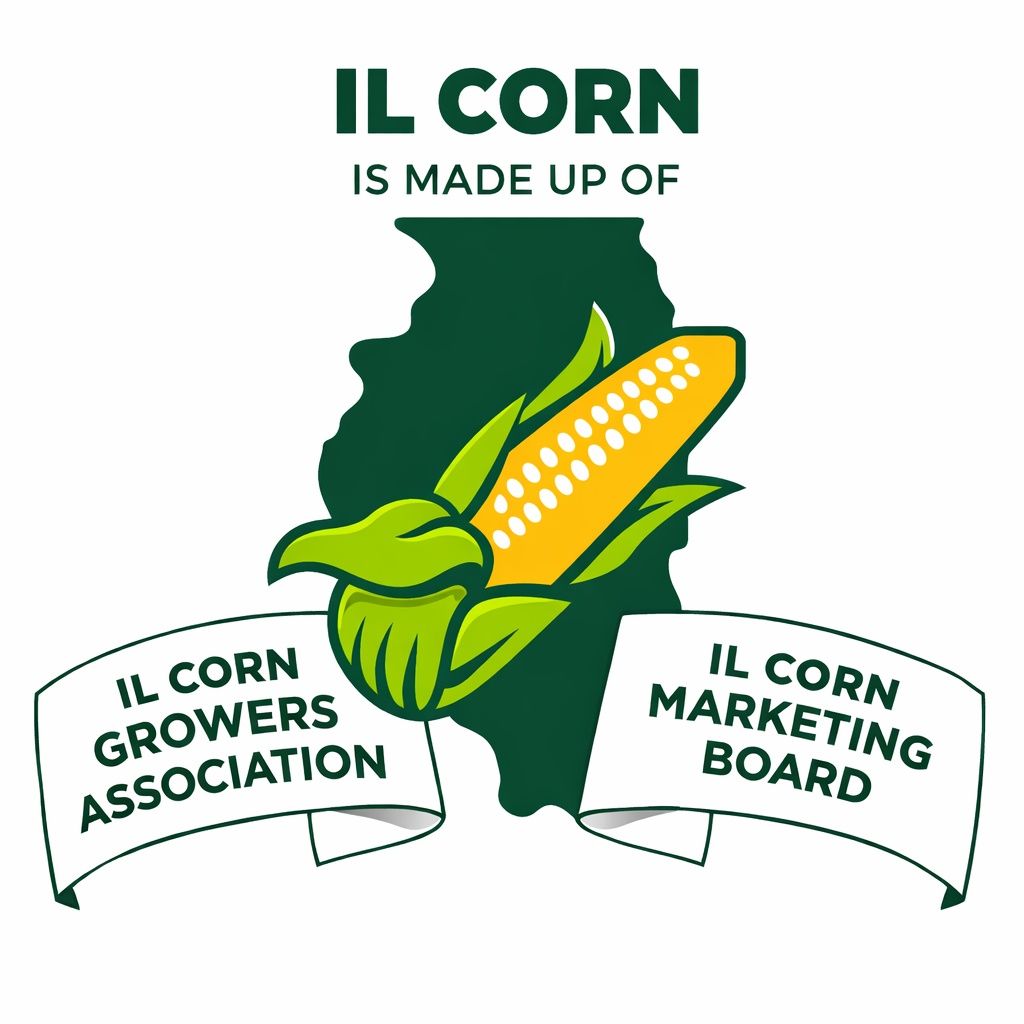
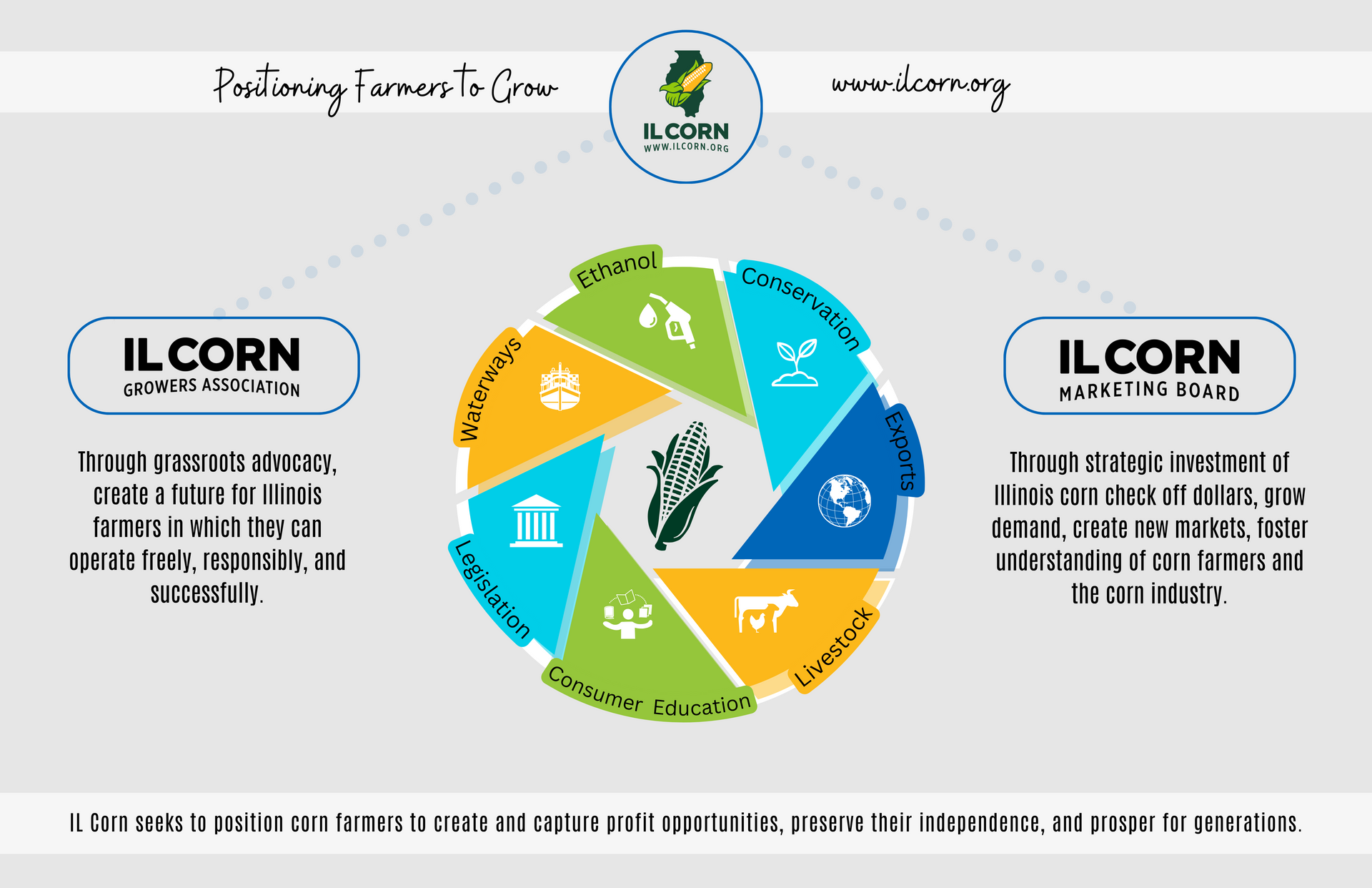
il corn logo with IL Corn growers association and IL Corn marketing board

mission starts with belief in the power of the checkoff.


“I’ve seen what happens when farmers pool resources and think long-term,” Thompson says. “No single farm can open global markets or fund cutting-edge research alone but together, we can.”


Investing in Demand: The Role of the Checkoff

The IL Corn Marketing Board exists because farmers voted for it. Established in 1982, ICMB manages the voluntary checkoff investment that Illinois corn farmers agreed would help grow demand and create new markets for their crop.

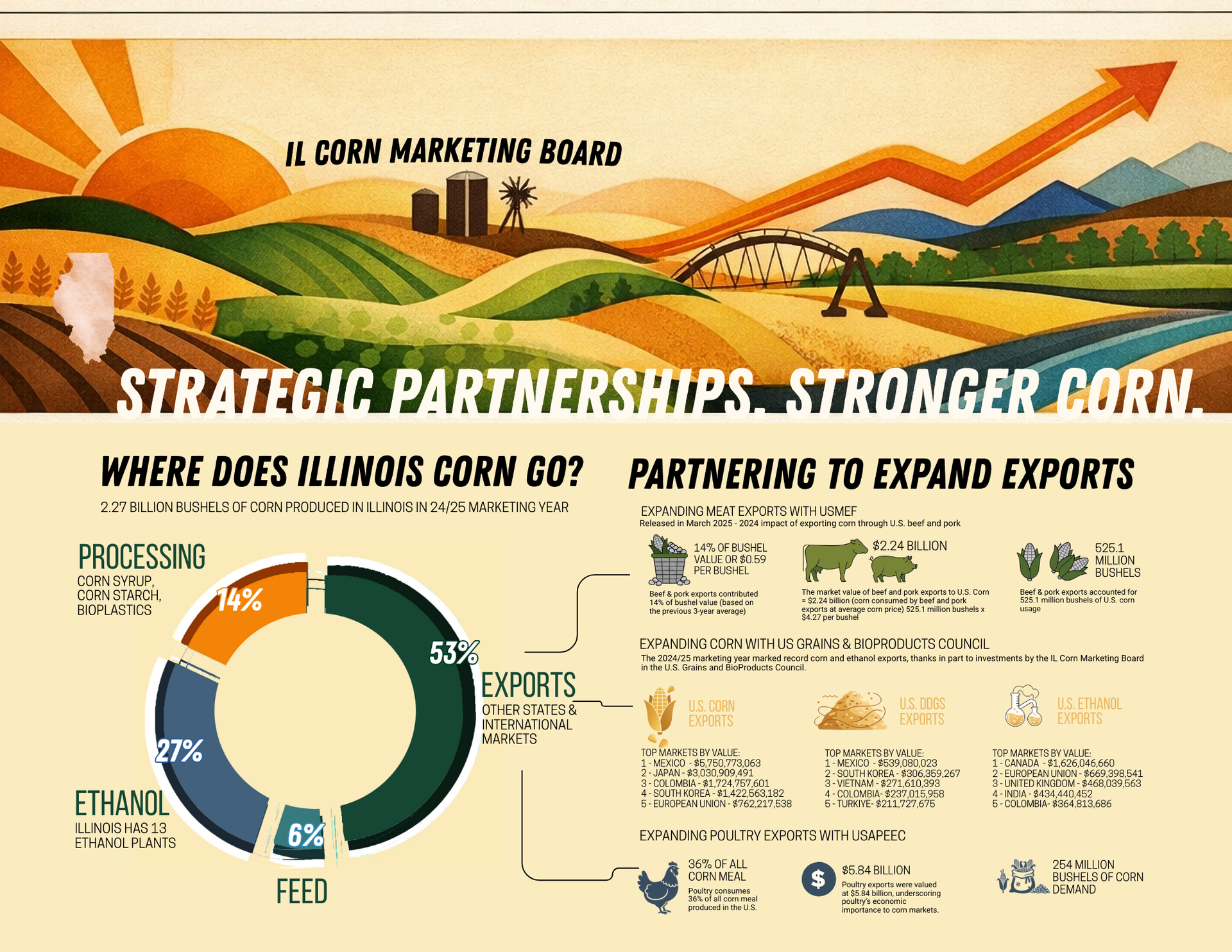
ICMB Annual Report Ad

Thompson, a lifelong farmer himself, views the checkoff not as a fee but as an investment.


“Every dollar we invest is about creating opportunity,” he says. “Whether that’s export markets, ethanol, sustainable aviation fuel, livestock feed, or telling our story better -  the checkoff works to make sure corn has a future beyond the bin.”


ICMB board members are elected by fellow farmers and serve unpaid terms, making decisions grounded in real-world experience. They know firsthand that demand doesn’t happen by accident - it’s built through strategy, research, and relationships.


But markets alone don’t guarantee success.


Defending the Farm: Advocacy Where It Counts

That’s where Mark Bunselmeyer, President of the IL Corn Growers Association (ICGA) and Decatur, Illinois farmer, comes in.


“As farmers, we don’t have the luxury of sitting out policy decisions,” Mark says. “If we’re not at the table in Springfield or Washington, D.C., someone else is making decisions for us.”


ICGA represents Illinois corn farmers on legislative and regulatory issues that directly affect their ability to farm — from trade and transportation to conservation programs, taxes, and environmental regulations.

ICGA Annual Report

For Mark, advocacy is deeply personal.


“I farm because I believe in this way of life,” he says. “ICGA gives our farmer members a unified voice so we can protect our independence and keep farming viable for the next generation.”


Through grassroots advocacy, ICGA ensures lawmakers hear directly from farmers not just lobbyists or headlines. It’s about telling the truth of modern farming and fighting for policies that let farmers operate freely, responsibly, and successfully.


One Organization, Two Essential Roles

While the IL Corn Marketing Board and the IL Corn Growers Association have different responsibilities, together they make up IL Corn.


ICMB focuses on the business of corn - investing checkoff dollars to grow demand, create new markets, and build long-term opportunities for Illinois corn farmers. ICGA focuses on the freedom to farm — advocating in Springfield and Washington, D.C., to ensure farmers have a voice in the policies and regulations that shape their livelihoods.


Two organizations. Two distinct roles. One shared mission.


Together, ICGA and ICMB form IL Corn - a farmer-led organization working to position Illinois corn farmers to create and capture profit opportunities, preserve their independence, and prosper for generations.


Not a member?

Become one today!

SHARE THIS

Latest Posts

Lou Lamoreux Farm
By Tara Desmond September 3, 2026
Livestock farmer Lou Lamoreux talks about his farming operation.
captain Cornelius at shake it up cocktail lounge
By Tara Desmond September 3, 2026
4.29M bushels of U.S. corn fueled beverage alcohol production in July 2026 alone — up 54% from July 2025. Corn's in your Labor Day toast!
aerial view of short corn
By Tara Desmond September 3, 2026
Illinois farmer Steve Fourez tests short stature corn against conventional hybrids, exploring yield potential and late-season management benefits.
USDA building
By Lyndi Allen September 3, 2026
This week, U.S. Secretary of Agriculture Brooke L. Rollins announced the U.S. Department of Agriculture (USDA) Data Modernization Plan to put Farmers First, reduce unnecessary burdens on producers, and improve the timeliness, accuracy, and usefulness of the data that informs agricultural decisions. USDA data informs crop and livestock estimates, risk-management tools, disaster assistance, and critical business decisions made by farmers, ranchers, agribusinesses, researchers, and policymakers. In February 2026, Secretary Rollins issued a Request for Information seeking feedback on the opportunities, challenges, and emerging areas in USDA data. That feedback helped shape the USDA Data Modernization Plan and its four pillars: Modernize the Data Reporting Experience: USDA will expand use of administrative data, improve mobile access to surveys, explore opportunities to use prefilled information where appropriate, and strengthen coordination across the Department. These changes will reduce duplicative requests and limit the amount of time producers spend reporting information. Enhance Acreage and Yield Estimation: USDA will conduct a pilot to evaluate the use of improved satellite imagery, geospatial tools, crop models, and other emerging technologies combined with essential producer-reported information to enhance acreage and yield estimations. USDA will also assess the use of optional field inputs to enhance and ground truth yield estimates and continue advancing yield research through collaboration with agricultural partners and land-grant universities. Integrate Data and Technology Platforms: USDA will modernize its technology infrastructure, expand secure data-sharing capabilities, and evaluate the responsible use of tools such as artificial intelligence and machine learning. Better integrated systems will improve efficiency, reduce duplication, and allow USDA to produce more timely and useful information. Expand Trust and Transparency with Producers: USDA will protect producer privacy, clearly explain why information is requested and how it is used, and create additional opportunities for producers to provide feedback. USDA will also improve communication surrounding reports, methodologies, response rates, and data limitations. USDA will begin implementing actions under the plan immediately and will continue engaging farmers, ranchers, and agricultural stakeholders throughout the process. The Department will evaluate new approaches carefully, protect privacy and confidentiality, and publish clear methodologies and supporting information to maintain the integrity of USDA’s agricultural statistics. See USDA’s Full Data Modernization Plan
Cornfield beside a dirt path under a blue sky with wispy clouds
By Lyndi Allen September 2, 2026
EPA has granted 1.76 billion RIN exemptions to small refiners, raising concerns among farmers and biofuel producers about the potential impact on demand for renewable fuel.
Weekly News
By Lyndi Allen August 28, 2026
News from IL Corn for week ending 8/28/26
Tall green corn plants under a partly cloudy blue sky
By Lyndi Allen August 27, 2026
New tariffs on Canadian goods took effect August 22, a critical market for U.S. agriculture. For Illinois farmers, the concern is what these tariffs could mean for demand.
Golden field at sunset with distant trees and a low farmhouse on the horizon
By Lyndi Allen August 27, 2026
A proposed merger between Union Pacific and Norfolk Southern would create the first true transcontinental Class I railroad in the United States, what does it mean for farmers
By Tara Desmond August 27, 2026
Get to know volunteer Southern Illinois farmer Matt Raben - New IL Corn Marketing Board Chair
Rachel Curry on IL Corn TV
By Tara Desmond August 27, 2026
Behind the Numbers: What's Really Driving Nutrient Loss in Illinois
Show More