When most people think about where their food comes from, they picture a grocery store. But for more than
143,000 neighbors across central and east-central Illinois, consistent access to nutritious food remains a challenge. Fortunately, Illinois farmers are helping make a difference.
Eastern Illinois Foodbank (EIF) serves 21 counties and partners with more than 180 food pantries, soup kitchens, school markets, backpack programs, and other feeding organizations to connect neighbors experiencing food insecurity with nutritious food. Agriculture plays an important role in that effort, providing food, resources, and support that help families across the region.
That commitment was on display in early June when the
Illinois Milk Producers Association (IMPA), in partnership with
Prairie Farms,
Illinois Farm Bureau,
IL Corn Marketing Board, and
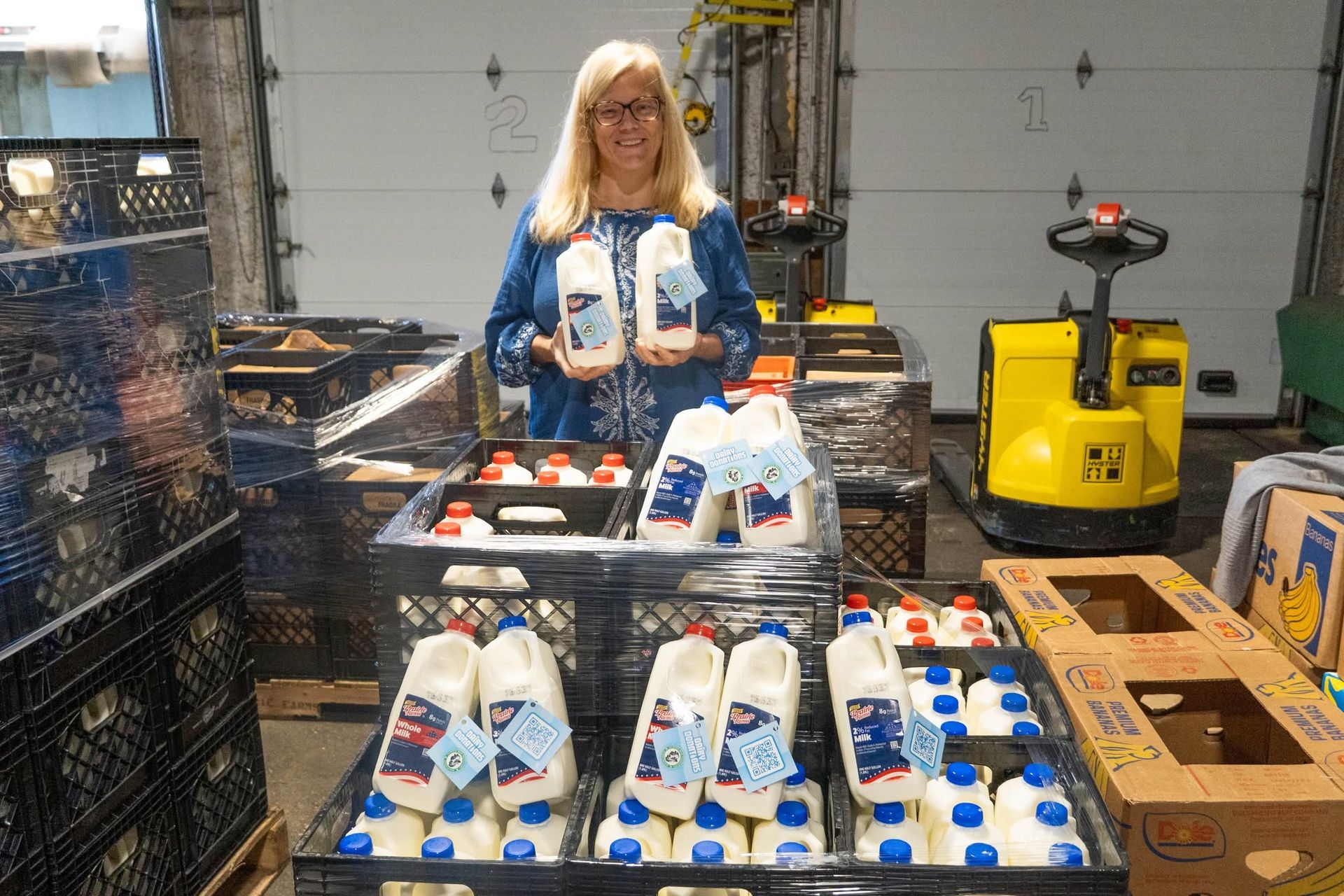
Illinois Soybean Association, donated 26,000 pounds of milk to food banks across the
Feeding Illinois network in celebration of National Dairy Month.
IL Corn recently sat down with Eastern Illinois Foodbank to learn more about hunger in our communities and the role Illinois agriculture plays in helping meet that need.
Q: For those who have never heard of Eastern Illinois Foodbank, tell us about it.
Eastern Illinois Foodbank serves 21 counties in central and east-central Illinois. We serve over 180 food pantries, soup kitchens, school markets, backpack programs, and other feeding programs that distribute food to neighbors experiencing food insecurity. We source funds and food through various channels, such as community donors, retailers like Walmart, Costco, and Target, the USDA Commodity Program, grants, and more, to distribute food and feed neighbors across our service area.
We started in the 1980s in Champaign County as a program to save food from being wasted. While that is still a lot of what we do, we also source product and focus on quality, nutritious foods for neighbors experiencing food insecurity. Throughout our 21-county service area, there are roughly 143,000 neighbors experiencing hunger.
Q: What's one person or family you've met that you'll never forget, and why has their story stayed with you?
On a visit to one of our southern counties, there was a young couple with a baby visiting a pantry during distribution hours. They had been released from the hospital that morning after having their first child. The baby's mother asked if I would hold her baby while they shopped for food at the pantry.
She will probably never realize the profound impact that moment had on my life and on my work at EIF. These young parents were learning how to care for their newborn while also figuring out how to keep food on their table. Hunger does not pause for major life events, but pantries and volunteers work hard to ensure that neighbors are fed.
Q: What's something about food insecurity that surprises people when they learn what you're seeing on the ground?
Often, there are misconceptions about food insecurity and how food banks and pantries work to feed neighbors. When many people think of food banks and pantries, they picture canned goods, cereal, cookies, and other shelf-stable items. While those foods are important, we work hard to source nutritious foods as well.
Illinois' Farm to Food Bank program helps us procure Illinois-grown products from small producers throughout the state. For EIF, that includes freshly grown lettuce, potatoes, apples, ground pork and beef, chicken, and rice. The lettuce procured through this program is harvested, delivered, and typically distributed within 24 to 48 hours—from field to table.
Q: What role do local farmers, businesses, and community volunteers play in helping families put food on the table?
Farmers play a critical role in serving our neighbors. We work with dozens of local farmers who go above and beyond for our mission by growing additional crops, making early and late trips to meat lockers, providing flexibility in deliveries to our warehouse, and advocating to legislators about our work and the need for state and federal funding.
We are grateful to businesses and community members who advocate for our mission, volunteer at pantries and our warehouse, attend and sponsor events and fundraisers, and donate time and money to our organization. Through this collective support, we moved nearly 10 million meals through our network in the last fiscal year.
Without supporters such as Illinois Farm Bureau, Illinois Milk Producers Association, Prairie Farms, and many others, we could not work to alleviate hunger in our area. Dairy is an important part of a healthy diet, and Eastern Illinois Foodbank is grateful to celebrate National Dairy Month alongside these generous supporters.
Q: If every person reading this could understand just one thing about hunger in Illinois, what would you want them to know?
Hunger exists in every community we serve, but support from producers and community members helps us meet that need. Summer can be especially difficult for many families, but farmers provide hope through sweet corn donations, gardeners contribute fresh produce, and pantries work hard to ensure food is available when it is needed most.
Our mission is made possible through community support and the collective action of Illinoisians who care deeply about addressing nutrition shortfalls. While we wish no family had to experience hunger, we remain committed to serving our communities and providing meals to friends and neighbors across our service area.
Agriculture's Role in Feeding Illinois
Illinois farmers do more than grow crops - they help strengthen communities. Whether it's a 26,000-pound milk donation, a truckload of sweet corn, or locally raised protein, agricultural producers play a vital role in helping ensure neighbors have access to nutritious food.
Eastern Illinois Foodbank distributed nearly 10 million meals through its network last fiscal year, a number made possible by the combined efforts of farmers, food companies, volunteers, donors, and community partners.
"Illinois farmers care deeply about feeding people," said Tim Thompson, chairman of the IL Corn Marketing Board. "The corn we grow helps support the production of milk, meat and other nutritious foods, and we're proud to partner with organizations like Eastern Illinois Foodbank that help ensure those foods reach families throughout our communities."
To learn more about Eastern Illinois Foodbank, find food assistance, support its mission, or schedule a warehouse tour, visit their
website or call
217-328-3663.