
Managing Gray Leaf Spot: Timing Fungicides for Maximum Return
By Matt from Becks • June 18, 2026
Fungicide Timing and Today's Disease Challenges
Tis the season… for corn fungicide applications. The mode of application (drone, airplane, or ground rig) can vary. However, so long as equipment is well calibrated and a quality operator is guiding application, all are equally acceptable methods to get the job done. They are equally useful because each protects the yield-critical, upper portion of the corn plant.
Mode of application is not the only thing that varies though. The target of those fungicide applications, the pathogen at work in the field, can vary as well. Today’s likely pathogen possibilities range from Gray Leaf Spot to Northern Corn Leaf Blight to Southern Rust to Tar Spot. It is a very different scenario compared to thirty years ago. In the mid-1990s, growers typically encountered just one of the above. A world with four likely pathogens was a little unheard of.
Our 21st century spectrum of likely corn diseases leaves many growers in a quandary. Our resources are not infinite. Growers must be strategic with their expenditures. With so many “disease players,” which of the four should a grower primarily target? Should fungicides be applied in the late vegetative stage, at tassel time or at brown silk? What is a grower to do?
The company I work for, Beck’s, conducts a host of fungicide trials each season. Applications at our research farms and on-farm trials continue to show that “tassel time applications” (R1) show the most return on investment. That timing fits very well for Gray Leaf Spot management. Our field scouting work also shows us that Gray Leaf Spot still tends to dominate in most geographies. In other words, the primary target is still Gray Leaf Spot (GLS) which means a well-timed R1 (tassel time) application will typically serve growers well. Monitor Tar Spot development and Southern Rust progression to see if the season might favor later, brown silk applications, but plan on tassel time being ideal more years than not.


The above means that GLS is still very much the “driver disease” in most corn fields, and because GLS continues to dominate the Illinois corn foliar disease spectrum, a little GLS review is warranted.
Understanding Gray Leaf Spot
Gray Leaf Spot (GLS) is caused by the fungus Cercospora zeae-maydis. The fungus spends the winter here, in the state of Illinois, nestled within residue. Spores are produced from that overwintering material and are spread via wind and rain. Those spores prefer warm (mid-70 to mid-80-degree temperatures), wet leaf conditions, and high humidity (greater than 90% relative humidity) to best germ and infect their host.
Recognizing Symptoms
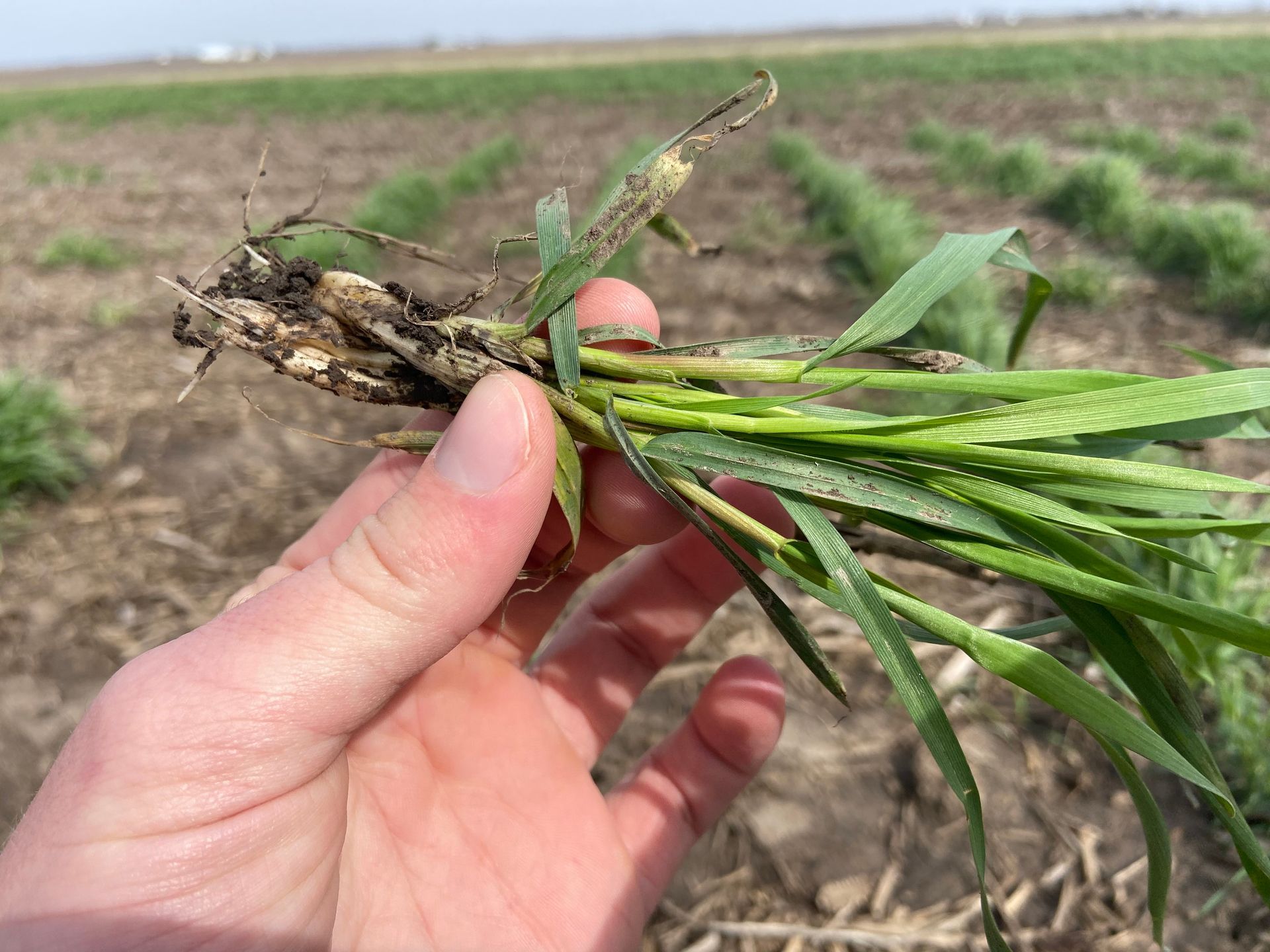
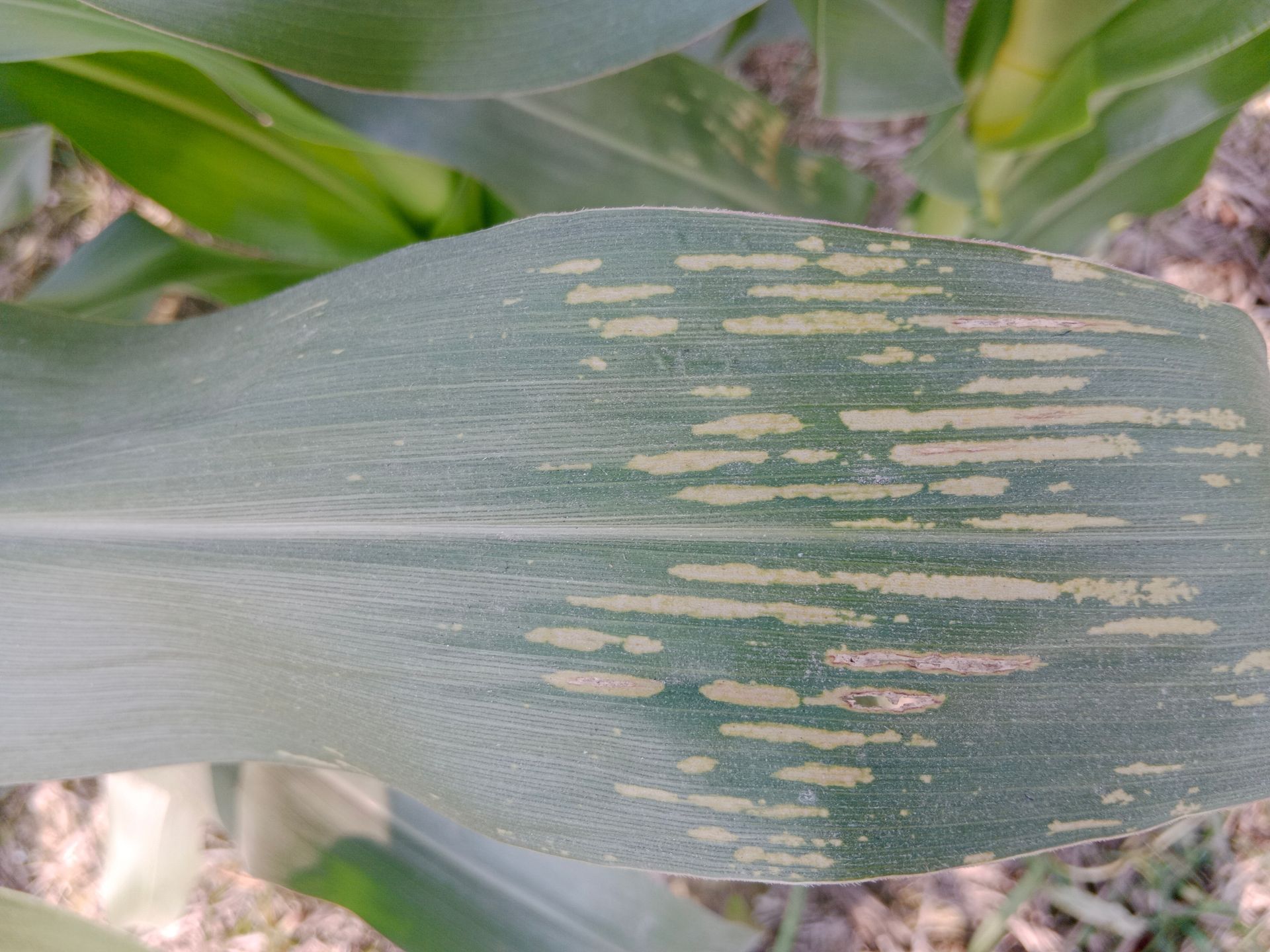
The actual leaf symptoms of Gray Leaf Spot develop about 2 to 4 weeks following infection. Those leaf symptoms appear as long (up to two-inch), skinny rectangular lesions that are restricted between the veins of the plant. In exceptional cases, these lesions may coalesce, forming larger regions of dead leaf tissue. Even when lesions have bled together – the rectangular shape of individual lesions can usually still be observed when diseased leaves are held up and backlit with sunlight.
Symptoms on the plant usually begin on the lowest leaves progressing up the plant. Those lesions become increasingly evident as the growing season plows into the mid to latter part of July.
Managing Gray Leaf Spot
How does one manage GLS?
The battel against GLS begins with hybrid resistance. Hybrid selection is typically our first step when battling most foliar diseases. GLS resistance is more akin to tolerance with the plant slowing development of the disease. This kind of resistance does not completely eliminate lesion development, but it does significantly limit lesion development – allowing more green tissue to be maintained throughout the grainfill period.
Crop rotation reduces GLS potential as well. The fungus responsible for GLS needs dead host tissue to overwinter upon and it cannot survive in-season minus a suitable host. While rotation reduces GLS potential, it does not completely eliminate it.
Finally, as was mentioned at the beginning of this article, fungicides have proven to be a critical GLS management tool over the past 20 years. R1 applications of fungicide are well timed to inhibit spore germination and subsequent infection of corn leaf tissue. Because fungicides have proven to be a critical tool in our battle against foliar disease, it is important to steward those products. Regardless of the product used, fungicides should be multiple active ingredient products rather than single active ingredient products. The use of multiple active ingredient fungicides decreases the risk of resistance development in GLS and other corn fungal foliar diseases. Single mode of action/ single active ingredient use is strongly discouraged.
Latest Posts