

45Z is Taking Shape – Here’s What It Means for Corn Farmers


By Lyndi Allen July 2, 2026

The U.S. Department of Agriculture’s (USDA) Regenerative Feedstock Rule provides important certainty for farmers as they begin making crop and input decisions. IL Corn has identified what it could mean for corn farmers.


The 45Z tax credit establishes a tax credit for biofuel producers when and if they make low-carbon-intensity fuel. In order to make the low carbon intensity (CI) fuel, they will require low CI feedstocks, i.e. low CI corn will be required to make low CI ethanol. This rule establishes the guidelines and scoring system to define low CI corn, as well as the practices farmers must use to grow low CI corn.


Who Gets the Tax Credit?

The 45Z credit itself is claimed by biofuel producers, not farmers. The biofuel producers can only earn the credit by sourcing low-CI feedstock, which means the low-CI corn grown using field-level conservation practices becomes more valuable to them. That value gets passed back to farmers through demand, contracts, or premiums for corn that qualifies as low-CI. 

  • Current Rulemaking WinsField-level scoring: farmers manage their fields independently and deserve to be recognized for the management decisions and conservation practices implemented on each acre
  • Evaluating nitrogen use using nitrogen use efficiency (NUE): a better way to measure appropriate nitrogen applications according to the productivity of the land that rewards farmers for practices that lower carbon intensity per bushel
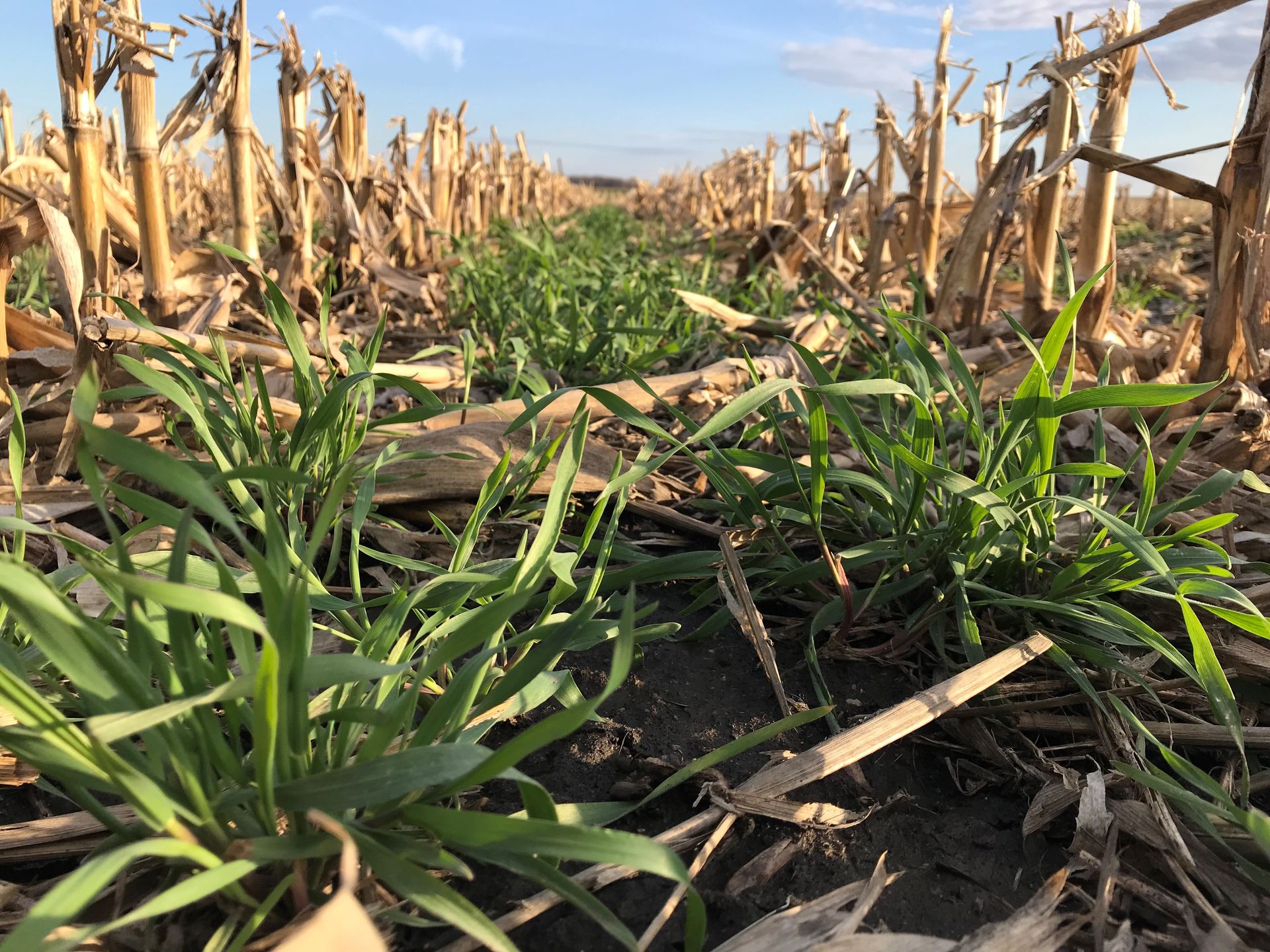
  • Allowing grazing of cover crops and inclusion of manure: elements that allow the integration of livestock and grain farming to continue, and recognize the importance of the cycle
  • Actual vs. Expected Yield: Farmers report actual production or, if yields fall more than 20% below expected due to extreme weather or other uncontrollable events, use an expected yield (such as one based on crop insurance history) – all corn yields are standardized to 15.5% moisture for consistency
  • Evaluating soil health practices: transition from a focus on soil erosion to a focus on soil carbon loss – the change provides more flexibility for farmers who are lowering carbon intensity, while making decisions that improve efficiency and resilience
  • Support of the Argonne GREET model's FD-CIC: base/framework for USDA's calculator 

Mass Balance vs. Book & Claim

IL Corn supports a book & claim system for documenting low-CI score corn. A book & claim system would generate an asset for farmers to implement CI-lowering practices that is independent of the physical grain. That asset could be sold into the marketplace.


The book & claim system allows more farmers to participate in the new market opportunities offered by a tax credit. It also increases the transparency of the value of that asset.


The system currently outlined in the Regenerative Feedstock Rule is a mass balance system. This opens up a new market opportunity only to farmers who are close enough to an ethanol plant to deliver their low-CI score corn directly to the plant.


The mass balance system is much less transparent, as each individual first purchaser gets to define the value of the low-CI score corn and the practices the farmer has invested in.


IL Corn is currently participating in a pilot project demonstrating the use of a book & claim system in the U.S. The USDA indicates openness to evaluating this system.


What Comes Next

Now that the USDA has released the Regenerative Feedstock Rule and the calculators that support it, the U.S. Department of Transportation and the U.S. Department of Treasury must evaluate what the USDA has provided and determine how to integrate the guidance and calculators into the final rulemaking. Essentially, the Regenerative Feedstock Rule is step one of a three-step process. However, for farmers, getting the USDA guidance correct was an extremely important step.


IL Corn’s Advocacy

During the process of USDA’s release of the rulemaking, IL Corn sent in a comprehensive letter to the docket during the comment period to emphasize that the program needs to fit how farmers actually operate. IL Corn advocated for the rulemaking to shift from farm-level averaging to field-level carbon intensity scoring; this system allows each acre to receive the credit for the conservation practices used. Other components like nitrogen management, grazing of cover crops, supporting Argonne GREET model’s FD-CIC, and many more were included in part due to the research and commentary IL Corn provided.


IL Corn will continue advocating for the adoption of a book & claim system so that the value of conservation work opens doors to more farmers for the good work they are doing on each field. 


Not a member?

Become one today!

SHARE THIS

Latest Posts

Schultz/Miller Family
By Penny Lauritzen - Illinois Agri-Women July 2, 2026
Illinois Agri-Women names three Legacy Farm Families for GoAg3, honoring generations of women in agriculture at an August 21 celebration.
Matt Boucher
By Tara Desmond July 2, 2026
Meet Matt Boucher of Boucher Family Farms in Dwight, IL — a 4th-gen farmer using cover crops, custom application & more. Read his story.
U.S. Capitol with “FARM BILL” text overlayed on the left
By Lyndi Allen July 2, 2026
Chairman John Boozman of the U.S. Senate Committee on Agriculture, Nutrition, and Forestry released a Farm Bill discussion draft on June 23, 2026.
Green graphic with Illinois outline and corn icon beside bold white text “NEWS RELEASE”
By Lindsay Croke July 2, 2026
ICGA would urge President Trump and the U.S. Trade Representative to build on the President's signature first term trade deal, swiftly negotiate improvements, and provide long term certainty.
Meganheadshot
By Tara Desmond July 1, 2026
Seven years ago, Megan Dwyer joined the IL Corn team and if you know Megan, you know she doesn't do anything halfway.
White
By Lindsay Croke June 26, 2026
The IL Corn Growers Association (ICGA) and our farmer leaders feel overwhelmingly positive after their review of the USDA Regenerative Feedstock Rule today
Monarch butterfly perched on a green plant against a blurred grassy background
By Pearl McDade June 25, 2026
Support pollinators in Illinois schools with free milkweed seeds, hands-on STEM learning, and real-world agriculture and conservation lessons.
Matt Raben
By Lyndi Allen June 25, 2026
Illinois Corn Farmer, Matt Raben, Speaks Out on the Importance of U.S. Mexico Canada Agreement (USMCA) for Agriculture by sharing U.S. corn export numbers to Canada and Mexico
Stacked soap bars with foam over corn cobs on a light background
By Pearl McDade June 25, 2026
Illinois corn powers renewable soap ingredients, from foaming cleansers to starches, oils, and ethanol.
Flags of Canada, the United States, and Mexico waving against a blue sky
By Lyndi Allen June 24, 2026
The U.S. – Mexico – Canada Agreement (USMCA) has been delivering real results for American families, farmers, and businesses since 2020.
Show More