

Corn to Cup: How Field Corn Becomes Plastic


By Pearl McDade June 12, 2026

From Illinois fields to everyday products, corn is helping create a new generation of plant-based plastics. 

Baby with corn plastic food containers

What is corn plastic? 

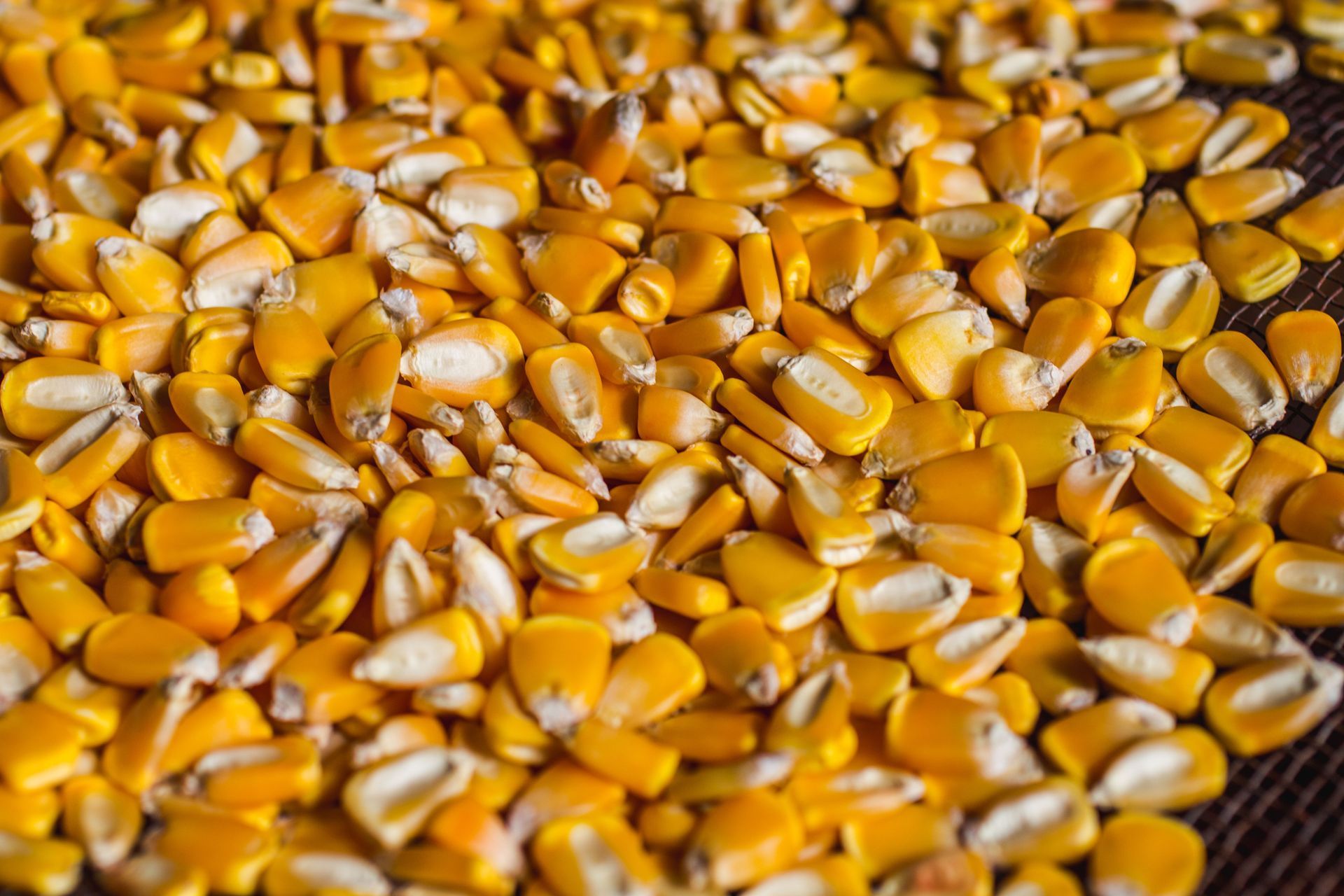
Corn plastic, also known as Polylactic Acid or PLA, is a type of bioplastic made from field corn. Instead of relying on crude oils to create plastic, PLA starts with something grown right here in the Midwest. 


Manufacturers have turned to materials like PLA as they look for ways to reduce their environmental impact while still creating durable single-use products. 


While PLA can also be produced with sugarcane, sugar beet, and other raw materials, corn accounts for over 60% of all PLA production. This is due to its strong global supply, established refining chains, and lower conversion costs. 


Currently, the global PLA market is estimated at $2.01 billion. By 2030, it’s expected that the growing demand for sustainable bio-based plastics will grow this market to $4.51 billion. 


How does corn become a cup? 

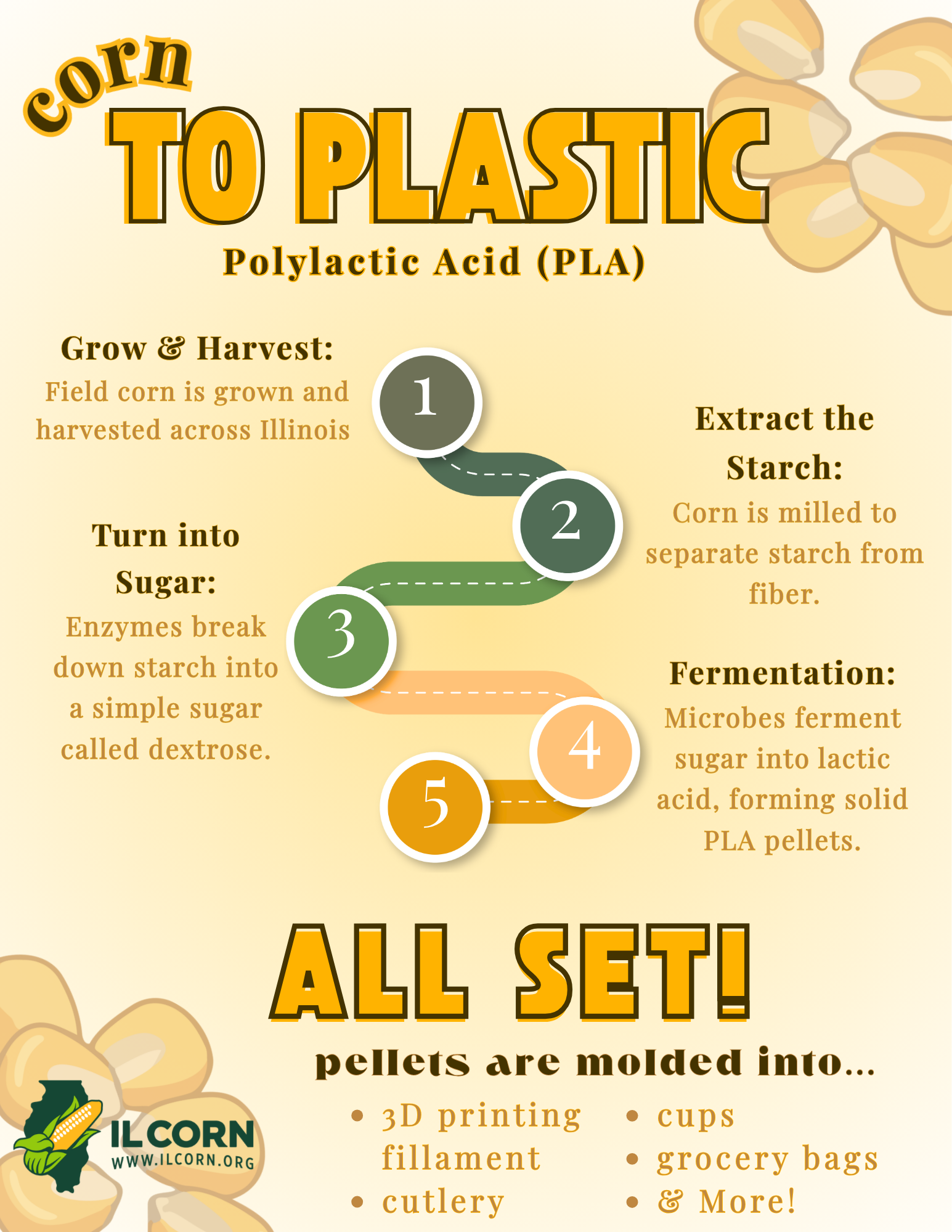
PLA production relies on the process of fermentation and can be broken down into 5 easy steps: 

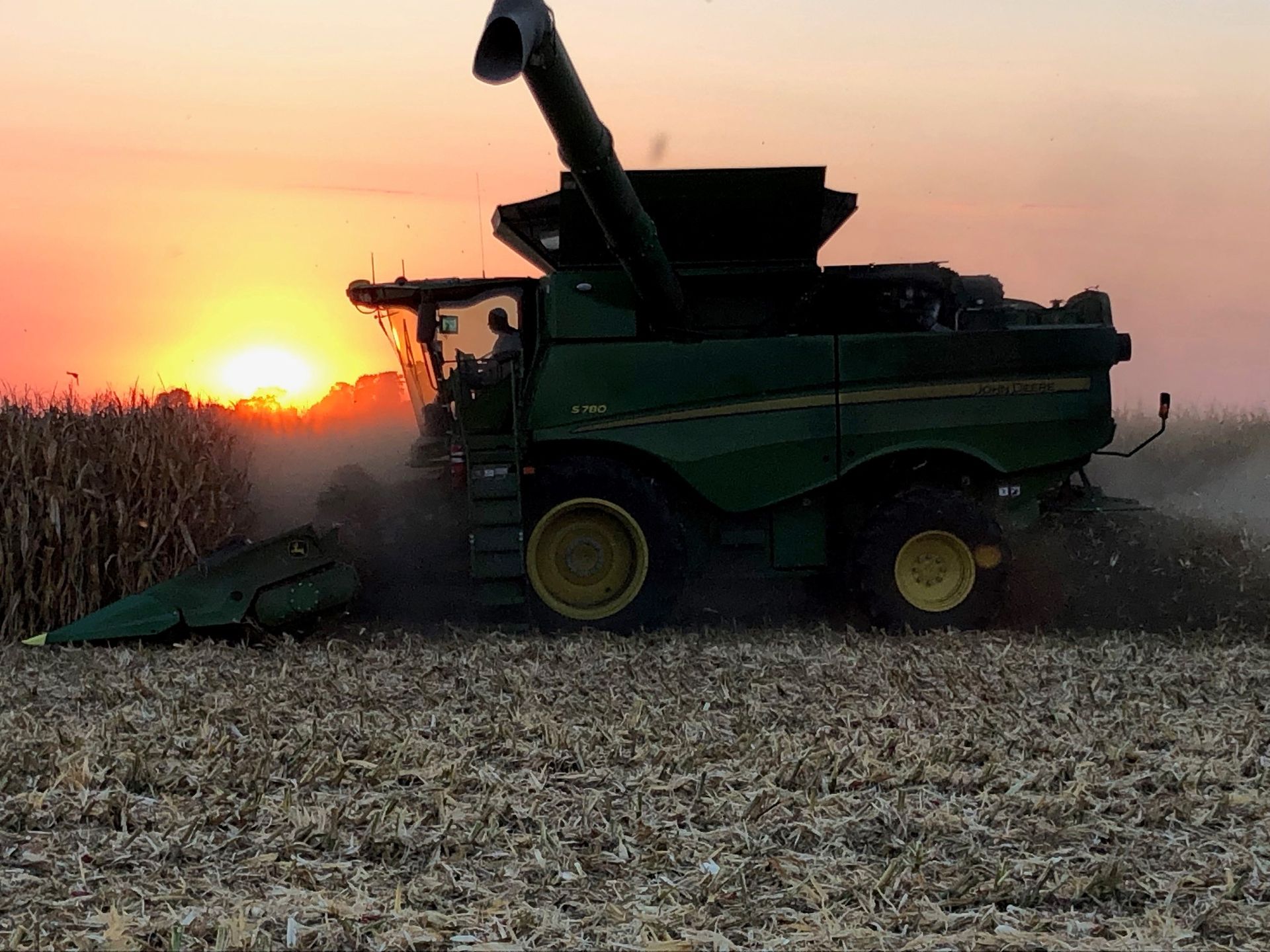
  1. Grow and Harvest: Field corn is grown and harvested across Illinois. It contains starches, proteins fibers, and oil. 
  2. Separate the Starch: Corn is milled to separate the starch from the rest of the kernel.
  3. Starch to Sugar: Enzymes break down the starch into a simple sugar called dextrose. 
  4. Fermentation: Last, microbes ferment the sugar into lactic acid, forming solid PLA pellets. 
  5. Manufacture Products: PLA resin is molded into products like cups, straws, 3D printing filament, and packaging. 
Corn Plastic (PLA) Production Process Infographic

This relatively simple process creates almost 500 thousand tons of PLA annually. With corn starch representing 60% of that, it’s estimated that 30 million bushels of field corn are used in PLA production every year. 


Why use corn-based plastics? 

PLA has several benefits that make it an appealing alternative to conventional plastic: 

  • Made from corn, a renewable resource 
  • Emits 68% fewer greenhouse gases 
  • Requires 65% less energy to produce 
  • Biodegradable and can break down in as little as 90 days with industrial composting 
  • Non-toxic fumes when incinerated 
  • FDA-approved and food safe 


Where do you see PLA in everyday life? 

PLA is found in cups, cutlery, take-out containers, and a variety of other single-use products. It’s also the most popular filament option for 3-D printed goods. 


If you want to see PLA in action or purchase corn plastic products, here are a few places to look: 


Sources:


Not a member?

Become one today!

SHARE THIS

Latest Posts

PCMthumbnail
By Tara Desmond June 11, 2026
PCM's 2026 Data Book, featured in this week's Prairie Farmer, shares 11 years of field data proving conservation and profitability go hand in hand.
By Tara Desmond June 11, 2026
How much do you know about the farmers who came before you and the decisions that still shape Illinois agriculture today? That's what University of Illinois student Lyndon Shi set out to explore during his internship with IL Corn . What began as an archival research project became a deeper look at the history of farmer leadership, innovation and advocacy in Illinois. While digging through university archives, Lyndon uncovered an undigitized manuscript from agricultural economist Harold Guither explaining the case for checkoffs. When he mentioned the discovery to IL Corn Director Rod Weinzierl, he got an unexpected response: "Oh yeah, I know him. We worked with him." It was a reminder that agricultural history isn't as distant as it may seem. Lyndon's research connected two eras of the IL Corn Growers Association: the original organization founded in the 1890s and the modern ICGA established in the 1970s. He learned how University of Illinois agriculture dean Eugene Davenport helped organize corn growers and sent professors across the state on "Corn Gospel Trains" to share the latest farming research. One story stood out in particular: the adoption of hybrid corn. Farmers who once judged corn by the appearance of the ear had to shift their focus to yield. Lyndon sees a similar transition today, as farmers increasingly balance yield with profitability amid rising input costs. "Illinois corn farmers are very good at organizing, and they are genuinely very grassroots," Lyndon said. "They've had a much more active role in shaping policy rather than just being on the receiving end." This Summer and Fall, Lyndon will travel to Taiwan on a federal scholarship to study food security. He'll do so with a new appreciation for Illinois agriculture's global connections, including Taiwan's longstanding role as an important trading partner. Watch the full conversation on IL Corn TV to hear Lyndon's research firsthand and discover how Illinois corn's history continues to influence the future.
Matt at USAPEEC Strategic Conference
By Tara Desmond June 11, 2026
IL Corn director Matt Raben was elected to USAPEEC's executive committee at the organization's 37th Annual Meeting this week.
Green world map with black curved arrows linking North America to Europe and Asia
By Lyndi Allen June 11, 2026
As one of the nation’s top agriculture exporters, Illinois ships corn to buyers across the globe—but where is it all going
Brian
By Tara Desmond June 11, 2026
Funk's Farm manager Brian Bangert explains the farm's 200-year history, the origins of Funk's G Hybrid, and how corn powers their cattle operation today.
Kaity Spangler Bowman
By Pearl McDade June 10, 2026
Three-time IL Corn intern Kaity Bowman gained connections, confidence, and passion for ag advocacy that she now shares with Macomb students.
Bill Leigh
By Lyndi Allen June 10, 2026
Illinois Farmer and Past ICGA President, Bill Leigh, is Elected to Serve As National Corn Growers Association’s First Vice President
livestock eating corn
By USMEF June 4, 2026
In 2025, beef and pork exports accounted for 70.31 million bushels of Illinois corn usage. New study by Juday Group released.
By Tara Desmond June 4, 2026
Whether you're catching up or revisiting your favorites, here's a look at some of our top stories from May. And don't forget new stories drop every week right here on our website, and IL Corn TV has new episodes weekly , so there's always something worth tuning in for. Do you have a story to share? Reach out to us .
thumbnail of John Bode
By Tara Desmond June 4, 2026
Agriculture drives 20% of the U.S. economy & 1 in 5 jobs. See what the Feeding the Economy report means for Illinois corn farmers.
Show More